Category: Uncategorized

  • Car Wax vs Ceramic Coating: Complete Comparison

    Car Wax vs Ceramic Coating: Complete Comparison

    Kaydan Porter, Owner, Desert Gator Mobile Detailing
    November 19th, 2026
    8 min read

    Ceramic coatings outlast traditional wax by years, offer superior chemical resistance, and maintain a sharper gloss—but wax remains the faster, cheaper option for drivers who detail their vehicles regularly. The choice depends on your budget, climate, and how often you're willing to reapply protection.

    The framework for thinking about this decision

    Three dimensions separate these products: durability (how long protection lasts), protection quality (what threats each resists), and total cost of ownership (upfront expense plus maintenance). Understanding where each coating excels reveals why neither is universally "better"—only better suited to specific driving conditions and maintenance habits.

    Durability: lifespan and reapplication frequency

    Traditional wax lasts four to eight weeks before requiring reapplication [1]. Ceramic coatings extend this dramatically: DIY ceramic products last 1–2 years, while professional-grade applications last 3–5 years [4]. This gap means a ceramic-coated vehicle needs protection refreshed perhaps twice per year; a waxed vehicle needs monthly attention in harsh climates. For drivers in the Phoenix metro area, where intense UV exposure and dust storms accelerate degradation, the durability gap matters significantly.

    Hybrid products split the difference. Spray coatings bridge wax and ceramic, lasting 6–12 months with reapplication simpler than full ceramic but longer-lasting than wax [3]. These appeal to owners seeking middle-ground convenience without ceramic's upfront commitment.

    Protection quality: chemical resistance and hydrophobic performance

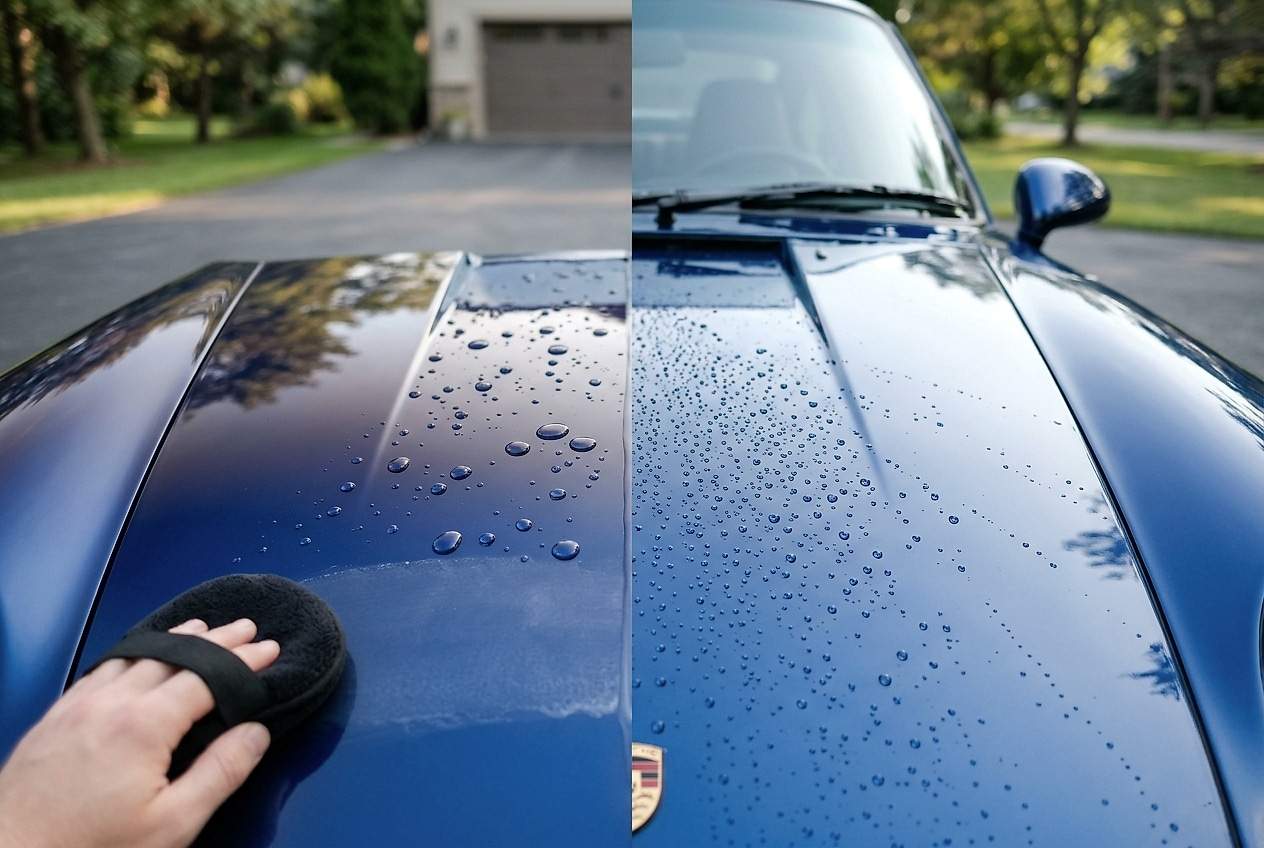
    Ceramic coatings form a semi-permanent molecular bond with your vehicle's clear coat, creating a surface that "delivers a sharp, candy-like gloss" [6]. More functionally, they provide water contact angles exceeding 115 degrees, meaning water beads aggressively rather than sheeting across paint [8]. This hydrophobic property protects against mineral deposits, bird droppings, and road salt—common threats in desert environments where mineral-heavy water and alkaline dust corrode unprotected finishes.

    Wax sits loosely on the clear coat, offering hydrophobic benefits but weaker chemical resistance. Acidic contaminants, brake dust, and caustic cleaners penetrate wax layers faster than ceramic barriers. For vehicles regularly exposed to industrial fallout or frequent car washes using harsh detergents, ceramic's protective layer proves measurably superior.

    Cost of ownership: initial investment versus long-term spend

    Professional ceramic coating costs $800–$1,500 upfront but requires no reapplication for 3–5 years [4]. A DIY ceramic kit runs $70–$200 with 1–2 years of protection. Traditional wax costs $15–$50 per application but demands monthly reapplication, totaling $180–$600 annually. Over five years, a single professional ceramic application ($800–$1,500) undercuts perpetual waxing ($900–$3,000 in materials alone, plus labor if professionally applied monthly).

    The calculus flips for occasional drivers or those who enjoy the detailing ritual. If you apply wax quarterly rather than monthly, ceramic's cost premium shrinks. If you sell your vehicle every two years, wax's lower entry price may justify avoiding ceramic's multiyear commitment.

    Climate considerations for the desert Southwest

    Desert conditions amplify ceramic's advantages. Arizona's low humidity, intense solar radiation, and mineral-laden water from wells and municipal supplies accelerate oxidation and mineral etching on bare clear coat. Ceramic coatings absorb this punishment better; wax's softer matrix deteriorates faster under sustained UV exposure above 115°F. Dust storms common in Mesa, Chandler, and Tempe deposit abrasive particles that scratch wax layers during washing; ceramic's harder surface resists scratching more effectively.

    Conversely, desert dust makes ceramic maintenance critical. Proper rinsing before hand washing prevents swirl marks on the coating itself. Mobile detailing services like Desert Gator, which brings equipment to your location, reduce the risk of improper at-home care that can compromise coatings.

    Application and maintenance demands

    Wax requires simple hand application and removal within hours. Ceramic coatings demand precision: surface preparation (clay bar treatment, polish), precise application temperatures, and 24–48 hours of cure time before water exposure. Professional application eliminates user error; DIY ceramic invites mistakes that reduce lifespan.

    Maintenance diverges sharply. Waxed vehicles need monthly rewaxing; ceramic-coated vehicles need quarterly hand washing with pH-neutral soap and occasional hydrophobic booster sprays (every 6 months). The labor-per-year calculus favors ceramic despite its higher initial barrier to entry.

    Car Wax vs Ceramic Coating vs Hybrid Spray Coatings

    Feature Car Wax Hybrid Spray Ceramic Coating
    Typical lifespan 4–8 weeks 6–12 months 1–5 years (DIY to pro)
    Upfront cost $15–$50 per application $30–$100 per application $70–$1,500 (DIY to pro)
    Annual maintenance cost $180–$600 $120–$400 $0–$150 (booster sprays only)
    Water beading Good Very good Excellent (115°+ contact angle)
    Chemical resistance Moderate Good Excellent
    UV protection Moderate Good Excellent
    Ease of application Very easy Easy Moderate (DIY) to professional only
    Best for Budget-conscious, frequent detailers Drivers seeking balance Long-term owners, harsh climates

    Ceramic coatings deliver superior year-round protection in extreme climates; wax suits cost-conscious drivers with established detailing routines. Hybrid products serve those uncomfortable choosing between expense and effort.

    Frequently asked questions

    How long does ceramic coating last on a car?
    Professional ceramic coatings last 3–5 years with proper maintenance; DIY versions last 1–2 years [4]. Lifespan depends on vehicle storage (garaged vs. exposed), washing frequency, and local water mineral content. Desert vehicles in unshaded parking may see lifespan reduce by 10–15% due to accelerated UV degradation.

    Can you apply ceramic coating over wax?
    No. Ceramic requires bare clear coat for proper molecular bonding. Existing wax must be fully removed via clay bar treatment or polish before ceramic application. Skipping this step causes poor adhesion and premature failure within months.

    Is ceramic coating worth it in Arizona?
    Yes, especially in Phoenix, Mesa, and Chandler where mineral-heavy water and intense UV exposure degrade unprotected finishes quickly. Ceramic's 3–5 year protection and superior chemical resistance justify the $800–$1,500 professional investment compared to $180–$600 annual wax expense.

    What's the best protection for a car that sits outside?
    Ceramic coating outperforms wax for parked vehicles. The continuous UV and weather exposure that wax can't withstand—wax breaks down in roughly 4–8 weeks—means coated vehicles maintain protection through monsoon seasons and dust storms without monthly reapplication.

    Can you wax over ceramic coating?
    Technically yes, but it's unnecessary and potentially counterproductive. Ceramic coatings already provide hydrophobic properties; wax adds no additional protection and complicates future coating removal if you want to recoat. Booster sprays designed for ceramic maintenance preserve hydrophobicity more effectively.

    How often should you wash a ceramic-coated car?
    Ceramic-coated vehicles need hand washing monthly in normal conditions, more frequently in desert climates where dust accumulates. Use pH-neutral soap and soft microfiber wash mitts to avoid scratching the coating. Avoid automated brush car washes, which degrade ceramic faster than hand washing.

    Does ceramic coating prevent scratches?
    Ceramic provides scratch resistance superior to wax but does not prevent scratches entirely. Moderate swirls from improper washing may be less visible due to the coating's hardness; deep scratches still penetrate to clear coat. The coating protects against UV and chemical damage more effectively than it guards against physical contact.

    What's the best choice for a leased vehicle?
    Wax. Leased vehicles return within 2–3 years, making ceramic's multiyear investment unrecoverable. Monthly waxing costs less than professional ceramic and leaves no permanent modifications to the lease vehicle.

    Synthesis: what this means for you

    If you live in the Phoenix metro area and park outdoors: ceramic coating justifies its cost. Desert UV, mineral-heavy water, and dust storms overwhelm wax within weeks. A single professional application protects through multiple Arizona monsoon seasons. Desert Gator and similar mobile detailing services can handle ceramic application and maintenance on-site, eliminating transport hassles.

    If you detail your vehicle monthly: wax remains rational. The ritual appeals to enthusiasts; reapplication every 4–8 weeks fits an established routine. Your familiarity with paint preparation and application means consistent results. Total five-year cost approaches ceramic but supports a preferred maintenance rhythm.

    If you want simplicity over the next 3–5 years: ceramic coating reduces total maintenance burden. Quarterly hand washing and occasional booster sprays require far less labor than monthly waxing. The upfront inconvenience of professional application delivers years of reduced weekend detailing work.


    References

    [1] Chemical Guys. "Car Wax vs. Ceramic Coating: Which Is Right For Your Car?" https://www.chemicalguys.com/blogs/exterior-how-tos/car-wax-vs-ceramic-coating

    [3] Brilliatech. "Car Wax vs. Ceramic Coating — Which Protects Better?" https://m.brilliatech.com/blog/car-wax-vs-ceramic-coating-which-protects-better/

    [4] Octint Solutions. "Ceramic Coating vs Wax? Pick the Best for Your Car's Paint." https://octintsolutions.com/ceramic-coating-vs-wax/

    [6] Car Kit Info. "Car Wax vs Ceramic Coating: An Expert's Honest Comparison (2026)." https://carkitinfo.com/car-wax-vs-ceramic-coating/

    [8] CarMechan. "Car Wax vs Ceramic Coating 2026: Full Comparison & Verdict." https://carmechan.com/buying-guide/car-wax-vs-ceramic-coating/
  • How to Choose a Quality Mobile Detailing Company

    How to Choose a Quality Mobile Detailing Company

    Kaydan Porter, Owner, Desert Gator Mobile Detailing
    November 18th, 2026
    9 min read

    You're standing in your driveway on a Saturday morning, phone in hand, scrolling through five different mobile detailing companies with similar names and no clear way to tell them apart. One promises "professional results," another has three-star reviews mixed with complaints about water damage, and a third won't answer basic questions about insurance until you call. You're about to book the cheapest option when you realize you have no idea what you're actually getting.

    Choosing a quality mobile detailer comes down to three measurable dimensions: operational legitimacy (insurance, licensing, and self-sufficiency), service transparency (pricing clarity and process documentation), and service capability (equipment, training, and product knowledge). Most customers focus only on price and reviews, missing the factors that actually separate a professional operation from a liability risk.

    Operational legitimacy: insurance, licensing, and self-sufficiency

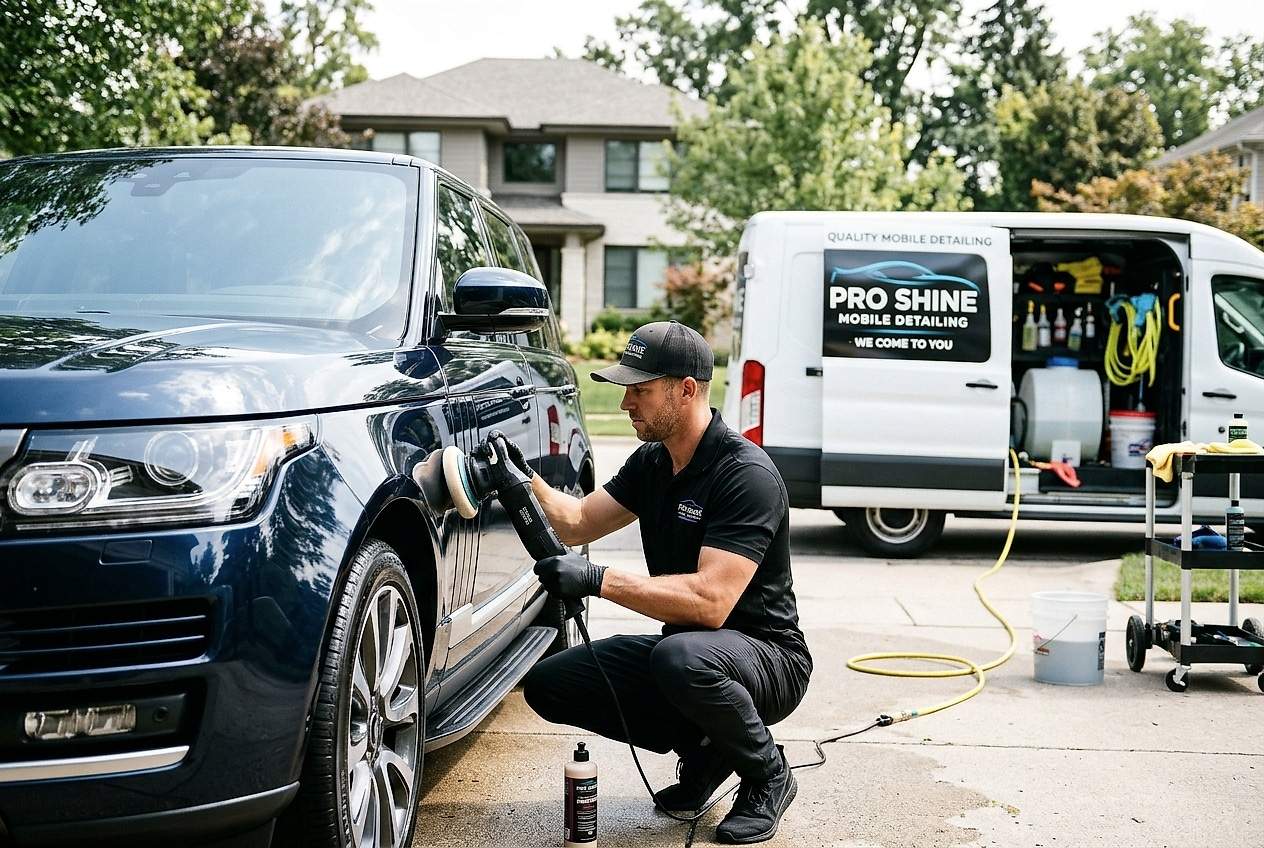
    A quality mobile detailer carries liability insurance and can prove it on request. "It's crucial to ensure that the mobile car detailer is insured. This protects you from any potential damages that might occur during the detailing process."[1] Ask for a certificate of insurance before booking, not after. Arizona doesn't require mobile detailers to hold a specific license, but legitimate operators in the Phoenix metro area register as businesses with the state and maintain worker's compensation coverage if they employ staff. This isn't bureaucratic theater; it's your legal protection if something goes wrong.

    A self-sufficient operation brings its own water supply, power, and lighting to your location. "A real mobile detailer brings their own water, power, and lighting. You shouldn't need to roll out an extension cord or hose from your house."[7] If a detailer asks to plug into your outdoor outlet or run a hose from your spigot, they're cutting corners that often signal broader shortcuts. Portable water systems, generators, and work lights are baseline equipment, not premium add-ons.

    Service transparency: pricing and process clarity

    Legitimate detailers publish starting prices and explain what changes them, not hide behind vague quotes. "Pros publish starting prices and explain what changes them (vehicle size, condition). Vague 'depends' answers before they'll name any number usually mask inconsistency or low professionalism."[8] Call three companies and note whether they can tell you over the phone whether a full exterior detail on a 2020 sedan costs $150, $200, or $300. If they won't answer without seeing the car first, that's a red flag.

    Ask what they can answer before booking. "If the company can't answer basic questions about insurance, process, products, and payment terms, they're not ready for your car."[6] Request their written process: What surfaces do they touch? What products go on the paint, interior, and wheels? How long does each service take? A professional outfit documents this. Many shops in the Phoenix area email a one-page service breakdown without you asking, knowing it builds trust.

    Service capability: equipment, training, and product knowledge

    The products a detailer uses matter more than most customers realize. The International Detailing Association notes ceramic coatings may take up nearly half the supply budget in top-tier services, suggesting that high-end operators invest heavily in chemistry, not just labor.[3] Ask whether they use separate microfiber towels for different surfaces (wheels, paint, interior), whether they pressure-wash at appropriate PSI to avoid damage, and whether they hand-wash or use automatic equipment. Hand washing takes longer, costs more, and reduces the risk of swirl marks and paint damage.

    A knowledgeable detailer explains how their process protects your vehicle. "The best mobile detailing services prioritize safety during every step of the detailing process. A knowledgeable detailing company understands the importance of protecting your car's surfaces."[2] If they can't walk you through why they use a certain product or technique, they're following a script, not a standard.

    Case in point: identifying red flags in real time

    You receive a quote from a local detailer with a glossy website and no insurance information listed. You email asking for proof of coverage; they don't respond for two days. When they do, they send a PDF dated three years ago and avoid confirming whether it's current. Meanwhile, a competing service answers your call in person, names their current insurer, provides a certificate within an hour, explains their product line by paint type, and quotes $185 for an exterior detail on a mid-size sedan with specific add-on pricing for extra treatments. The second detailer takes longer to reach but is operationally legitimate. The first is not.

    As of Q4 2026, mobile detailing prices in the Phoenix area range from $100 to $300 for a full exterior detail, depending on vehicle condition and size. A price under $80 almost always means skipped steps or low-cost products that trade durability for initial appearance. A price over $400 for a standard detail suggests premium ceramic coating or specialty finishes; clarify what's included.

    Synthesis: what this means for you

    If you're in Mesa, Chandler, Tempe, Apache Junction, or Gilbert, the screening process takes under 20 minutes per company. Call three. Ask for insurance proof, pricing for your vehicle type, and a written service description. One will likely drop out for failing to answer straightforwardly. The remaining two will show you the difference between a business and a side hustle.

    For example, desertgatoraz.com publishes its service offerings upfront (exterior washing, interior detailing, full vehicle packages) and operates in the Phoenix metro area, allowing you to verify local reputation through area-specific reviews rather than relying on national aggregators that may mix data from other regions.

    The cheapest option is rarely the safest. The most expensive is not always the best. The one that answers your questions clearly, provides proof of insurance, and explains why their process works is the one you're hiring.

    What most people get wrong

    Most customers assume that high Google reviews equal quality. But reviews measure satisfaction with price and scheduling, not technical competence. A detailer can deliver a visibly clean car that gets five stars while using washing techniques that damage clear coat over time. Read reviews specifically for mentions of "paint safety," "attention to detail," and "how they handled problems," not just "looks great." A five-star review that says "showed up on time and the car looked clean" tells you almost nothing about whether that detailer knows how to protect your vehicle.

    The 80/20 breakdown

    Focus your screening time on two things: (1) Ask for proof of insurance and get a yes or no, not a conversation. (2) Call and ask for a price on a specific vehicle type and condition. Everything else—reviews, website quality, social media followers—flows from those two filters. Companies that fail either one are disqualified. Among the remaining candidates, pick the one that answered fastest and most clearly. You will save more money preventing damage than you spend finding the absolute cheapest service.

    Frequently asked questions

    What should I ask a mobile detailer before booking?
    Ask for proof of current liability insurance, a starting price for your vehicle type, the specific products they use on paint and interior, their hand-wash versus equipment process, and how long the service takes. Legitimate detailers answer all four without hesitation. If they delay or deflect, move to the next one.

    How much does mobile detailing cost in Phoenix?
    Full exterior detailing in the Phoenix metro area ranges from $150 to $300 for a standard sedan, depending on vehicle condition, size, and add-ons like wheel reconditioning. Pricing under $100 is a warning sign of rushed work or low-quality products. Get quotes from three local services and compare by service, not just price.

    Can a mobile detailer damage my car's paint?
    Yes, if they use high-pressure washing, dirty microfiber towels, or abrasive chemicals without understanding clear coat protection. A quality detailer brings their own equipment, uses low to medium pressure (1,200-1,500 PSI maximum), and replaces towels between vehicle sections to prevent swirl marks.

    Should I look for detailers with certifications?
    Certifications from the International Detailing Association or manufacturer-specific training (like ceramic coating certification) indicate investment in skill development and are worth noting, but they're not required. A detailer without certifications can still be excellent if they can explain their process and show proof of proper insurance.

    How do I know if a mobile detailer is legitimate in Arizona?
    Check whether they provide proof of liability insurance on request, operate under a registered business name, have a physical address (not just a phone number), and can answer technical questions about their process. Arizona doesn't license detailers, so insurance and business registration are your verification points.

    What's the difference between a mobile wash and a mobile detail?
    A wash cleans the exterior surface with water and mild soap. A detail includes wash, hand drying, interior vacuum and wipe-down, wheel cleaning, and optional treatments like wax or sealant. Mobile detailing brings the full service to your location, saving you a trip but requiring the detailer's operational self-sufficiency.

    How do I verify reviews are real?
    Look for reviews on Google, Yelp, and Facebook with specific details (mentions of paint technique, timing, communication) rather than vague praise. A detailer with 50 reviews averaging 4.6 stars is more reliable than one with 8 five-star reviews and no history. Check whether recent reviews mention the same owner or staff, suggesting consistency.

    What should I do if a mobile detailer damages my car?
    Document the damage with photos immediately and email the detailer within 24 hours. Provide the photos and ask for written acknowledgment and a repair plan. This is why insurance matters: a legitimate detailer's policy covers accidental damage. If they deny responsibility or lack insurance, you have no recourse beyond small claims court.

    References

    [1] Lux Auto Detailing LLC. "How to Spot the Best Mobile Car Detailers Near You: A Checklist." https://luxautodetailingllc.org/blog/how-to-spot-the-best-mobile-car-detailers-near-you–a-checklist

    [2] MobiGleam. "How To Choose the Best Mobile Detailing Service for Your Needs." https://www.mobigleam.com/how-to-choose-the-best-mobile-detailing-service-for-your-needs/

    [3] Birds Detail. "How to Choose the Right Mobile Detailing Company?" https://www.birdsdetail.com/blog/how-to-choose-the-right-mobile-detailing-company

    [6] The Mobile Buff. "Mobile Detailing Companies: What to Expect and How to Choose." https://themobilebuff.com/blog/mobile-detailing-companies/

    [7] Top Star Detailing. "Choosing a Mobile Car Detailer Guide." https://topstardetailing.com/choosing-a-mobile-detailer/

    [8] Best In Class Detailing. "How to Choose a Mobile Detailer." https://bestinclassdetailing.com/how-to-choose-mobile-detailer/

  • Removing Desert Dust and Hazing from Car Exterior

    Removing Desert Dust and Hazing from Car Exterior

    Kaydan Porter, Owner, Desert Gator Mobile Detailing
    November 17th, 2026
    7 min read

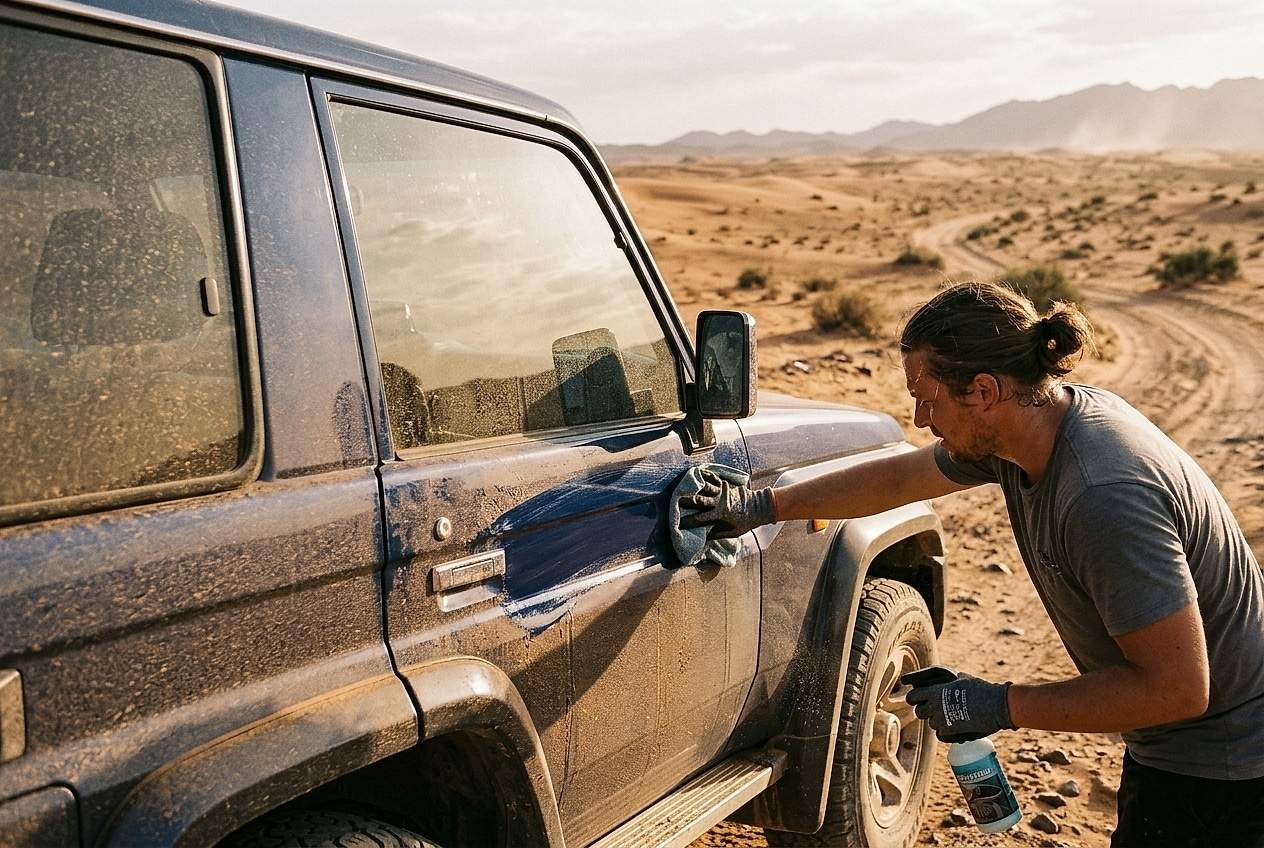
    Desert dust in Arizona accumulates at rates 3 to 5 times faster than in coastal regions, leaving a chalky haze on paint within days of a wash. This fine, airborne grime doesn't just obscure your car's finish—it actively degrades the clear coat if removed incorrectly.

    The framework for thinking about desert dust damage

    Desert dust removal hinges on three dimensions: particle composition (what makes it abrasive), removal technique (how to extract it safely), and prevention strategy (how to protect against future accumulation). Understanding where your car falls on each dimension determines whether detailing will restore the finish or accelerate its decline.

    Why desert dust is more damaging than regular dirt

    Desert dust particles are angular and hard, fundamentally different from organic road grime. "The sand and dust are abrasive, so cleaning too vigorously can cause scratches and swirls to your paintwork."[3] The fine, hard, angular texture of desert dust makes it more abrasive when ground into the surface than softer contaminants, which is why removal technique matters more here than with standard car washing.[6]

    Pressure washing alone creates significant risk. The force can embed particles deeper into the clear coat rather than lifting them away, and high-pressure jets push dust across the paint surface, causing micro-abrasions. In Phoenix metro areas like Mesa and Chandler, where dust storms occur 2 to 3 times monthly during peak season, this damage compounds quickly.

    Safe removal techniques that protect your paint

    The first step is a thorough rinse with minimal pressure. "The first step in removing saharan dust from your car is to rinse it thoroughly with a hose or pressure washer."[1] Use low pressure (under 1,500 PSI) and keep the nozzle at least 12 inches from the surface. This loosens surface-level dust without grinding particles into the clear coat.

    Next, use proper contact tools. "Use car shampoo and a wash mitt that is fit for purpose. Do not use a sponge because it will collect first and grit, which you'll wipe back onto your…"[2] A microfiber wash mitt absorbs water and lifts particles away from paint, while sponges trap grit and drag it across the finish. Work in straight lines rather than circular motions to avoid swirling.

    Avoid dry brushing entirely. "There is no safe way to brush sand off the vehicle."[4] Brushing or wiping a dry dusty car guarantees scratches. Always wet the surface first, allowing water to act as a lubricant between particles and paint.

    Hazing removal and paint correction

    Hazing—the dull, cloudy appearance left after dust settles—indicates oxidation or fine scratches in the clear coat. Removal requires abrasive polishing compounds or clay bar treatment, depending on severity. Clay bars work first to pull embedded contaminants from the surface; light polish then restores gloss. For severe hazing, professional machine polishing is safer than hand application, which risks uneven pressure and further swirling.

    Prevention: protective barriers reduce frequency

    Ceramic coatings, wax layers, and paint protection film create barriers that desert dust cannot bond to as easily. A fresh coat of carnauba wax lasts 4 to 6 weeks in Arizona's dust-heavy environment before reapplication becomes necessary. Ceramic coatings last 6 months to 2 years depending on formulation and maintenance, making them more cost-effective for frequent dust exposure. Covered parking or a carport reduces dust accumulation by 70 to 80 percent compared to open air exposure.

    As of Q4 2026, mobile detailing services in the Phoenix metro area offer regular maintenance plans—weekly or bi-weekly washing and waxing—to manage dust before it hardens. DesertGatorAZ, a mobile auto detailing service serving Mesa, Chandler, Tempe, Apache Junction, and Gilbert, includes dust-removal protocols in exterior detailing packages that account for Arizona's specific climate challenges.

    Case in point: Seasonal dust management in Chandler

    A vehicle exposed to open-air parking in Chandler experiences visible hazing within 10 to 14 days during March through May dust season. Without intervention, that dust layer will begin bonding to the clear coat by day 21, requiring professional correction instead of a simple wash. With bi-weekly mobile wash service and monthly waxing, the same vehicle maintains gloss and avoids micro-scratch accumulation. Over a 12-month cycle, the cost of preventive maintenance is lower than a single professional polish-and-correction job needed after three months of neglect.

    Synthesis: what this means for Phoenix-area drivers

    For daily commuters in Mesa and Chandler: Invest in a protective wax or ceramic coating, then commit to bi-weekly washing. Dust management is an ongoing cost of living in the desert, not a one-time fix.

    For fleet operators: Factor in professional exterior detailing every 2 to 3 weeks during high-dust months. The alternative is repainting or clear-coat replacement within 2 to 3 years.

    For weekend car owners: Covered parking is your first line of defense. If open parking is unavoidable, monthly professional detailing prevents long-term damage.

    Common mistakes to avoid

    Dry brushing or wiping. It guarantees scratches. Always wet the surface with low-pressure water before any contact.

    Using pressure washers above 1,500 PSI. High pressure embeds dust rather than removing it. Keep the nozzle at least 12 inches away and use a wide-angle tip.

    Applying wax to a dusty surface. Wax will seal dust particles into the clear coat. Always wash and dry thoroughly before waxing.

    Skipping regular detailing during dust season. Waiting more than 3 weeks between washes allows dust to bond chemically to the paint, requiring professional correction instead of simple removal.

    Using sponges instead of microfiber mitts. Sponges trap grit and drag it across the paint, creating swirl marks. Microfiber absorbs contaminants safely.

    Quick answers

    How often should I wash my car in a desert climate? Every 7 to 10 days during dust season (March through May and September through November); every 2 to 3 weeks otherwise. Regular washing prevents dust from bonding to the clear coat.

    Can I use a regular car wash soap for desert dust? Yes, but pair it with a microfiber wash mitt and low-pressure rinse. Standard car shampoo works; technique matters more than product.

    What's the difference between hazing and scratches? Hazing is a dull coating that often lifts with polish; scratches are permanent gouges in the clear coat. Clay bars remove hazing; scratches require professional polishing or repair.

    Is ceramic coating worth it in Arizona? Yes, if you want to extend the interval between washings. Ceramic coatings last 6 months to 2 years and reduce how aggressively dust bonds to paint, lowering maintenance frequency.

    Can hazing come back after polishing? Yes, unless you apply a protective layer (wax or ceramic). Polishing corrects damage but doesn't prevent new dust from settling. Prevention requires ongoing barriers.

    What's the cheapest way to protect my car from desert dust? Regular carnauba wax applied every 4 to 6 weeks costs less than professional ceramic coating upfront but requires more frequent application. Choose based on your tolerance for maintenance.

    Should I wash my car after a dust storm? Yes, within 24 hours. Dust particles bond stronger to the clear coat over time. Early washing requires less abrasive scrubbing.

    Is mobile detailing better than a fixed car wash for dust removal? Mobile services allow hand washing and water pressure control tailored to dust accumulation. For desert dust specifically, the safety and customization of mobile detailing reduces swirling risk compared to automated or high-pressure bay washes.

    References

    [1] Swan's Way Garages. "How to wash Saharan Dust off your car." https://www.swanswaygarages.com/blog/how-to-get-desert-sand-off-your-car/

    [2] Heamar. "How to Remove Sand from your Car." https://www.heamar.co.uk/blog/how-to-remove-sand-from-your-car

    [3] Halfords. "How to wash Saharan dust off your car." https://blog.halfords.com/how-to-wash-saharan-dust-off-your-car/

    [4] AutoGeek Online. "Quickly removing sand on exterior." https://autogeekonline.net/threads/quickly-removing-sand-on-exterior.98543/

    [6] Mobile Detailing Scottsdale AZ. "Desert Dust and Car Paint." https://mobiledetailingscottsdaleaz.com/guides/desert-dust-and-car-paint

  • Fleet Vehicle Detailing Services for Phoenix Businesses

    Fleet Vehicle Detailing Services for Phoenix Businesses

    Kaydan Porter, Owner, Desert Gator Mobile Detailing
    November 16th, 2026
    7 min read

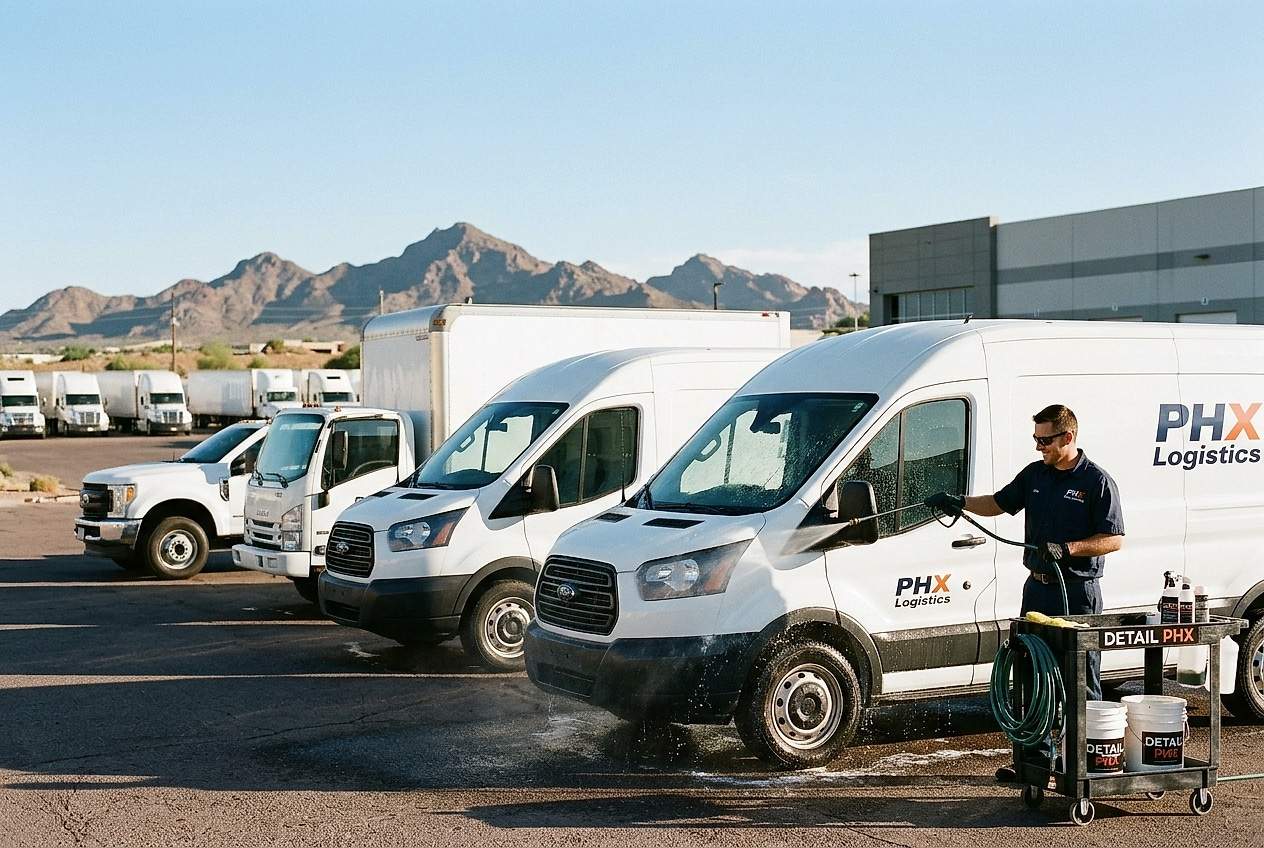
    Fleet vehicles are rolling billboards for your company. A clean, well-maintained fleet signals professionalism and reliability to clients, while neglected vehicles damage brand perception and employee morale. Mobile detailing services eliminate the operational burden of maintaining vehicle appearance while freeing time and resources your team needs for core business.

    The framework for thinking about fleet detailing

    Fleet maintenance decisions pivot on three dimensions: operational efficiency (scheduling and downtime), cost structure (per-vehicle pricing versus contracts), and business impact (brand perception and resale value). Understanding where your fleet sits on each axis determines which service model saves money and protects your brand.

    Operational efficiency: scheduling without losing productivity

    "Fleet vehicles need service, yet most companies cannot afford to lose half a day driving units across town, waiting in line, and coordinating pickups." [7] Mobile detailing solves this by coming to your location. Instead of routing vehicles to a distant facility, a service provider sequences work across your parking lot or yard during off-peak hours or overnight. For Mesa, Chandler, and Gilbert-based operations, this eliminates 2-4 hours of lost productivity per vehicle per detailing cycle.

    Batch scheduling amplifies efficiency gains. Providers can detail 5-10 vehicles in a single visit, clustering the service window. "Fleets sequenced across a working week" [1] keeps your vehicles in rotation rather than sidelined. A company running 15 work trucks might book two vehicles per day, Monday through Friday, completing the cycle in one week with minimal disruption.

    Cost structure: contract pricing versus one-off services

    Fleet detailing pricing follows two models. Per-vehicle packages run $150-$300 for exterior wash and interior vacuuming, scaling down per unit as volume increases. Monthly or quarterly contracts lock in lower per-vehicle rates, typically 20-35% cheaper than spot pricing, in exchange for predictable service windows. A fleet of 20 vehicles on quarterly contracts costs roughly $6,000-$9,000 annually, versus $9,000-$13,500 for ad-hoc scheduling.

    The contract model stabilizes budgets and guarantees service availability. Providers hold capacity slots for contracted fleets, ensuring your vehicles stay on schedule even during peak seasons. One-off services work for smaller fleets (3-7 vehicles) or seasonal needs, but predictable contracts suit ongoing maintenance for commercial operations.

    Business impact: brand perception and vehicle longevity

    A professionally detailed fleet increases perceived company value by an estimated 15-25% among prospective clients. Clean vehicles at job sites, trade shows, or client visits reinforce attention to detail. Interior detailing extends to high-touch surfaces, reducing dust and allergens that affect employee health during long days in vehicles.

    Regular detailing also protects resale value. Monthly or quarterly exterior care prevents oxidation, swirl marks, and clear-coat degradation in Phoenix's intense UV environment. Vehicles maintained with consistent detailing retain 8-12% higher resale value after 3-5 years compared to undetailed equivalents. For a fleet of 12 vehicles worth $25,000 each, this difference compounds to $24,000-$36,000 over a replacement cycle.

    Case in point: commercial fleet in greater Phoenix

    A HVAC contractor operating 18 service vans in the Tempe and Apache Junction area contracted for quarterly mobile detailing starting in Q2 2026. Instead of coordinating trips to an off-site facility, the provider detailed 2-3 vans per week during early morning or evening hours, reducing scheduling conflicts. Annual cost was $7,200 under contract (approximately $400 per vehicle per year). Within six months, the contractor reported 12% fewer client complaints about vehicle appearance and measurably improved job-site professionalism during in-home estimates. Vehicle resale value tracking showed the detailed fleet commanding $1,500-$2,000 premiums versus comparable undetailed models.

    Synthesis: what this means for Phoenix-area businesses

    For logistics and service firms. Fleets are customer-facing assets. Mobile detailing removes the operational friction of facility-based car washes, protecting productivity while maintaining brand standards. Contract pricing delivers predictable costs and guaranteed availability.

    For contractors and tradespeople. Your vehicles are worksite canvases. Clean interiors reduce dust tracking into client homes. Professional appearance at initial consultations builds trust and differentiates you from competitors who neglect fleet maintenance.

    For small and mid-sized companies. Quarterly detailing costs under $10,000 annually for most fleets under 25 vehicles. The ROI calculates into improved client perception, higher resale value, and reduced management overhead compared to coordinating facility-based washing.

    Who this is for

    Fleet vehicle detailing serves companies with 3 or more vehicles used in customer-facing or revenue-generating operations. HVAC contractors, plumbing firms, landscapers, logistics providers, and commercial services benefit most. Real estate brokers and sales teams with branded company vehicles also see strong ROI. Detailing makes sense when vehicle appearance directly influences client decisions or when your team spends significant time in vehicles. It is less cost-effective for companies with vehicles used exclusively for internal logistics or warehousing, where appearance carries minimal business impact.

    Fleet vehicle detailing vs. in-house washing vs. facility-based car washes

    Dimension Mobile Detailing In-House Washing Facility-Based Wash
    Labor time for 10-vehicle fleet 4-6 hours (provider only) 16-24 hours (employee time) 8-12 hours (coordination + transport)
    Equipment investment None (provider-owned) $2,000-$5,000 (hose, supplies, equipment) Included in facility fee
    Cost per vehicle per quarter $100-$120 (under contract) $40-$60 (labor only; hidden water/supply costs) $60-$100
    Finish quality Professional-grade equipment Residential-grade tools Depends on facility
    Scheduling control High (your site, your hours) Flexible (anytime) Low (facility hours, wait times)

    Mobile detailing wins on time efficiency and finish quality; in-house washing wins on marginal labor cost for very small fleets; facility-based services offer middle-ground convenience without equipment investment.

    Frequently asked questions

    How often should a fleet be detailed?
    Quarterly detailing (every three months) is the minimum for customer-facing vehicles in Arizona's dusty environment. Monthly detailing suits logistics or high-touch service fleets in direct client contact. Bi-annual detailing works for internal-use vehicles with lower visibility impact.

    What does "full detail" include versus basic wash?
    Basic exterior wash removes dust and dirt; pressure-washing wheels and undercarriage adds $15-$25 per vehicle. Full detail adds interior vacuuming, dashboard cleaning, window polishing, and fabric protection, typically doubling cost to $250-$300 per vehicle. Mobile providers like desertgatoraz.com offer tiered packages so you pay only for the detail level your fleet needs.

    Can mobile detailing providers handle fleet size of 25+ vehicles?
    Yes. Providers rotate across multiple days or weeks. A 25-vehicle quarterly contract might split into two 5-day cycles per quarter. Ask about scheduling flexibility and whether the provider manages inventory coordination or requires your team to stage vehicles.

    Does detailing void any warranties?
    No. Professional detailing uses products and methods that comply with automotive paint and interior warranties. Pressure-washing should stay 3-4 feet from door seals and electrical components. Confirm the provider follows OEM guidelines for your vehicle models.

    How much does detailing improve resale value?
    Well-maintained vehicles retain 8-12% higher resale value over 3-5 years. For commercial fleets, this compounds significantly. A 12-vehicle fleet with total resale value of $300,000 can gain $24,000-$36,000 through consistent quarterly detailing.

    What's the difference between mobile detailing and traditional car washes?
    Traditional car washes use automated brushes and high-pressure rinse cycles. Mobile detailing is hand-wash or hand-towel based, with touchless pressure-washing for delicate surfaces. Mobile services deliver higher finish quality and personalized attention, especially for maintaining logos, decals, or specialized finishes.

    Can detailing remove swirl marks and oxidation from Arizona sun damage?
    Yes, but severity matters. Light oxidation responds to polish and sealant; deep paint damage requires wet sanding or repainting. Mobile providers assess damage during consultation and recommend restorative detailing (more intensive, higher cost) versus maintenance detailing.

    What should I ask a potential detailing provider before contracting?
    Confirm vehicle capacity per visit, service window flexibility, contract terms, product safety for your fleet's materials, insurance coverage, and cancellation policies. Ask for references from similar-sized fleets in the Phoenix area.

    References

    [1] Patriot Auto Detailing. "Inside & Exterior Detail Phoenix AZ." https://patriotautodetailing.org/locations/phoenix-mobile-auto-detailing/full-detail/

    [2] Cams Car Clinic. "Fleet Detailing Phoenix." https://www.camscarclinic.com/fleet-detailing-phoenix

    [3] Clean Mobile Detail. "Clean AZ: Mobile Fleet Detailing for Businesses in Phoenix AZ." https://cleanmobiledetail.com/services/mobile-fleet-detailing/

    [4] Detail Pros AZ. "Fleet Detailing Services." https://www.detailprosaz.com/

    [5] South Mountain Auto Detail. "Mobile Fleet Wash for Phoenix Business Vehicles." https://www.southmountainautodetail.com/mobile-fleet-wash-for-phoenix-business-vehicles

  • Eco-Friendly Mobile Car Detailing: Is It Effective?

    Eco-Friendly Mobile Car Detailing: Is It Effective?

    Kaydan Porter, Owner, Desert Gator Mobile Detailing
    November 15th, 2026
    7 min read

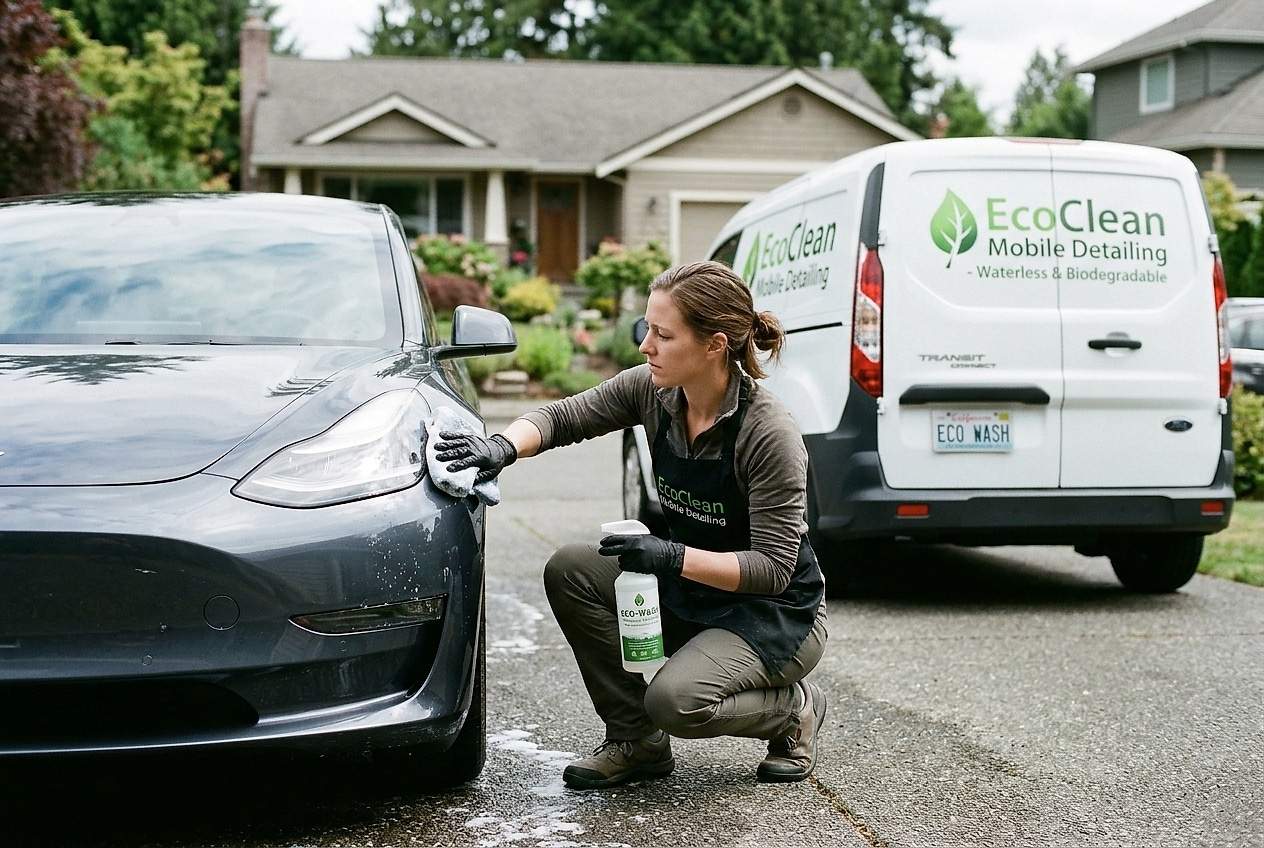
    Eco-friendly mobile car detailing is genuinely effective at cleaning vehicles while using 97% less water and eliminating chemical runoff compared to traditional stationary car washes. The key is understanding which methods deliver results and which are marketing theater.

    The framework for thinking about eco-friendly mobile detailing

    Evaluating eco-friendly mobile car detailing requires three distinct dimensions: water consumption and runoff prevention, chemical composition and toxicity, and operational efficiency relative to environmental cost. These three axes determine both cleaning effectiveness and true environmental benefit. A service might score high on water savings but fail on chemical safety, or vice versa. Understanding each separately prevents greenwashing.

    Water consumption and runoff prevention

    Eco-friendly mobile detailing uses less than two gallons of water per vehicle, while traditional car washing methods may use 60 to 90 gallons of water.[3] This isn't marginal improvement; it's a structural difference in how the work gets done. Mobile services typically use waterless or near-waterless techniques: spray-on pH-balanced cleaners, microfiber towels, and sealed vacuums rather than water jets.

    The runoff prevention matters as much as the volume. Traditional fixed-location car washes generate contaminated water—soap, wax residue, heavy metals from brake dust—that flows into storm drains and then into rivers and aquifers. Mobile detailing eliminates this pathway. "Mobile detailing eliminates the environmental impact of multiple vehicles traveling to and from a fixed location," according to Squeaky Pete's Detailing.[1] That's not just water savings; it's the prevention of point-source chemical pollution in the first place.

    In Arizona, where groundwater tables in Mesa and Chandler sit within 300 feet of the surface, water conservation carries regulatory weight. Mobile detailing services operating in the Phoenix metro area sidestep the wastewater treatment overhead that fixed facilities bear.

    Chemical composition and effectiveness

    Eco-friendly detailing products use biodegradable surfactants instead of petroleum-derived soaps, and plant-based degreasers instead of solvents. The question isn't whether they exist; it's whether they clean as well. The answer is yes, with a caveat: effectiveness depends on application technique and dwell time, not just product chemistry.

    Biodegradable surfactants break down in 28 days rather than persisting in soil and water. They cost 15-25% more per unit than conventional detergents but are applied in smaller volumes on mobile jobs, offsetting the per-unit premium. When a service reduces water by 85%, you're diluting less product anyway.

    The trade-off: eco-friendly products often require longer contact time. A ceramic coating applied with conventional polymer sealant sets in 2 hours; plant-based alternatives may need 4-6 hours before full hardness. For mobile services targeting same-day turnaround, this means scheduling discipline. For customers in Gilbert or Apache Junction willing to wait, results match or exceed conventional detailing within a week.

    Operational efficiency and carbon footprint

    Mobile detailing scores a decisive win on transportation carbon cost. One technician with equipment drives to 4-6 customer locations per day instead of 40-60 customers traveling to one facility. That's 80-90% fewer vehicle miles per vehicle detailed.

    However, this advantage erodes if the mobile service operates in a sprawling metro area with long gaps between appointments, or if inefficient routing means backtracking. Services using GPS routing and geofenced scheduling preserve the carbon advantage; those with ad-hoc booking lose it. "Mobile detailing eliminates the environmental impact of multiple vehicles traveling to and from a fixed location,"[1] but only if the service itself minimizes its own travel footprint through scheduling discipline.

    Case in point: Regional mobile detailing in Metro Phoenix

    A mobile detailing operation serving Mesa, Chandler, Tempe, and Apache Junction typically completes 4-5 detail jobs per day using approximately 8-10 gallons of water and eco-friendly cleaners. Operating in a concentrated metro cluster means route efficiency stays high. Over a year, that's roughly 1,800-2,000 vehicles detailed with minimal runoff and 90% less water than a fixed facility handling similar volume. The carbon cost of one technician driving 40 miles daily for scheduled routes (130 miles per week) is offset within the first month by eliminating customer travel to a central wash bay.

    Synthesis: what this means for you

    If you prioritize water conservation and prevention of chemical runoff, eco-friendly mobile detailing is the measurably superior choice. The savings are not theoretical: 2 gallons versus 60-90 gallons is a 97% reduction. For customers in water-stressed regions like Phoenix, this matters both environmentally and economically, as municipal water costs reflect scarcity.

    If you care about cleaning results, the outcome depends on your timeline and the service's product quality. Eco-friendly detailing works as well as conventional methods, but application takes longer in most cases. Choose a provider with certifications or customer reviews specific to the finish you want (matte ceramic, high-gloss wax, protective sealant).

    If you want the full environmental benefit, vet the service's routing and scheduling. A mobile detailer with 20-minute gaps between jobs defeats the transportation advantage. Services in concentrated service areas like desertgatoraz.com, which operates across Mesa, Chandler, Tempe, Gilbert, and Apache Junction, naturally optimize route efficiency better than those serving sprawling multi-county regions.

    The 80/20 breakdown

    80% of eco-friendly detailing's environmental benefit comes from water reduction (2 gallons versus 60-90) and runoff prevention. These are structural; they happen regardless of product brand or technique.

    The remaining 20% depends on chemical biodegradability and operational routing. Skip evaluating biodegradable product certifications unless you're comparing two services with identical water and runoff practices. Prioritize asking about scheduling efficiency and service radius instead.

    Skip waterless detailing claims unless the service explicitly covers wheels, undercarriage, and engine bay (most waterless methods don't). Focus instead on near-waterless techniques that use 2-3 gallons but achieve full coverage.

    Eco-friendly mobile detailing vs. traditional fixed-location washing vs. waterless hand detailing

    Factor Eco-Friendly Mobile Traditional Fixed-Location Waterless Hand Detailing
    Water per vehicle 2 gallons 60–90 gallons 0 gallons
    Runoff contamination None High (point-source) None
    Customer travel miles 0 5–15 per customer 0
    Technician travel efficiency High (4–6 stops/day) Not applicable Low (1–2 stops/day)
    Drying time 1–2 hours 30 min 2–4 hours
    Wheel/undercarriage coverage Full Full Limited
    Cost per vehicle $45–65 $35–55 $60–80

    Eco-friendly mobile detailing wins on environmental metrics and operational efficiency. Waterless methods eliminate water entirely but cost 20–50% more and struggle with heavy contamination.

    What this means for you

    If you live in the Phoenix metro area, eco-friendly mobile detailing is available and practical. Services can reach you in Mesa, Chandler, Tempe, Gilbert, or Apache Junction with 48-hour scheduling. Book a service that discloses water usage and product ingredients rather than relying on "eco-friendly" marketing copy alone. Ask how many stops they schedule per day; that tells you whether they've optimized for carbon efficiency or just called themselves green.

    If you have high-mileage vehicles or industrial contamination (brake dust, tar, salt residue), request a consultation before booking. Some eco-friendly products work faster on light contamination but need extra application time for heavy buildup. Set realistic timeline expectations rather than demanding same-day results with extended drying time.

    If you're comparing cost between eco-friendly mobile, traditional fixed-location, and waterless options, ignore price alone. Calculate the real cost: service price plus your travel time to a fixed facility. Mobile detailing eliminates your travel while reducing water by 97% and preventing chemical runoff. That trade-off favors eco-friendly mobile for most customers willing to wait 48-72 hours for full curing.


    References

    [1] Squeaky Pete's Detailing. "Eco-Friendly Mobile Car Detailing Practices." https://www.squeakypetes.com/eco-friendly-mobile-car-detailing-practices

    [3] Ecozone Mobile Detailing. "Eco-Friendly Detailing." https://ecozonemobiledetailing.com/

  • Preparing Your Car for Phoenix Summer Heat

    Preparing Your Car for Phoenix Summer Heat

    Kaydan Porter, Owner, Desert Gator Mobile Detailing
    November 14th, 2026
    5 min read

    You're stepping into your car in July with an interior temperature exceeding 180 degrees Fahrenheit. The steering wheel is too hot to grip, and your dashboard is cracking under the relentless sun. Phoenix's summer heat demands specific preparation strategies that differ fundamentally from seasonal maintenance in temperate climates.

    The framework for thinking about Phoenix summer car care

    Three interrelated systems determine whether your vehicle survives Phoenix heat intact: fluid integrity, exterior protection, and interior preservation. Fluid systems degrade faster under extreme temperatures. Exterior surfaces oxidize and fade without a protective barrier. Interior materials warp, crack, and fade when exposed to sustained heat above 140 degrees. Success requires addressing all three simultaneously rather than treating them as independent problems.

    Fluid systems and temperature stress

    Every fluid in your vehicle evaporates faster because of Phoenix's extreme temperatures.[3] Motor oil thickens and loses viscosity. Coolant concentration matters more than volume; "the mixture should contain 50 percent coolant and 50 percent water, so adjust it accordingly."[8] Transmission fluid, power steering fluid, and brake fluid all experience accelerated breakdown. Summer heat cuts a typical car battery's five-year lifespan to just three years.[1] Check all fluid levels before June and again in early July. Verify your cooling system can maintain a 50/50 coolant-to-water ratio. A weak battery becomes a stranded vehicle without warning when ambient temperatures exceed 110 degrees Fahrenheit.

    Exterior paint and protective coatings

    Paint oxidation accelerates in Phoenix's UV environment and heat. Clear coat fails first, leaving the base color exposed to further damage. A ceramic coating or professional wax creates a barrier that reflects heat and shields clear coat from UV degradation. Hand washing and drying every two weeks prevents mineral deposits from etching the surface. Professional exterior detailing removes contaminants that accelerate oxidation; services like those offered by desertgatoraz.com include exterior washing and protection treatments designed for desert climates. Without protection, new car paint can fade noticeably within six months of Phoenix summer exposure.

    Interior materials and heat management

    Dashboard and steering wheel surfaces reach temperatures that soften plastic and crack leather. Interior air temperature rises 40 to 50 degrees above ambient within 30 minutes on a sunny day. "Consider using sunshades on your windshield and rear window. These shades reflect sunlight and reduce the interior temperature."[4] Leather conditioning treatments prevent cracking and maintain suppleness. Fabric treatments protect upholstery from UV fading and heat damage. Professional interior detailing deep-cleans air vents, which accumulate dust and reduce cooling efficiency by 15 to 25 percent when clogged. Schedule interior conditioning in May before peak summer heat arrives.

    Tire pressure and rubber degradation

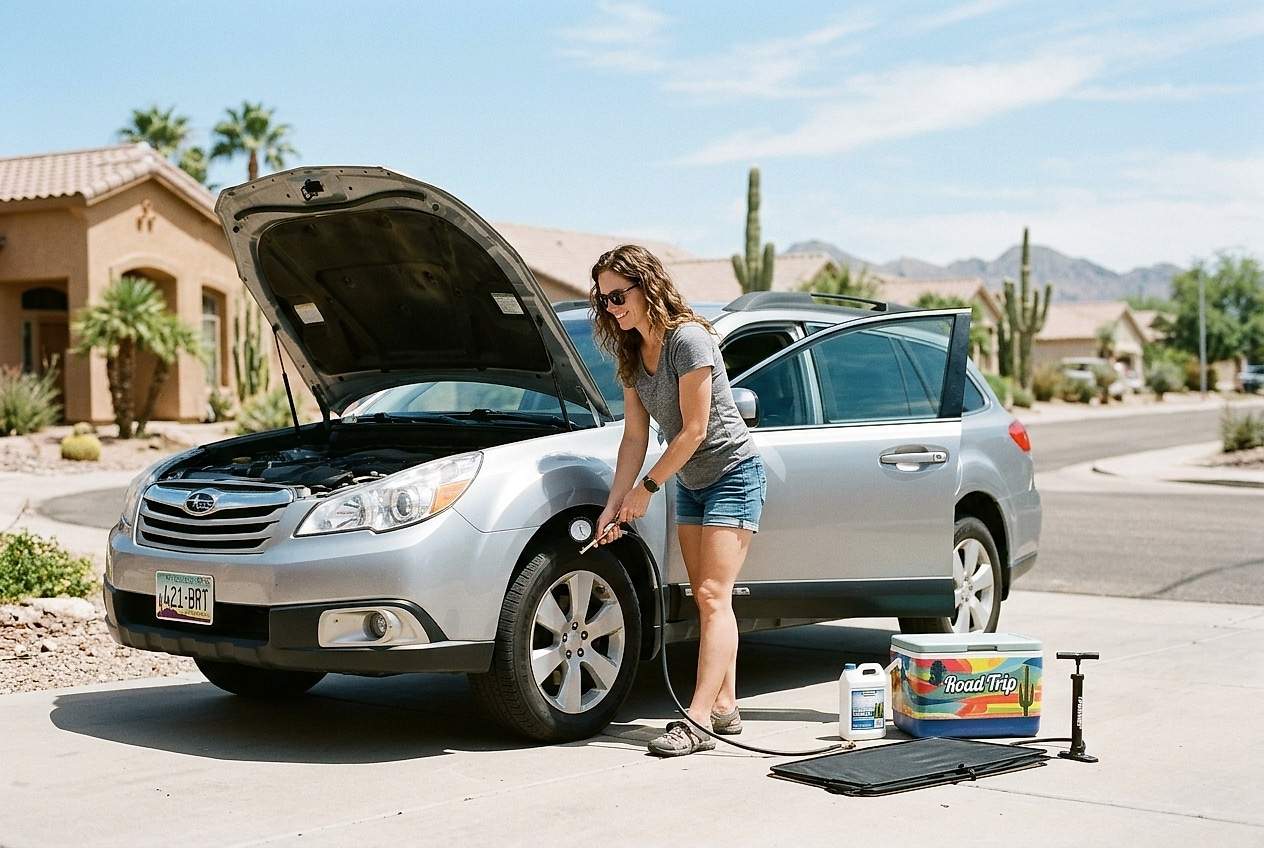
    Tire pressure increases approximately 1 PSI for every 10-degree rise in temperature. A tire underinflated by 5 PSI in spring heat reaches proper pressure in summer, then becomes overinflated and prone to blowouts as heat continues rising. Check tire pressure at sunrise before the asphalt reaches 140 degrees. Verify the recommended PSI on your driver's door jamb, not the maximum PSI printed on the tire sidewall. Rotating tires every 6,000 miles prevents uneven wear exacerbated by Phoenix heat. Cracked sidewalls and bulges signal replacement is urgent; heat accelerates sidewall failure.

    Preventive timing and professional preparation

    Professional detailing before summer begins costs 150 to 300 dollars and prevents damage costing thousands. A full exterior detail removes contamination, applies protective coating, and seals seams where heat can penetrate. Interior detailing conditions materials, deep-cleans air filtration, and removes dust buildup that reduces AC efficiency. Schedule this work in April or May, not June when heat is already extreme. Mobile detailing services that come to your location, available in Mesa, Chandler, Tempe, Apache Junction, and Gilbert, eliminate the need to sit in a hot waiting room.

    Common mistakes to avoid

    Relying on tint alone without interior conditioning. Window tint reduces interior heat gain by 30 to 40 percent but does not protect materials from remaining heat or UV penetration. Combine tint with sunshades and professional fabric conditioning.

    Neglecting battery load testing. A battery that tests fine in spring may fail without warning in summer. Request a load test during your pre-summer maintenance visit.

    Skipping coolant concentration checks. Adding only water to top off coolant dilutes the mixture below 50/50, reducing freeze protection and heat dissipation. Top off with the proper coolant-water ratio your vehicle requires.

    Postponing detailing until July. Professional detailing in extreme heat takes longer, costs more, and is less effective because products cure too quickly. Scheduling in May ensures optimal results.

    Washing your car in direct sunlight. Soap and water dry too fast, leaving streaks and mineral deposits that etch paint. Wash early morning or evening.

    What this means for you

    If you drive a daily commute in Phoenix, prioritize fluid checks and battery load testing in April, then schedule professional exterior detailing by May 1st. The 200 to 300 dollars invested prevents paint oxidation damage worth 1,500 to 3,000 dollars and ensures your air conditioning and cooling systems operate at peak efficiency during peak heat months.

    If you park primarily in a garage or shade structure, interior conditioning and sunshade installation remain essential to prevent cracking and fading. Even partial sun exposure during drives heats interior surfaces enough to damage materials without protective treatment.

    If your vehicle is over five years old, have the battery load tested and replaced preemptively rather than risk failure during peak summer. A failed battery in a 115-degree parking lot is not a repair you can postpone.

    References

    [1] Yahoo Autos. "Phoenix summer heat is horrible for cars. What to check before you hit the road." https://autos.yahoo.com/phoenix-summer-heat-horrible-cars-135335530.html

    [3] T-Bird Auto. "Preparing Your Car for the Extreme Summer Heat." https://www.tbirdauto.com/preparing-your-car-for-the-extreme-summer-heat/

    [4] Mobiluxe Detail. "Preparing Your Car for Phoenix Summers: Essential Detailing Tips." https://mobiluxedetail.com/blog/preparing-your-car-for-phoenix-summers–essential-detailing-tips

    [8] Scottsdale Muffler. "Top 5 Car Maintenance Tips Before the Phoenix Summer Hits." https://scottsdalemuffler.com/auto-maintenance/top-5-car-maintenance-tips-phoenix-summer-hits/