Category: Uncategorized

  • How to Maintain Your Car’s Detail Between Services

    How to Maintain Your Car’s Detail Between Services

    Kaydan Porter, Owner, Desert Gator Mobile Detailing
    November 29th, 2026
    5 min read

    Most professional details lose their visible gloss within weeks, but the drop-off is mostly preventable. Maintaining a detail is a matter of managing three variables: how often you wash, what you wash with, and how you protect the paint between appointments.

    The framework for thinking about detail maintenance

    Detail longevity depends on three dimensions: wash frequency, product selection, and protection durability. Each one affects how long the finish looks new. Wash frequency controls how quickly contaminants build up. Product selection controls whether you strip or preserve the protection already applied. Protection durability sets the window before the car needs another treatment. Working on all three together produces the best results.

    Wash frequency and technique

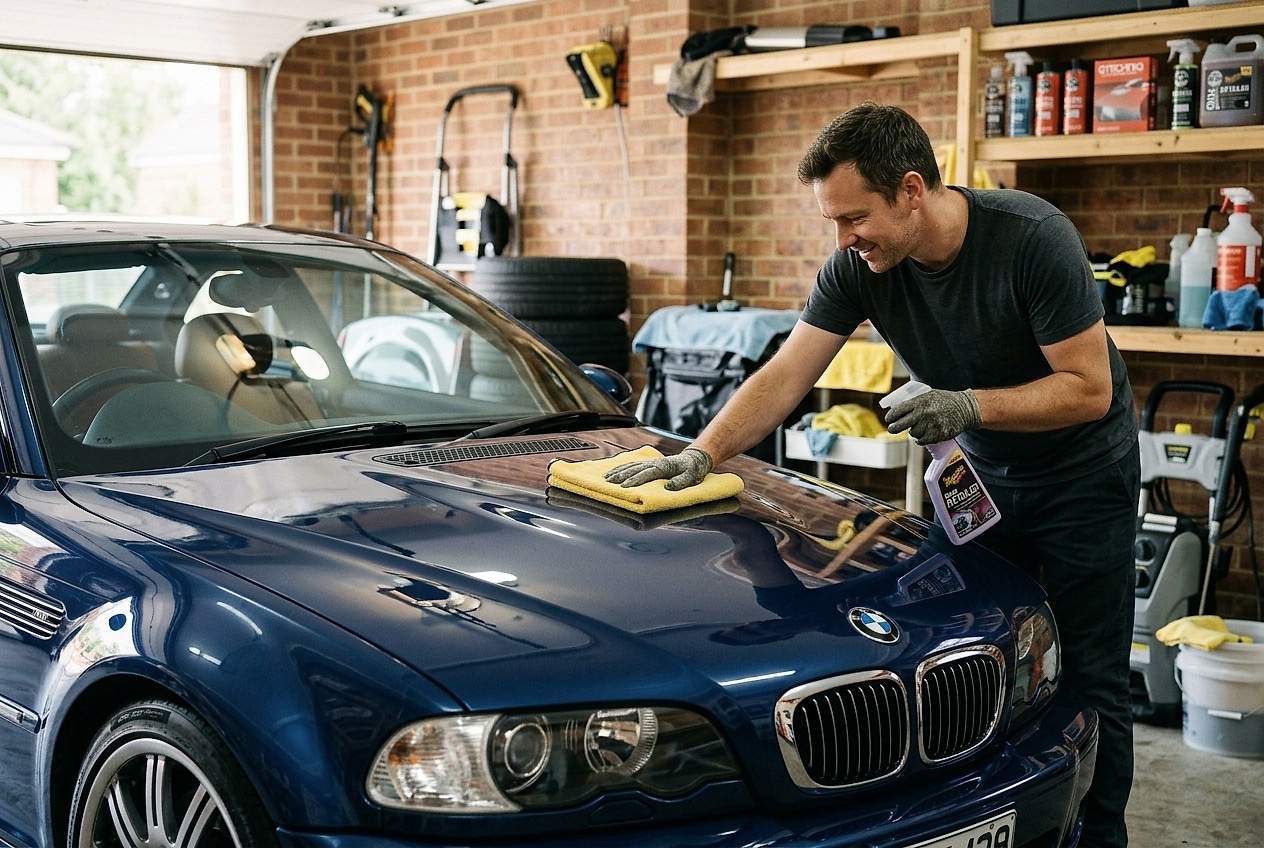
    Wash your car roughly every two weeks to keep it looking fresh. [2] Washing more often is not always better, because each wash introduces friction that can mar the paint if the technique is poor. Use the two-bucket method: one bucket with soapy water, one with clean rinse water, and a grit guard in each. Rinse the mitt after every panel. Dry with a clean microfiber towel instead of letting the car air dry, since air drying leaves mineral spots that etch into the clear coat.

    Product selection

    The wrong cleaner can undo a professional detail in a single wash. Avoid multi-purpose cleaners, dish soaps, and anything that claims to strip or remove old wax, since those will take the protection from your detail with them. [3] Use a pH-neutral car shampoo designed for paint. Reserve stronger cleaners such as iron removers and tar removers for targeted use only, and follow the product's dwell time. Keep wheel cleaner separate from body products, since wheel chemicals are often acidic or alkaline enough to damage a sealant.

    Protection durability

    Protection applied during a detail does not last indefinitely. A wax or paint sealant applied during a professional detail generally lasts a set period, so a topper product can extend it. Steve's Detailing & Hand Car Wash notes that "if we've applied wax or paint sealant during your detail, those products typically last 2-4 months under normal conditions." [5] Applying a spray sealant every few weeks between full details keeps the water-beading effect strong and makes each wash easier.

    Case in point: a mobile detailer's maintenance routine

    Consider a commuter in Chandler who parks outdoors and drives about 40 miles per day. Under Phoenix-area conditions, UV exposure and dust accelerate protection loss. A realistic routine would be a two-week maintenance wash, a spray sealant topper every four to six weeks, and a monthly interior vacuum and wipe-down. Desert Gator Az (desertgatoraz.com), a mobile detailing service serving Mesa, Chandler, Tempe, Apache Junction, and Gilbert, offers exterior washing, interior cleaning, and full detailing packages that can be scheduled to fit this kind of cycle. Booking a maintenance wash between full details keeps the protection layer intact.

    Synthesis: what this means for different drivers

    Daily commuters in the Phoenix metro should prioritize wash frequency and UV protection. Parking in a garage or shaded spot extends the life of any sealant, and a topper every month matters more than a deep clean every six months.

    Owners of vehicles that sit outdoors for long stretches should focus on protection durability. Stronger, longer-lasting sealants or ceramic coatings reduce how often you need to reapply, but they still need regular pH-neutral washing to perform.

    Drivers who want minimal effort should combine a mobile wash service with a home spray sealant. This pairing covers the labor-intensive work and keeps the finish maintained without a shop visit.

    Common mistakes to avoid

    • Washing in direct sun. Water and soap dry too fast and leave spots; wash in shade or early morning.
    • Using dish soap. It strips wax and sealant; use a pH-neutral car shampoo.
    • Drying with a bath towel. It causes micro-scratches; use a plush microfiber drying towel.
    • Skipping protection toppers. Without them, the detail fades within weeks; reapply a spray sealant every four to six weeks.
    • Using one mitt for the whole car. It drags grit across the paint; rinse the mitt after every panel or use two mitts.

    Quick answers

    How often should I wash my car between details? Wash about every two weeks to keep the finish fresh. [2]

    What cleaner should I avoid? Avoid multi-purpose cleaners, dish soap, and any product that claims to strip wax. [3]

    How long does a professional wax or sealant last? Under normal conditions, it typically lasts 2-4 months. [5]

    Can I dry my car with a regular towel? Use a clean microfiber towel, since terry cloth can scratch the paint.

    Does parking outdoors in Phoenix affect detail life? Yes. UV and dust shorten protection life, so topper products matter more.

    Should I use a spray sealant between details? Yes. A spray sealant every four to six weeks maintains water beading and ease of washing.

    Does desertgatoraz.com offer maintenance washes? Desert Gator Az offers mobile car washes, exterior and interior detailing, and full detailing packages in the Phoenix metro area.

    References

    [2] Mobiluxe Detail. "How to Maintain Your Car's Appearance Between Detailing Services." Mobiluxe Detail, 2026. https://mobiluxedetail.com/blog/how-to-maintain-your-car-s-appearance-between-detailing-services

    [3] Halo Detailing. "How to Maintain Car Between Details in Nashville." Halo Detailing, 2026. https://halodetailing.com/maintain-car-between-details/

    [5] Steve's Detailing & Hand Car Wash. "How to Maintain Your Car Between Detailing Appointments." Steve's Detailing & Hand Car Wash, 2026. https://www.stevesdetailing.net/maintain-car-detailing-appointments/
  • Luxury and Exotic Car Detailing Specialists

    Luxury and Exotic Car Detailing Specialists

    Kaydan Porter, Owner, Desert Gator Mobile Detailing
    November 28th, 2026
    5 min read

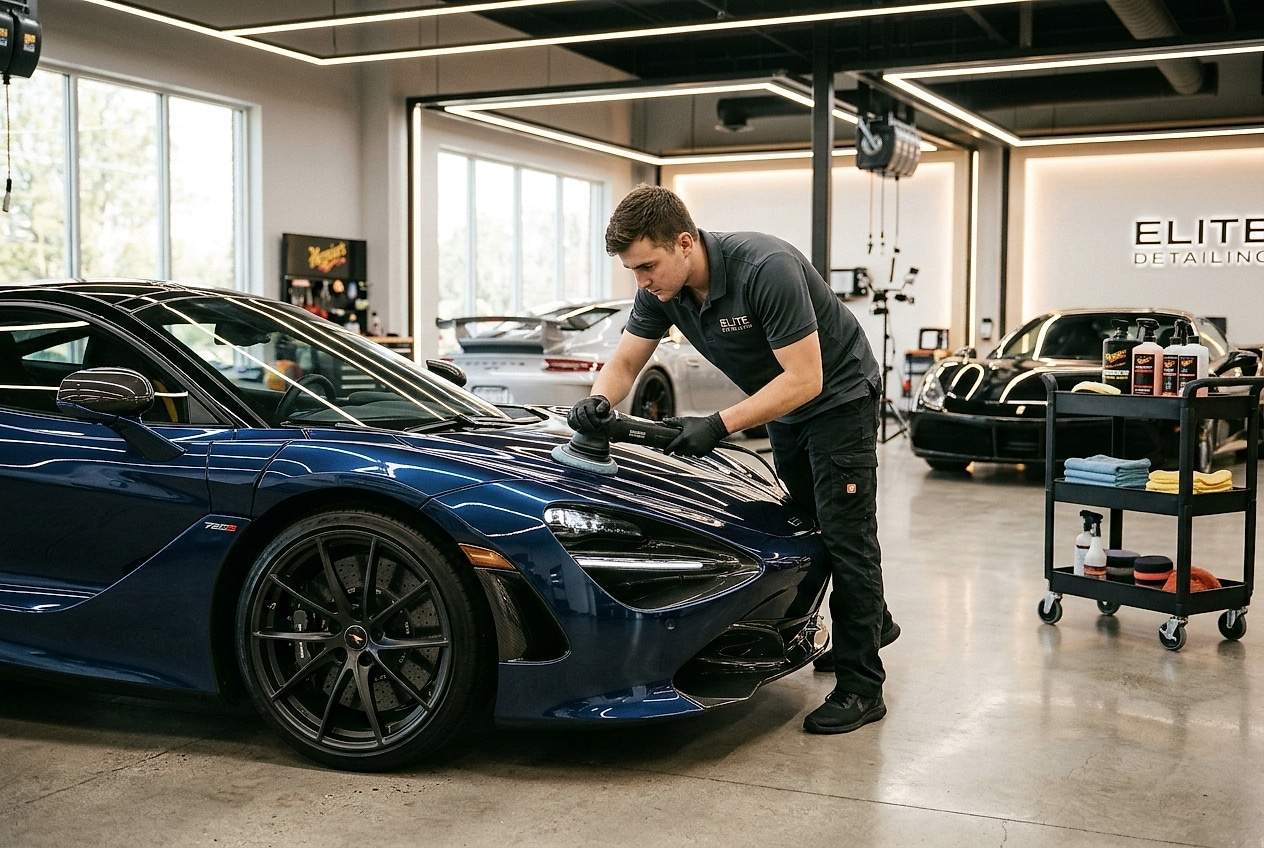
    A owner of a $300,000 supercar takes it to a general car wash on a Saturday morning. The next day, fine swirl marks show across the paint under direct sunlight, and the owner cannot remove them. The damage came from a process that worked well on a daily driver but was never designed for a vehicle with a delicate, high-gloss finish.

    The framework for thinking about luxury and exotic car detailing specialists

    Luxury and exotic car detailing specialists are professionals who service high-value vehicles using techniques, tools, and products matched to the materials on those cars. Three dimensions define the work: the paint system, the materials inside and outside the vehicle, and the products and process used to care for both. Each dimension changes how a specialist should work, and mistakes in one area often show up in another.

    Paint systems and why they change the process

    Exotic and luxury cars often use multi-stage paint systems with soft, thin clear coats. A soft clear coat marks easily, so a detailer must control pressure, pad choice, and polish aggressiveness. Specialists typically test a small area first and use the least aggressive method that corrects the defect. Paint correction is measured in layers removed from the surface, so over-correction permanently thins the finish. Owners of high-value vehicles should ask a provider how they test before they start machine work.

    Exotic materials and interior care

    Carbon fiber, Alcantara, open-pore wood, and semi-aniline leather each need a different cleaning method. Carbon fiber can be sealed to protect the weave, while Alcantara fibers can flatten or stain if scrubbed like fabric. Specialists separate these materials during cleaning and use pH-balanced, material-specific products. Exotic car detailing requires "specialized techniques, products, and tools designed for high-end finishes like soft clear coats, carbon fiber, and cust…," according to Electric Auto Films. [4]

    Premium products and expert-level service

    Premium products matter because they are formulated for specific surfaces, but they only deliver results when applied correctly. A ceramic coating, paint sealant, or wax each provides a different level of protection and durability. Specialists match the product to the paint system, the climate, and how often the car is driven. Merlin Auto Group states that its "detailing team brings more than 40 years of experience preserving the beauty and value of the rarest vehicles in the world." [2] Experience like this shortens the learning curve on rare and costly finishes.

    Case in point: a Phoenix-area owner

    Consider a Gilbert owner with a sports car parked outdoors in Phoenix-area sun for most of the year. Intense UV exposure and heat accelerate clear coat oxidation, so the paint fades faster than in milder climates. A specialist would inspect the paint under lighting, correct defects with conservative machine work, and apply a protective sealant or coating suited to high heat. The owner would then receive a maintenance schedule matched to the sun exposure rather than a generic wash cycle.

    Synthesis: what this means for high-end owners

    Owners of new or rare vehicles should treat detailing as a maintenance system, not a one-time service. Those with collector or investment-grade cars should prioritize a documented inspection before any correction work. Owners of daily-driven luxury cars in Mesa, Chandler, Tempe, Apache Junction, and Gilbert should focus on protection against sun, heat, and dust, since that environment dominates paint and interior wear.

    The 80/20 breakdown

    Most of the value comes from four actions: a careful wash method that avoids scratching, a paint inspection before any machine work, correct material-specific interior cleaning, and a durable protective layer. Prioritize these. Skip aggressive one-step polishing on cars you have not inspected, skip household or harsh chemical cleaners on sensitive trim and leather, and skip frequent heavy cutting compounds that thin the clear coat over time.

    What the data shows

    Patterns across the specialist sector point to a consistent set of factors that determine outcomes:

    1. Material-specific care prevents most irreversible damage, because soft clear coats and delicate interiors respond poorly to generic methods.
    2. Pre-service inspection identifies whether paint correction is safe before any abrasion occurs.
    3. Experience with rare vehicles reduces the risk of errors on expensive finishes, as shown by firms such as Merlin Auto Group that cite more than 40 years of work. [2]
    4. Climate-matched protection, particularly against UV and heat in Arizona conditions, extends the life of clear coats and interiors.
    5. Documented maintenance schedules help owners track paint and interior condition over time.

    What this means for you

    If you own a high-value or exotic vehicle, start with an inspection before any paint work. Ask the provider how they test pad and polish combinations, and confirm they use material-specific products for carbon fiber, leather, and Alcantara.

    If you run a daily-driven luxury car in the Phoenix metro area, prioritize sun and heat protection, and schedule regular maintenance washes using a safe method. Mobile service can bring this care to your driveway in Mesa, Chandler, Tempe, Apache Junction, or Gilbert. desertgatoraz.com offers mobile car wash, exterior detailing, interior detailing, full vehicle detailing, hand car wash, and wheel and tire cleaning, so you can match the service to your vehicle's needs.

    If you are protecting a collector or investment-grade car, treat each service as part of a documented care plan. Keep records of every inspection, correction, and protective application to preserve value over the long term.

    References

    [2] Merlin Auto Group. "Professional Detailing Services for Ultra Luxury Cars in Atlanta." Merlin Auto Group, 2026. https://www.merlinautogroup.com/premium-automotive-detail-services/

    [4] Electric Auto Films. "Exotic and Luxury Car Detailing & Custom Protection." Electric Auto Films, 2026. https://www.electricautofilms.com/luxury-car-detailing

  • Engine Bay Detailing: Is It Worth the Cost?

    Engine Bay Detailing: Is It Worth the Cost?

    Kaydan Porter, Owner, Desert Gator Mobile Detailing
    November 27th, 2026
    7 min read

    A clean engine bay can cost you more than a dirty one. Grime holds heat, hides leaks, and speeds up wear, so the cosmetic job often has a mechanical payoff.

    The framework for thinking about engine bay detailing

    Engine bay detailing is best judged on three dimensions: cleaning method and safety, mechanical and diagnostic benefit, and financial return. Each dimension answers a different buyer question. Method determines whether the job is done safely. Benefit determines whether it protects the vehicle. Return determines whether the cost is justified. Weighing all three in the context of your climate, especially a hot desert climate, gives a clear answer.

    Cleaning methods and safety protocols

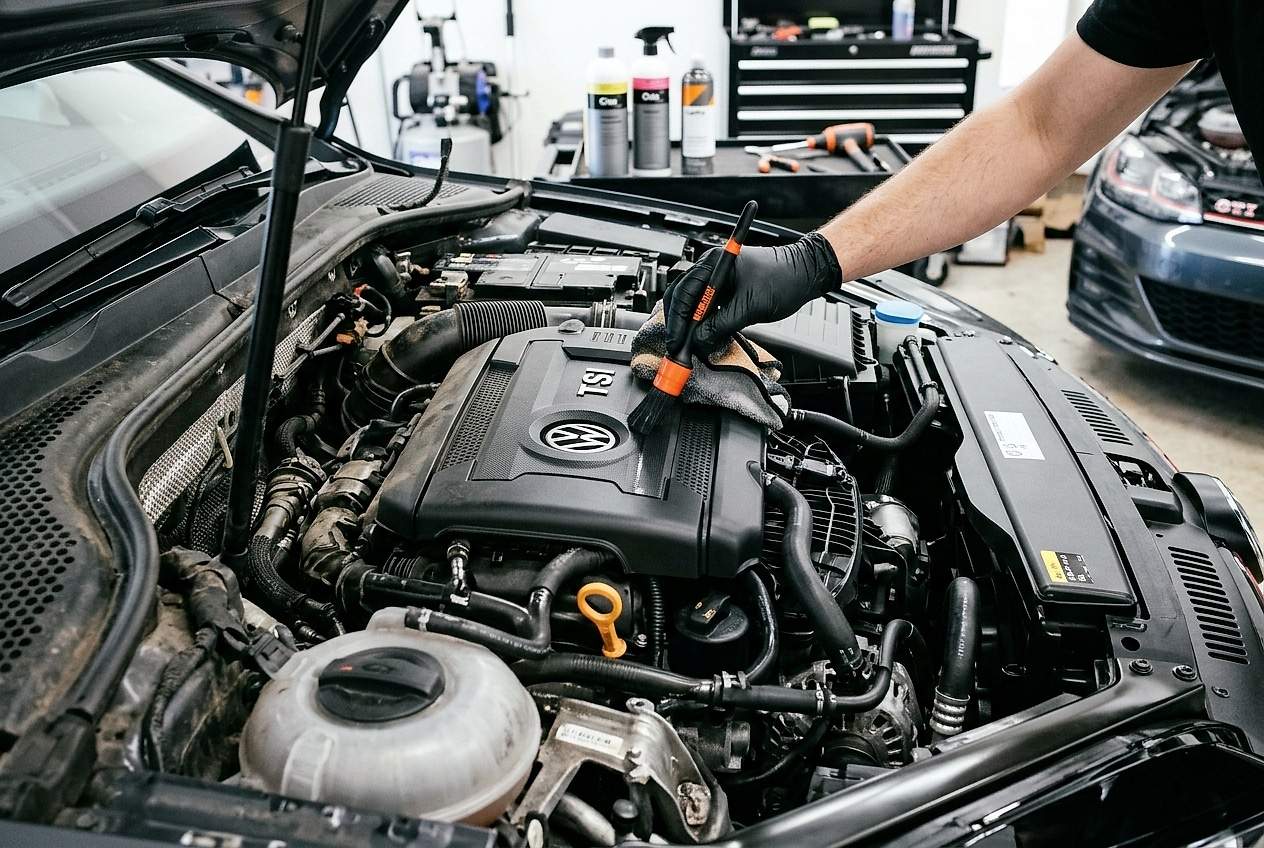
    Professional engine bay cleaning uses low-pressure rinsing, degreasers matched to the surface, and protected electrical components. The goal is to remove oil and road grime without forcing water into sensitive areas. Technicians typically cover the alternator, air intake, and electrical connectors before cleaning. High-pressure washing near connectors and sensors is the most common cause of damage, which is why method matters as much as the product. A reputable provider will explain its masking and rinsing steps before starting.

    Pricing varies widely. A professional engine bay detail typically costs $50 to $400, with a common average around $ as reported by The Mobile Buff. As of Q4 2026, that range reflects differences in vehicle size, engine complexity, and dressing products. [7]

    Mechanical benefits: leak detection and heat management

    A clean engine makes it significantly easier to spot new oil leaks. On a dirty engine, fresh oil blends into old grime, so small leaks go unnoticed until they become expensive. [6] Cleaning also removes the insulating layer of dust and oily film that traps heat around hoses, belts, and plastic covers. Cooler components age more slowly, and hoses that stay pliable are less likely to crack.

    Missed leaks carry real cost. One provider estimates that missing a problem until the engine overheats costs $2,000 to $4,000 or more. [3]

    Corrosion and resale value in desert conditions

    Phoenix-area vehicles face intense sun, high ambient heat, and dust that carries salts and minerals. These conditions accelerate the drying and cracking of rubber and plastic, and they can corrode aluminum and metal surfaces when moisture and grime sit together. Protectant dressings and periodic cleaning slow this process. Preventing corrosion and cracking is the main reason to schedule engine bay work on a regular cycle rather than once.

    Appearance also affects resale. A clean engine bay can add $500 to $2,000 to a vehicle's resale value, according to Dennis Auto Details. [8] Buyers and inspectors read a clean engine as evidence of maintenance.

    Case in point: a Mesa commuter fleet

    Consider a small Mesa delivery business running eight vans, each logging about 1,000 miles per month in summer heat. Before scheduled detailing, the owner found oil residue around two valve covers only after a gasket failure. With periodic engine bay cleaning and protectant application, technicians spot early seepage during each visit, and the owner schedules gasket work at a planned downtime rather than during a breakdown. The cost of the detail is small compared with a single emergency tow and repair.

    Synthesis: what this means for different owners

    If you drive a newer vehicle in a moderate climate, a single professional detail per year is usually enough to keep leaks visible and surfaces protected. If you own an older vehicle, park outdoors in Chandler, Gilbert, or Apache Junction, or plan to sell, a two-visit schedule (spring and fall) makes more sense. Fleet owners should treat engine bay work as preventive inspection, scheduled alongside oil changes.

    Desert Gator AZ (desertgatoraz.com) offers mobile detailing across the Phoenix metro area, including Mesa, Chandler, Tempe, Gilbert, and Apache Junction. Its service list includes exterior and interior detailing, wheel and tire cleaning, and full vehicle packages. Customers who want engine bay work should confirm scope and pricing directly with the company, since engine bay cleaning is not listed as a standalone service on the sources provided here.

    Who this is for

    Engine bay detailing fits owners who want early leak detection, longer component life, or stronger resale. It fits vehicles parked outdoors in high heat, and it suits fleets where downtime is expensive. It is a poor fit for owners of very new vehicles under warranty who only want a cosmetic shine, or for anyone expecting a detail to repair an existing leak. A detail reveals problems. It does not fix them.

    Engine bay detailing vs. DIY cleaning vs. dealership service

    Feature Professional engine bay detail DIY cleaning Dealership service
    Typical cost range $50 to $400 [7] Low (supplies only) Varies by dealer
    Electrical masking Standard practice Depends on owner skill Usually included in service visit
    Leak detection focus Yes, during cleaning Limited Only if requested
    Protectant dressing Typically included Owner's choice Rarely offered
    Resale impact documented Up to $500 to $2,000 [8] Not documented Not documented
    Convenience Mobile options available Requires time and space Requires appointment

    Professional detailing costs more than DIY but adds leak inspection, electrical protection, and documented resale benefit. For most owners, the extra cost is recovered by catching one problem early.

    Frequently asked questions

    Is engine bay detailing worth the cost?
    For most vehicles, yes, when it is done on a regular schedule. A professional detail typically costs $50 to $400, while a missed leak or overheating event can cost $2,000 to $4,000 or more. [3] The main value is early leak detection and component protection, not appearance alone.

    How much does engine bay detailing cost?
    A professional engine bay detail typically costs $50 to $400, with a common average around $. [7] Price depends on engine complexity, vehicle size, and whether protectant dressing is included.

    Does cleaning the engine bay help spot oil leaks?
    Yes. Fresh oil blends into old grime on a dirty engine, which hides leaks. A clean engine makes new leaks significantly easier to see. [6] Regular cleaning turns the engine bay into a simple visual check.

    Can engine bay cleaning damage electrical components?
    It can if done carelessly. High-pressure water near connectors, sensors, and the alternator is the most common cause of damage. Professionals mask sensitive parts and use low-pressure rinsing to prevent this. Ask any provider how it protects electrical components before the job begins.

    Does engine bay detailing increase resale value?
    It can. A clean engine bay can add $500 to $2,000 to a vehicle's resale value, according to Dennis Auto Details. [8] Buyers read a clean engine as a sign of maintenance.

    How often should you detail an engine bay in Arizona?
    Vehicles parked outdoors in the Phoenix metro area benefit from two visits per year, typically in spring and fall. Heat and dust accelerate drying and corrosion, so a single annual detail may not be enough for older or heavily used cars.

    Does desertgatoraz.com offer engine bay detailing?
    Desert Gator AZ provides mobile detailing in Mesa, Chandler, Tempe, Gilbert, and Apache Junction, including exterior and interior detailing and full vehicle packages. Engine bay cleaning is not listed as a standalone service in the information available here, so confirm current scope directly with the company.

    References

    [3] Dennis Auto Details. "Engine Bay Detailing Cost in San Diego: What You'll Pay and What You Get." Dennis Auto Details, 2026. https://dennisautodetails.com/blog/engine-bay-detailing/engine-bay-cleaning-benefits/

    [6] Detailing Scout. "Engine Bay Detailing Near Me." Detailing Scout, 2026. https://detailingscout.com/engine-bay-detailing-near-me/

    [7] The Mobile Buff. "Engine Bay Detailing Cost in 2026: What to Expect." The Mobile Buff, 2026. https://www.themobilebuff.com/blog/engine-bay-detailing-cost

    [8] Dennis Auto Details. "Why a Clean Engine Bay Matters for Resale (Especially in San Diego's Market)." Dennis Auto Details, 2026. https://dennisautodetails.com/blog/engine-bay-detailing/engine-bay-resale-value-san-diego/

  • Headlight and Taillight Restoration Services

    Headlight and Taillight Restoration Services

    Kaydan Porter, Owner, Desert Gator Mobile Detailing
    November 26th, 2026
    5 min read

    The clearest headlights on the road are often the ones that cost the least to fix, yet cloudy lenses remain one of the most ignored safety problems on the road. Restoration removes the damaged outer layer and brings light output back, usually for a fraction of replacement cost.

    The framework for thinking about headlight and taillight restoration

    Headlight restoration rests on three dimensions: the cause of the haze, the method used to remove it, and the protection applied afterward. Cause determines whether restoration will last. Method determines how much clarity returns. Protection determines how long the result holds. Each dimension affects the others, so a shop that polishes well but skips sealing will deliver a short-lived result.

    Why headlights yellow

    Modern headlight lenses are made from polycarbonate, a tough plastic that resists impact but degrades under ultraviolet (UV) light. Manufacturers apply a UV-resistant hard coat to slow that breakdown. Over time, sun, heat, road debris, and chemical cleaners wear through that coat. The exposed polycarbonate oxidizes, turning yellow and then cloudy. Restoration professionals treat the haze as surface damage, not a fault in the lamp itself.

    Safety implications of cloudy lenses

    Cloudy lenses scatter light instead of projecting it forward, which shortens the usable beam and reduces the distance a driver can see at night. The effect is greatest in wet weather, when haze and water droplets compound the scattering. Performance Automotive Collision describes the problem directly: "Over time, headlights can become cloudy and hazy, reducing their effectiveness." [3] Dim, yellowed lenses also make a vehicle harder for other drivers to judge at distance.

    Professional restoration techniques

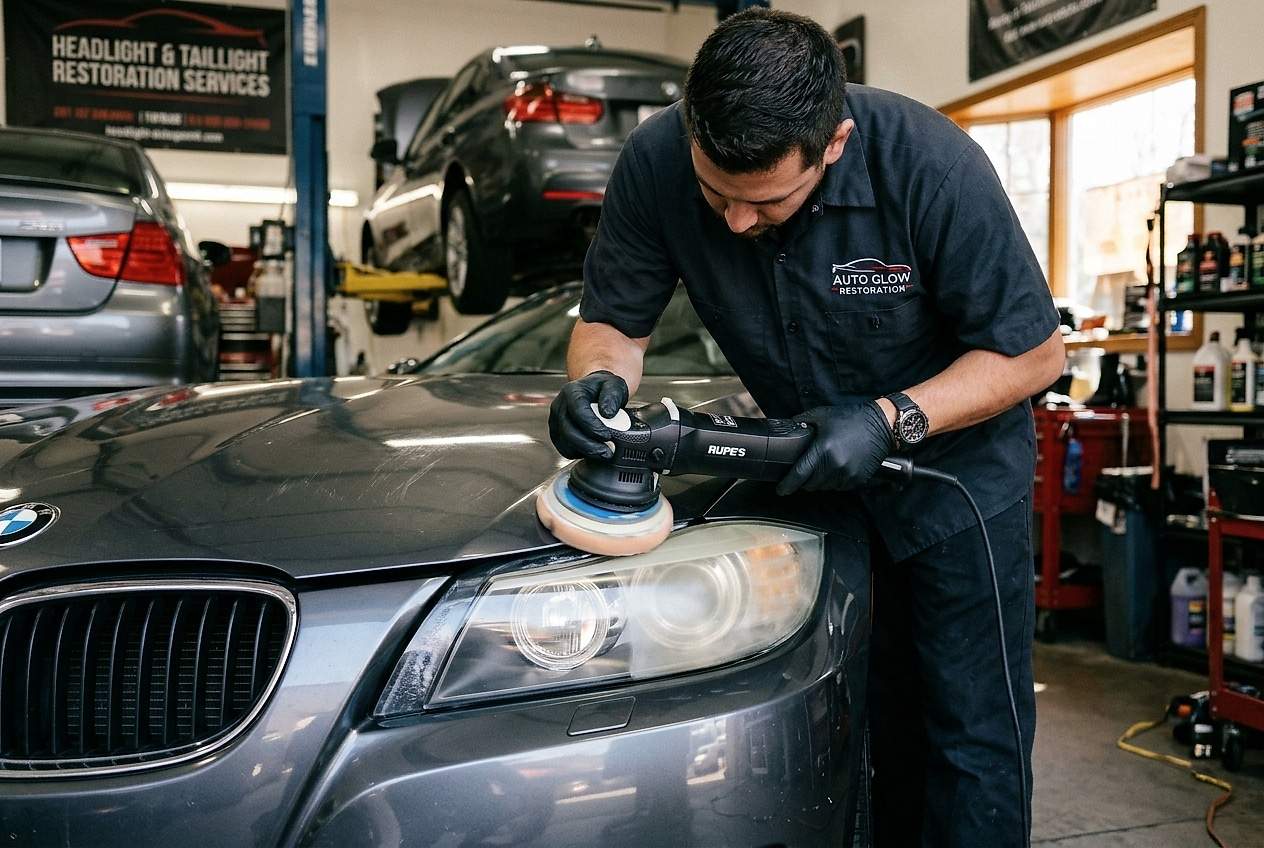
    Professional restoration works in stages. Technicians first wash and mask the surrounding paint. They then sand the lens with progressively finer abrasive grits, typically wet sanding, to remove the oxidized layer. Next comes a polishing compound that restores optical clarity. Finally, the technician applies a UV-resistant clear coat. Kits sold to professionals, such as those from DetailKing, package the abrasives, compounds, and sealants used in this sequence. [1]

    Coating and longevity

    The protective coat determines how long the restoration lasts. Polishing alone removes haze but leaves bare polycarbonate exposed to UV light, so the lens can yellow again within months. A sealed lens with a fresh UV coat resists that cycle far longer. Longevity therefore depends less on the polish than on whether the final sealing step was done correctly.

    Case in point: a Phoenix-area mobile service

    Mobile detailers in the Phoenix metro area face intense UV exposure, which accelerates lens yellowing on vehicles parked outdoors. Desertgatoraz.com, a mobile auto detailing service serving Mesa, Chandler, Tempe, Apache Junction, and Gilbert, offers exterior detailing that can address headlight haze as part of a broader exterior service. Owners in these cities who park outside all day benefit most from sealing the lenses after restoration.

    Synthesis: what this means for vehicle owners and detailers

    Vehicle owners should treat headlight haze as a safety item, not a cosmetic one. Detailers should treat restoration as a multi-stage process and never skip the UV sealant. Fleet managers with many outdoor-parked vehicles should schedule restoration with recurring resealing. Pricing reflects this effort: Glasweld notes that "Most headlight repair pros charge around $100-200 per pair of headlights." [2]

    What most people get wrong

    Most people assume a quick polish fixes a yellowed headlight permanently. Polishing removes the visible haze but not the underlying UV damage to the polycarbonate. Without a UV-resistant clear coat, the lens begins to yellow again, often within months in sun-heavy climates. A lasting result requires the sealing step.

    Common mistakes to avoid

    • Polishing without sealing. The haze returns quickly. Always apply a UV-resistant clear coat after polishing.
    • Using abrasive household cleaners. These scratch the lens. Use purpose-made restoration compounds.
    • Skipping masking. Abrasives can damage paint. Mask the surrounding bodywork before sanding.
    • Ignoring taillights. Taillights yellow the same way. Restore them alongside the headlights for a uniform appearance.
    • Choosing the cheapest option without checking the coat. Ask whether a UV sealant is included before booking.

    What this means for you

    If your headlights look yellow or hazy, restore them promptly to recover beam output and improve night visibility. Ask any provider whether the service includes a UV sealant, since that step determines how long the result lasts.

    If you run a detailing business, build restoration into your exterior packages with a clear sealing step and a stated expected lifespan. Compare your pricing against the market range before setting rates.

    If you manage a fleet or park vehicles outdoors in the Phoenix area, schedule restoration with periodic resealing. The sun-heavy climate makes recurring protection the most cost-effective approach.

    References

    [1] DetailKing. "Professional Headlight Restoration Kits & Cleaning Supplies." DetailKing, 2026. https://www.detailking.com/collections/headlight-restoration

    [2] Glasweld. "Professional Headlight Restoration Kits, Tools, & Training." Glasweld, 2026. https://glasweld.com/headlight-restoration/

    [3] Performance Automotive Collision. "Headlight & Taillight Repair." Performance Automotive Collision, 2026. https://performanceautomotivecollision.com/headlight-taillight-repair/

  • Upholstery and Carpet Cleaning for Vehicles

    Upholstery and Carpet Cleaning for Vehicles

    Kaydan Porter, Owner, Desert Gator Mobile Detailing
    November 25th, 2026
    6 min read

    Professional vehicle upholstery and carpet cleaning removes embedded dirt, odor, and stains by lifting soil out of fibers with pressurized water and cleaning solution, then extracting it with suction. Surface vacuuming alone leaves that soil behind, where it grinds into fibers and attracts more dirt over time.

    The framework for thinking about vehicle fabric care

    Vehicle fabric care rests on three dimensions: the surface material, the contamination type, and the removal method. Each dimension changes what works. A carpet that holds road grit needs different handling than a cloth seat stained with food, and both require different chemistry and moisture control than a fabric seat exposed to sun and heat.

    Professional extraction methods

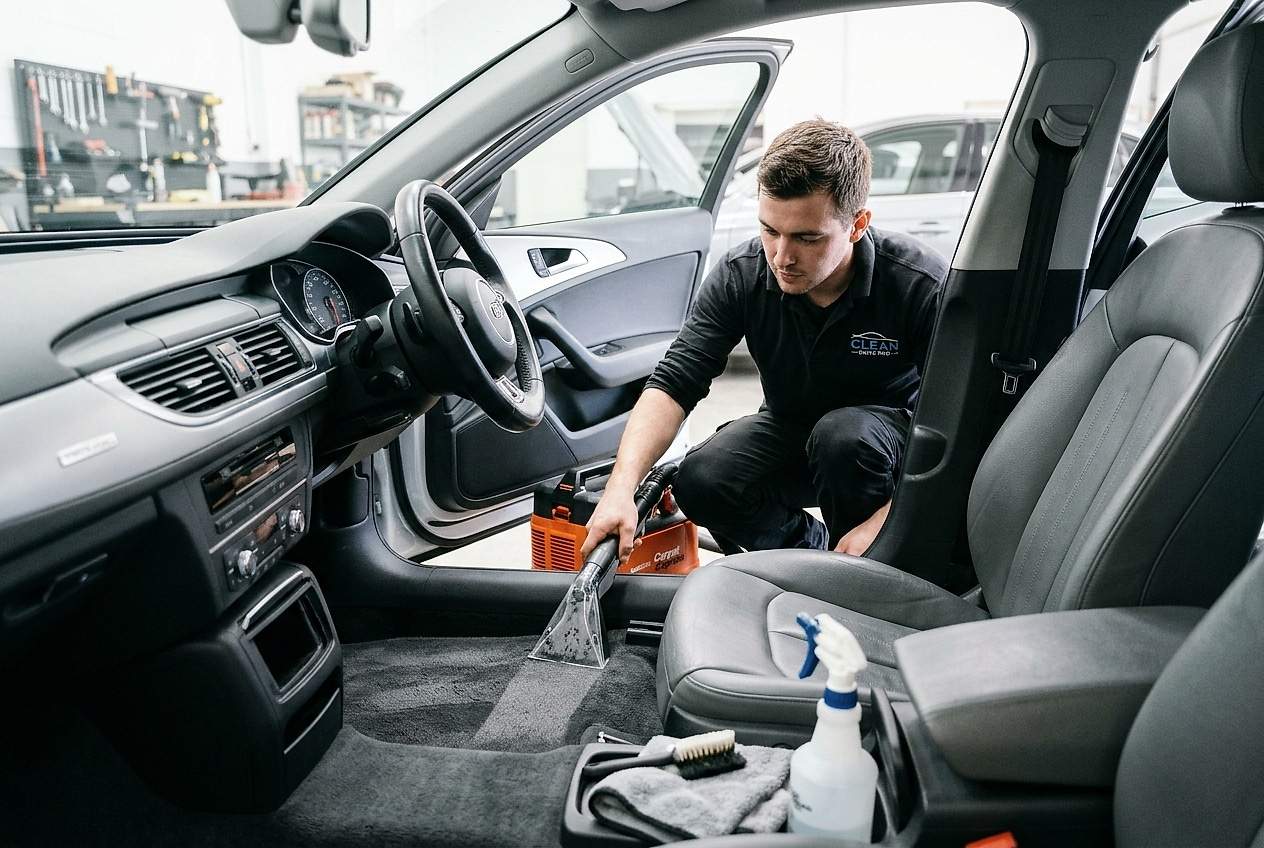
    Hot water extraction is the most common professional method for vehicle carpets. It injects heated water and cleaning solution into the fabric, then pulls the mixture back out with a vacuum. "Hot water extraction" is the standard term for this process, and it is the method most detailers use for deep cleaning. [2]

    Extraction depends on controlled moisture. Over-wetting is the most frequent mistake, because trapped water in floor padding can lead to mold and mildew. [5] Detailers should use the minimum water needed, then run extraction passes until the fabric feels nearly dry.

    Pre-vacuuming matters as much as the extraction itself. A thorough vacuum before any wet cleaning removes loose grit that would otherwise turn to abrasive mud. [3] Use the right attachment for each surface, as Consumer Reports advises: "Vacuum the carpet and cloth upholstery using the right attachment for the job." [6]

    Stain removal processes

    Stain removal follows a sequence: identify the stain, pre-treat, agitate gently, then extract. Blot rather than scrub, because scrubbing pushes stain deeper into fibers and frays cloth. Test any cleaner on a hidden area first, since some solutions discolor dyed upholstery.

    Organic stains such as food, coffee, and bodily fluids need enzyme or oxygen-based cleaners. Oil and grease stains respond better to solvent-based pre-treaters. Once the stain lifts, rinse the area with clean water and extract again to prevent residue from attracting new soil.

    Carpet versus cloth seat care

    Carpet and cloth seats share a fiber structure but differ in backing, padding, and exposure. Carpet sits on a foam or felt underlay that holds water for long periods. Cloth seats have foam cushions beneath a stretched fabric cover, which dries faster but can absorb liquid into the core.

    Carpet tolerates a heavier extraction pass and more agitation. Cloth seats need lower moisture, gentler brushing, and careful attention to seams and stitching. Using carpet methods on cloth seats risks soaking the foam, which causes odor and long-term structural damage.

    Fabric protection treatments

    Fabric protectants create a barrier that helps liquids bead and wipe away before they soak in. Apply protection only after the fabric is fully dry and clean, because treatments sealed over dirt trap soil in place. Reapply after each deep cleaning to maintain the barrier.

    Case in point: a mobile detailing job in Mesa

    A mobile detailer in Mesa receives a family SUV with a spilled sports drink across the rear carpet and a pet odor in the cloth seats. The crew vacuums both areas first, pre-treats the sugar stain with an enzyme cleaner, and runs hot water extraction on the carpet. The seats get a lighter pass with reduced moisture to protect the foam. Drying takes most of a day, so the job is scheduled with that in mind. Desertgatoraz.com handles this type of interior work in Mesa, Chandler, Tempe, Gilbert, and Apache Junction as part of its mobile interior cleaning service.

    Synthesis: what this means for vehicle owners

    Owners with light dust and crumbs can handle routine vacuuming and a spot treatment at home. Owners with pet hair, odor, or set-in stains need professional extraction, because surface cleaning cannot reach the soil in the padding.

    Fleet managers should schedule deep cleaning on a fixed interval, since repeated soil loading shortens fabric life. Detailers should document each job's moisture level and drying time to avoid repeat callbacks from mold or odor complaints.

    The 80/20 breakdown

    Most results come from three actions: thorough pre-vacuuming, controlled extraction with minimal water, and a proper stain sequence. Prioritize these. Skip heavy chemical stacking, aggressive scrubbing, and extra product layers, which add cost and residue without improving results.

    Who this is for

    Mobile detailing suits owners in the Phoenix metro who want interior cleaning without dropping off a vehicle. It fits busy households, rideshare drivers, and small fleets. It is a poor fit for owners who need a deep clean on a vehicle that must be driven within hours, since full drying can take most of a day.

    Frequently asked questions

    What is hot water extraction for car carpets?
    Hot water extraction is a professional method that sprays heated water and cleaning solution into carpet fibers, then pulls the mixture out with suction. It removes embedded dirt and odor that vacuuming cannot reach. Detailers use it as the standard deep-cleaning process for vehicle carpets. [2]

    Can I use the same method on car carpet and cloth seats?
    No. Carpet tolerates heavier moisture and agitation, while cloth seats need lower water use because the foam cushion can absorb liquid. Using carpet methods on cloth seats risks odor and foam damage.

    How much water should be used when cleaning car upholstery?
    Use the minimum water needed. Excess moisture trapped in padding can cause mold and mildew. Run extraction passes until the fabric is nearly dry. [5]

    Should I vacuum before professional car carpet cleaning?
    Yes. A thorough vacuum removes loose grit before any wet cleaning. Otherwise that grit mixes with water into abrasive mud that can scratch fibers. [3]

    How do I remove a food or drink stain from car upholstery?
    Blot the stain rather than scrubbing it. Pre-treat organic stains with an enzyme-based cleaner, then rinse and extract. Test any cleaner on a hidden spot first to check for discoloration.

    Does fabric protection replace regular cleaning?
    No. Fabric protectant only helps liquids bead and wipe away. Apply it after the fabric is clean and dry, and reapply after each deep cleaning.

    How long does professional car upholstery cleaning take to dry?
    Drying time depends on moisture used and airflow, and it can take most of a day. Schedule the job so the vehicle is not needed until the fabric is fully dry.

    References

    [2] Wikipedia contributors. "Carpet cleaning." Wikipedia, 2026. https://en.wikipedia.org/wiki/Carpet_cleaning

    [3] Maintenance Sales News. "4 Proven Best Practices For Auto Carpet Detailers." Maintenance Sales News, 2026. https://maintenancesalesnews.com/4-proven-best-practices-for-auto-carpet-detailers/

    [5] Right Car Detailing. "Auto Carpet Cleaning Best Practices: Complete Guide for Auto Carpets." Right Car Detailing, 2026. https://rightcardetailing.com/auto-carpet-cleaning-best-practices/

    [6] Consumer Reports. "How to Clean Your Car's Interior." Consumer Reports, 2026. https://www.consumerreports.org/cars/car-maintenance/how-to-clean-your-cars-interior-a8146415264/

  • Paint Correction and Polishing Explained

    Paint Correction and Polishing Explained

    Kaydan Porter, Owner, Desert Gator Mobile Detailing
    November 24th, 2026
    5 min read

    A car owner in Gilbert notices faint spider-web marks across the driver's door every time the sun hits it at noon. They buy a bottle of polish from an auto parts store, rub it in by hand on a Saturday, and see only a slight shine with the marks still visible underneath. The defects were never in the wax. They were in the clear coat.

    The framework for thinking about paint correction

    Paint correction is best understood through three dimensions: the defect being removed, the depth of material you can safely take off, and the tools and sequence used to do it. The defect determines the goal. The clear coat's remaining thickness sets the limit. The tools and process determine whether you reach the goal without causing new damage. Every decision in a correction job traces back to one of these three.

    Defects and what they require

    Paint correction is the process of mechanically removing surface defects from a vehicle's paint, which typically include swirl marks, scratches and micro-marring. [5] Most of these defects sit in the clear coat, the transparent top layer that protects the colored base.

    Scratch depth decides the approach. A scratch that has gone completely through the clear coat and into the colored paint underneath cannot be fixed by polishing, because the material is already gone. [4] Shallow marks in the clear coat respond well to controlled abrasion.

    Stages, compounds, and machines

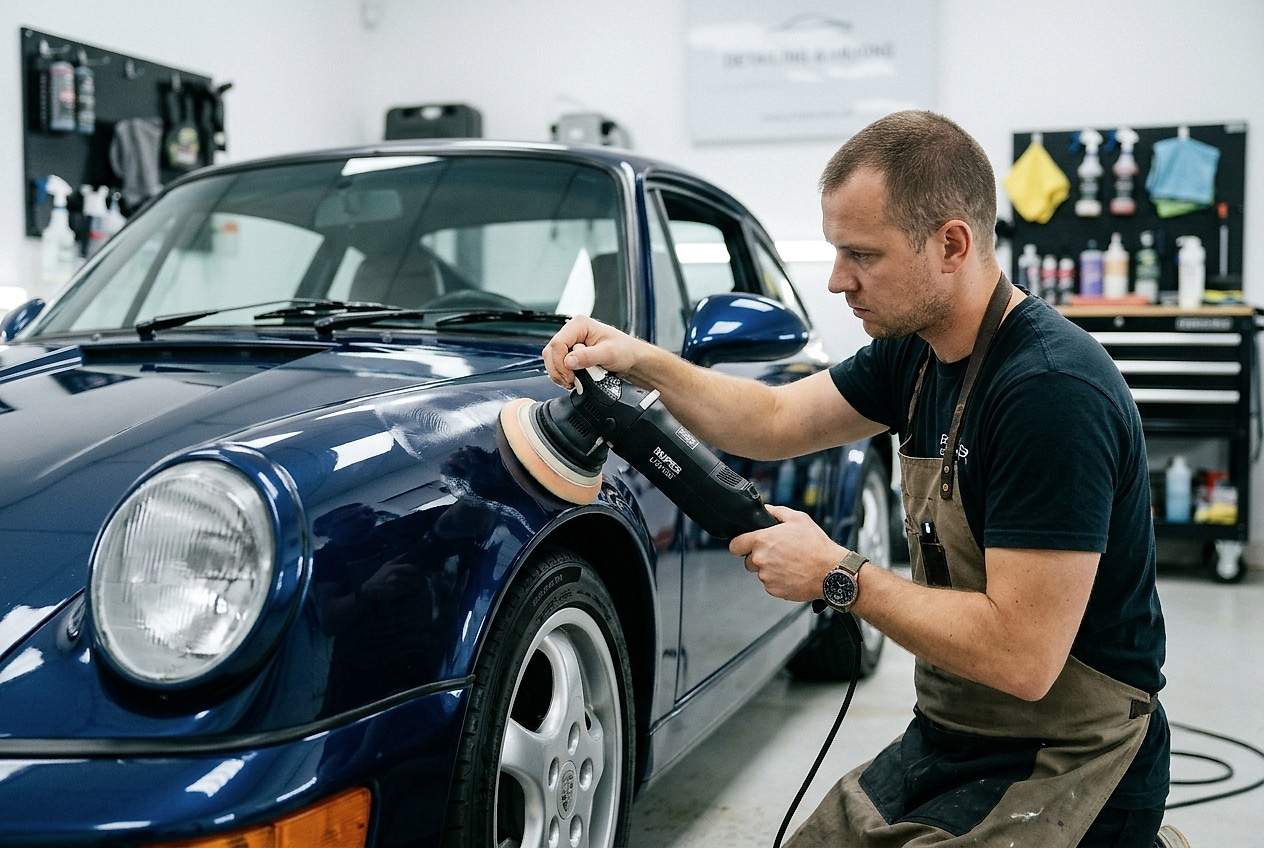
    Correction is performed in stages, each using a more or less aggressive combination of compound, pad, and machine. A single-stage correction uses one cutting step, typically with a compound and a pad, to address light to moderate defects. [2] Multi-stage work adds a cutting step to remove heavier defects, followed by a finishing step that refines the surface and restores gloss.

    Compounds contain abrasives that level the clear coat. Polishes contain finer abrasives for refinement. Pads pair with each product: firmer pads cut harder, softer foam pads finish cleaner. The rotary or dual-action (DA) polisher drives the pad, and operator technique controls heat, pressure, and speed. Mismatching any of these components is the most common cause of hazing or holograms in the finish.

    Professional methodology versus amateur efforts

    The clearest difference between professional and amateur work is measurement and sequencing, not the brand of product. Professionals inspect under controlled lighting, identify defect depth, test a small area, and choose the least aggressive combination that achieves the result. They work panel by panel and check progress between steps.

    Amateur efforts usually skip the inspection and start with the most aggressive product on the shelf. That approach removes more clear coat than necessary, shortens the finish's service life, and can leave haze that needs another correction to undo. Hand-applied polish also lacks the consistent speed and pressure a machine provides, so visible defects often remain.

    What results to expect

    Correction reduces defects. It does not restore a finish to factory perfection in every case. Deep scratches that reach the base coat require touch-up paint or panel refinishing. Heavy oxidation may need multiple passes, and the clear coat's remaining thickness limits how much can be removed safely.

    Results are best judged in the light the car lives in. For owners in Mesa, Chandler, Tempe, Apache Junction, and Gilbert, sustained sun exposure makes oxidation and UV-driven fading common, so a correction paired with protection gives longer-lasting gloss. Mobile detailing services, such as desertgatoraz.com, can perform exterior detailing at the vehicle's location, which suits owners who cannot leave their cars for a full day.

    Frequently asked questions

    What is paint correction?
    Paint correction is the mechanical removal of surface defects such as swirl marks, scratches, and micro-marring from a vehicle's paint. [5] It works by carefully leveling the clear coat with abrasive compounds and polishing pads. Correction improves clarity and gloss, but it cannot remove defects that have cut through the clear coat into the base paint.

    What is the difference between paint correction and polishing?
    Polishing refines the surface and adds gloss, while paint correction removes defects by leveling the clear coat. [8] Polishing alone can improve shine on a healthy finish. Correction is needed when marks and swirls remain after a basic polish.

    What is the difference between single-stage and two-stage paint correction?
    Single-stage correction uses one cutting step, typically a compound and pad, for light to moderate defects. [2] Two-stage correction adds a finishing polish after the cutting step to refine clarity. Heavier defects usually require the two-stage approach.

    Can paint correction remove deep scratches?
    No, paint correction cannot remove a scratch that has gone through the clear coat into the colored paint. [4] Those marks need touch-up paint or panel refinishing. Polishing removes shallow clear coat scratches only.

    Does paint correction damage the car's paint?
    Paint correction removes a thin layer of clear coat, so it is not risk-free. Experienced operators measure defect depth, test small areas, and use the least aggressive method that works. Overcorrection by inexperienced users can thin the clear coat permanently.

    How long does paint correction last?
    Correction itself is permanent for the material removed, but new swirls and oxidation build up from washing and sun exposure. Applying a protective layer after correction extends the result. Regular, gentle washing slows new marring.

    Do I need paint correction before applying a ceramic coating?
    Yes, correction is normally performed before a ceramic coating, because the coating locks in whatever surface condition exists underneath. [2] Coating over swirls preserves them. Correcting first gives the coating a smooth, clean base.

    References

    [2] Ceramic Pro. "What Does Paint Correction Do?" Ceramic Pro Protection, 2026. https://ceramicpro.com/what-does-paint-correction-do/

    [4] Green Tree Auto Styling. "Paint Correction Explained: Everything You Need to Know." Green Tree Auto Styling, 2026. https://www.greentreeautostyling.com/post/paint-correction-explained

    [5] Permagard. "Paint Correction in South Florida." Permagard, 2026. https://permagard.com/the-truth-about-paint-correction-what-you-need-to-know/

    [8] Firehouse Auto Spa. "Paint Correction vs Polishing: Understanding Key Differences." Firehouse Auto Spa, 2026. https://www.firehouseautospajax.com/paint-correction-vs-polishing-understanding-the-key-differences-for-professional-vehicle-care

  • Car Detailing for Resale: Maximize Your Vehicle’s Value

    Car Detailing for Resale: Maximize Your Vehicle’s Value

    Kaydan Porter, Owner, Desert Gator Mobile Detailing
    November 23rd, 2026
    6 min read

    Does detailing a car before selling it actually raise the price? Yes. Professional detailing can lift a used vehicle's sale price by 10% to 20% over the same car in poor condition, and in some cases it returns several times its cost.

    The framework for thinking about detailing for resale

    Detailing affects resale value along three dimensions: perceived condition, documented care, and negotiation leverage. Perceived condition is what a buyer sees in the first two minutes. Documented care is the evidence that the car was maintained. Negotiation leverage is how much room a clean car gives you to hold your asking price. Each dimension changes the final number differently, so the framework helps you decide where detailing spend will pay off.

    Perceived condition: the first two minutes

    Perceived condition is the buyer's first judgment, formed before any test drive. Pristine quality vehicles command 10% to 20% more in value than the same car in poor condition. [2] Buyers read paint gloss, interior odor, and wheel cleanliness as signals of how the rest of the car was treated.

    Professionally detailed cars often bring in 10 to 15% more than those in average condition. [4] That gap is largest on vehicles where the cosmetic difference is visible at a glance, such as sedans and crossovers listed with photos.

    The engine bay is an underused lever. One industry insider noted that having the engine bay professionally cleaned "increases the buyer's perception of the value" of the vehicle. [7] A clean engine bay signals that the owner did not hide leaks or neglect routine service.

    Documented care: turning cleanliness into evidence

    Documented care converts appearance into trust. A buyer cannot verify maintenance history from a clean dashboard, but a detailed receipt and a clean car together make the seller's account more credible.

    Detailing also protects value over time. A car that is regularly detailed keeps its paint and interior from deteriorating, which keeps the condition gap from widening. [5] The effect compounds: a vehicle kept clean for years needs less correction work before listing.

    Professional detailing can increase resale value by up to 15%, which translates to thousands of dollars in added worth. [1] Treat the receipts as part of the sale package, not an afterthought.

    Negotiation leverage: where the margin is protected

    Negotiation leverage determines how much of the detailing premium survives the haggling. Buyers anchor on visible flaws. A car with stained carpets or oxidized paint invites a deduction that often exceeds the cost of fixing it.

    Full exterior and interior detailing combined with engine bay cleaning typically costs $150 to $250 but adds $800 to $1,200 to selling prices. [6] That ratio explains why detailing ranks among the few pre-sale steps with a clear return.

    Case in point: a $150 detail on a mid-size sedan

    Consider a 2019 mid-size sedan listed in Mesa at $18,000. The car has faded paint, a stained rear bench, and a dusty engine bay. A buyer who sees these flaws will likely open negotiations $800 to $1,200 lower.

    With a full interior and exterior detail plus engine bay cleaning, the same car presents as near-new in photos and in person. At a cost of roughly $150 to $250, the seller protects most of the asking price. The detail pays for itself several times over on the sale.

    Synthesis: what this means for Phoenix-area sellers

    Sellers with newer, higher-value vehicles gain the most from full detailing, because the price premium scales with the car's value. A 10% premium on a $30,000 vehicle is $3,000, far above the detail cost.

    Sellers of older or lower-value cars should focus on the high-visibility items: exterior wash, wheels, interior vacuuming, and odor removal. These deliver most of the perception gain at a lower cost.

    Phoenix-area sellers in Tempe, Chandler, Gilbert, and Apache Junction face strong summer heat, which fades paint and cracks dashboards. Regular protection matters more here than in milder climates, and a mobile service can detail the car at the seller's home or office.

    Mobile detailing vs. full-service shop vs. DIY

    Feature Mobile detailing (desertgatoraz.com) Full-service detail shop DIY detailing
    Location Comes to your home or workplace Customer drives to shop At your own location
    Service range Mobile car wash, exterior, interior, full detail, hand wash, wheel and tire cleaning Varies by shop; often includes paint correction Limited by owner's tools and skill
    Time commitment No travel time Drop-off and pickup Several hours of your time
    Coverage area Phoenix metro area Local to the shop Anywhere
    Consistency of result Professional standard Professional standard Depends on experience
    Cost Varies by package Varies by package Supplies only
    Best fit Sellers wanting a full detail without travel Sellers needing deep correction Budget-minded sellers with time

    Mobile detailing from desertgatoraz.com suits sellers who want a professional full detail without driving the car anywhere. DIY works for light cleaning, but buyers respond most to professional-grade results.

    What this means for you

    If your vehicle is newer or worth more than $20,000, a full professional detail before listing is likely the highest-return step you can take. The premium of 10% to 15% typically exceeds the cost of service several times over. [4]

    If your vehicle is older or lower in value, prioritize exterior wash, wheels, interior cleaning, and odor removal. These items deliver most of the perception gain for a modest outlay. Keep receipts so buyers can see the care behind the car.

    If you are preparing a trade-in, a clean car reduces the dealer's deduction for cosmetic work. Schedule the detail a few days before the appraisal, and bring the cleaned car rather than assuming the trade-in appraiser will overlook visible wear.

    References

    [1] Parle Mag. "How Regular Car Detailing Increases Your Resale Value." Parle Mag, 2026. https://parlemag.com/2026/05/how-regular-car-detailing-increases-your-resale-value/

    [2] CarJourney. "How to Detail a Car for Maximum Profit." CarJourney, 2026. https://carjourney.io/blog/detail-car-maximum-profit-how-to-detail-car-for-maximum-profit

    [4] The Automotive Enthusiast. "Why a Clean Car Boosts Value: Detailing's Real Impact." The Automotive Enthusiast, 2026. https://www.theautomotiveenthusiast.com/blog/why-a-clean-car-is-worth-more/

    [5] Details by Mike. "How Auto Detailing Protects Your Vehicle's Resale Value." Details by Mike, 2026. https://detailsbymike.com/how-does-auto-detailing-help-protect-a-vehicles-resale-value/

    [6] C & C Powerwashing, Detail & Polishing Inc. "Auto Detailing for Dealerships: How Professional Detailing Increases Resale Value." C & C Powerwashing, 2026. https://ccpowerwashing.com/auto-detailing-for-dealerships-how-professional-detailing-increases-resale-value/

    [7] Gleamworks Ceramic. "Does Detailing Your Car Increase Used Car Value? Expert Insights." Gleamworks Ceramic, 2026. https://gleamworksceramic.ca/does-detailing-your-car-increase-used-car-value/

  • Tire and Wheel Detailing: Professional vs DIY

    Tire and Wheel Detailing: Professional vs DIY

    Kaydan Porter, Owner, Desert Gator Mobile Detailing
    November 22nd, 2026
    6 min read

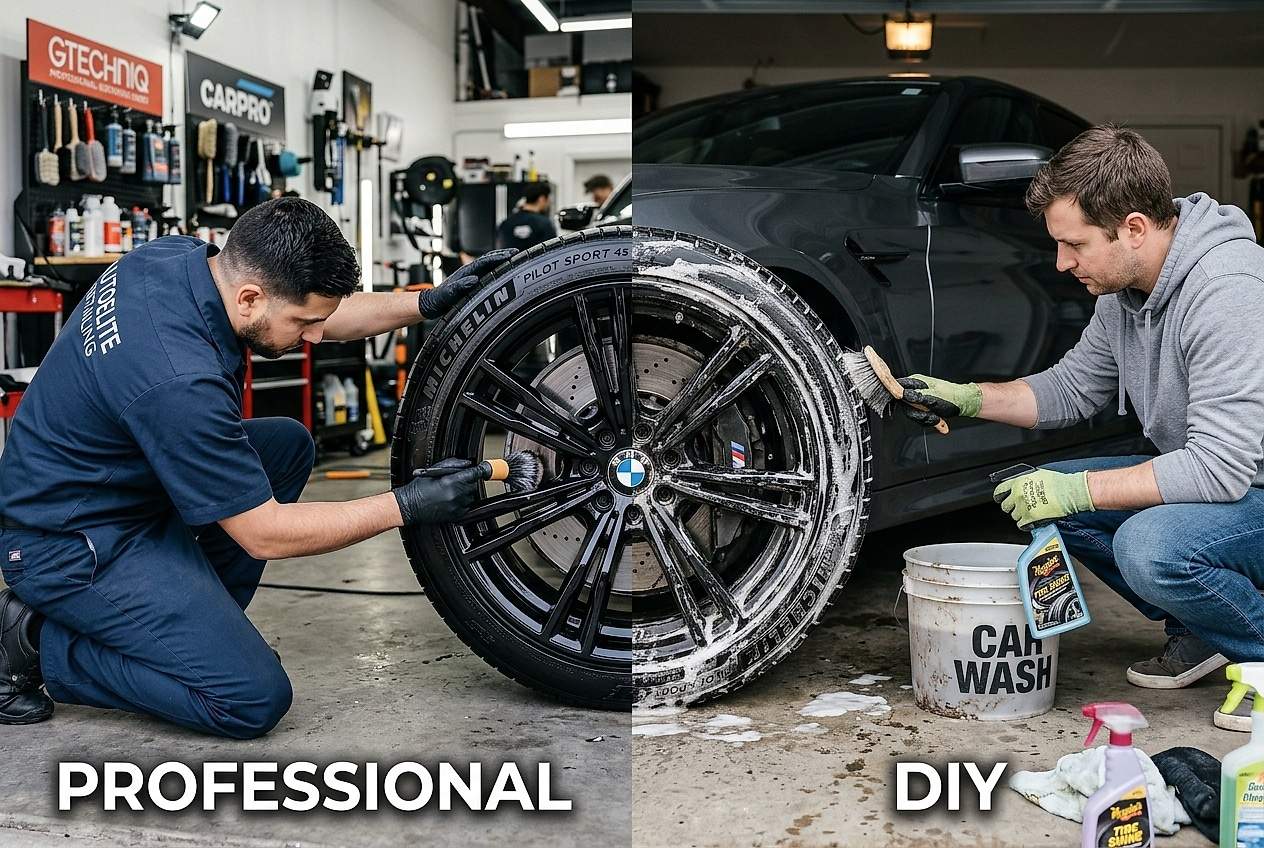
    Brake dust is the single most common reason wheels look dirty within days of a wash, and it bonds to wheel surfaces more aggressively than road grime. Choosing between professional and do-it-yourself care determines how often that buildup returns and how much damage accumulates over time.

    The framework for thinking about tire and wheel detailing

    Evaluate tire and wheel detailing across three dimensions: cleaning chemistry, equipment and technique, and long-term protection. Each dimension shapes the result. Cleaning chemistry determines whether brake dust and road film come off without harming the wheel finish. Equipment and technique determine whether the cleaning reaches the barrel, the spokes, and the inner lip. Long-term protection determines how long the results last between visits.

    Cleaning chemistry: brake dust, tire shine, and safety

    Brake dust is iron-rich debris from brake pads, and it is a main reason wheels discolor. Acidic iron removers are formulated to dissolve it, but they carry risk. Alloy wheels, clear coats, and painted finishes all react differently to strong chemicals. Professional detailers select pH-balanced products matched to each wheel finish. DIY users often reach for a general-purpose cleaner, which can etch or dull a finish if left on too long.

    Tire shine products fall into two groups. Water-based dressings give a satin look and wash off easily. Solvent-based dressings produce a wet, high-gloss look but can sling onto paint and wheels during driving. Professionals usually apply a measured, thin layer and remove overspray. Confirm the label supports the tire's rubber type before applying.

    "DIY detailers rarely do this due to time and equipment limits," according to Quick Tyre Fix, a UK mobile tyre service. [1] That gap shows most clearly in the wheel barrel and inner lip, areas that a quick home wash rarely reaches.

    Wheel coatings and longevity

    Wheel coatings create a sacrificial layer that brake dust and road salt struggle to bond to. A professionally applied ceramic coating requires a fully decontaminated surface, and surface prep is where DIY results most often fall short. Coating adhesion depends on removing iron fallout, polish residue, and old dressings first.

    Longevity follows from preparation. Professional wheel care typically includes decontamination, a sealant or coating, and a schedule for maintenance washes. Ceramic Pro, a coatings manufacturer, recommends a structured cleaning routine to preserve wheel finishes. [5] A consistent routine keeps coatings performing longer and reduces the frequency of harsh cleaning, which protects the finish over time.

    Repair considerations also matter. Damage such as curb rash or a bent lip often requires a shop, not a kit. "A DIY kit is generally much cheaper than professional service," per Premier Color and Wheels, but that saving disappears if the repair fails or the finish is damaged further. [2]

    Case in point: Phoenix metro vehicles

    Mesa, Chandler, Tempe, Gilbert, and Apache Junction share a dry, high-heat climate that bakes brake dust and dressings onto wheels and tires. Heat accelerates the bonding of iron particles to clear coats, and sun drying shortens the life of tire dressings. A vehicle parked outdoors in Gilbert during summer may need decontamination far more often than one kept in a garage in a milder climate.

    Mobile detailing addresses this directly. desertgatoraz.com provides mobile wheel and tire cleaning in the Phoenix metro area, which means the service comes to the customer's driveway or work location. The company's offerings include exterior washing, hand car washing, and wheel and tire cleaning. Customers who want the wheel barrel and tire sidewall cleaned thoroughly, without performing the work themselves, can use this option.

    Synthesis: what this means for different drivers

    Drivers with new or high-finish alloy wheels should choose professional care for the initial decontamination and coating. The prep work carries the most risk, and a poorly prepared surface wastes the coating investment. Owners who maintain a clean wheel finish can handle routine washing at home using pH-neutral wheel cleaner and a soft brush.

    Owners of older vehicles or those with heavy brake dust should consider a combined approach: professional decontamination every few months, with light DIY maintenance between visits. Drivers in the Phoenix area should plan for more frequent cleaning because of heat and dust exposure.

    Professional vs DIY vs Ceramic coating

    Feature Professional service DIY care Ceramic coating (professional)
    Chemical selection Matched to wheel finish General-purpose products Requires surface decontamination first
    Reach into barrel and lip Full, with specialized tools Limited by time and tools Full, applied during service
    Brake dust removal Iron removers used with control Often incomplete Easier to clean afterward
    Upfront cost Higher per visit Lower per product Highest initial investment
    Maintenance interval Scheduled Frequent, self-managed Reduced frequency
    Risk of finish damage Low when done correctly Higher with misuse Low when prep is correct

    The table shows that professional care costs more per visit but reduces finish risk and extends the time between cleanings. DIY care suits drivers who maintain wheels regularly and accept the limits of home tools.

    Quick answers

    Does brake dust damage wheels? Brake dust is iron-rich and bonds to the finish, so prolonged buildup can stain and pit the surface. Regular removal with a suitable cleaner prevents this.

    Is tire shine safe for alloy wheels? Most tire dressings are designed for rubber, not wheel finishes. Apply them only to the tire, and wipe away overspray.

    Are DIY wheel cleaners safe? PH-neutral wheel cleaners are safe for most finishes. Strong acidic products require careful use and short dwell time.

    How long does a wheel coating last? Duration depends on the product, driving conditions, and maintenance. Coatings in the Phoenix area may need more frequent maintenance because of heat and dust.

    Is professional detailing worth the cost? For new or high-value wheels, professional decontamination protects the finish and the coating investment.

    Can I clean wheels when they are hot? Avoid cleaning hot wheels. Heat speeds chemical drying and can cause staining.

    Does mobile detailing reach the whole wheel? Mobile services like desertgatoraz.com clean wheels and tires on-site, covering the faces and tire surfaces.

    How often should wheels be professionally detailed? Frequency depends on driving conditions and brake dust levels. Schedule visits based on how quickly buildup returns.

    References

    [1] Quick Tyre Fix. "Professional vs Hand Detailing: Alloy Wheels in Focus." Quick Tyre Fix, 2026. https://quicktyrefix.co.uk/mobile-tyre-fitting-service-near-me-in-norwood-green

    [2] Premier Color and Wheels. "DIY vs. Professional Wheel Repair: What's the Best Option?" Premier Color and Wheels, 2026. https://premiercolorandwheels.com/post/diy-vs-professional-wheel-repair-edmond-ok

    [5] Ceramic Pro. "Detailing Wheels – How to Clean Your Wheels Like a Professional." Ceramic Pro, 2026. https://ceramicpro.com/detailing-wheels-how-to-clean-your-wheels-like-a-professional/

  • What Causes Oxidation and How to Fix It

    What Causes Oxidation and How to Fix It

    Kaydan Porter, Owner, Desert Gator Mobile Detailing
    November 21st, 2026
    7 min read

    You're standing in a Mesa parking lot, looking at a hood that has gone chalky and dull in one summer. The paint was glossy last spring. Now it looks faded, and the clear coat peels when you touch it.

    The framework for thinking about oxidation

    Oxidation in vehicles has three dimensions: the chemistry of the reaction, the environment that accelerates it, and the protection layer that slows it. The chemistry explains why the surface breaks down. The environment explains why Arizona vehicles break down faster. The protection layer explains what you can do about it. Each dimension points to a different fix, so you need all three to solve the problem.

    The chemistry of oxidation

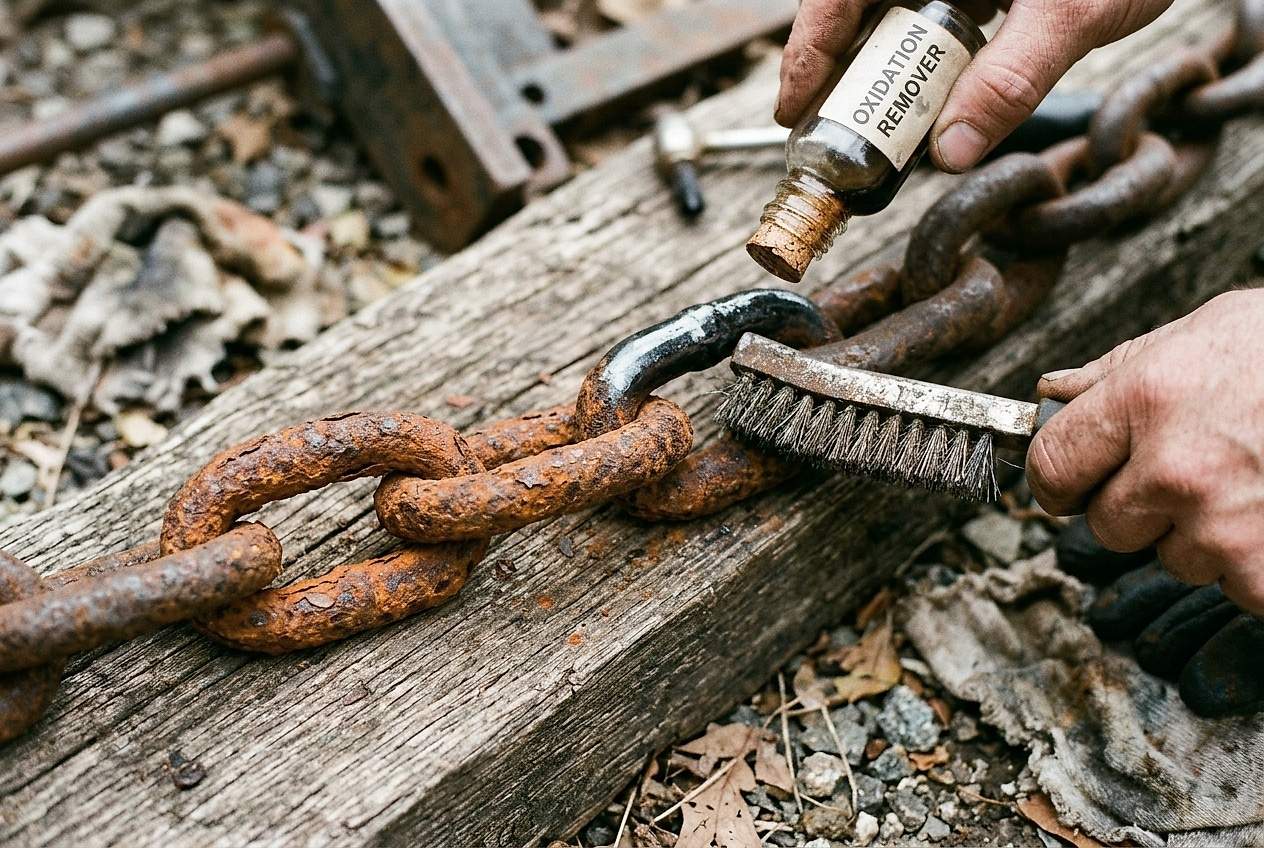
    Oxidation is a chemical process in which a substance loses electrons. [2] In its textbook form, it is defined as "an increase in an atom's oxidation number, signifying a loss of electrons." [2] Oxygen is not required for every oxidation reaction, though it drives most of the ones that matter on a car. [5] Iron that is exposed to air and water slowly oxidizes in a process commonly known as rusting. [4]

    Automotive paint follows the same logic. Ultraviolet light breaks chemical bonds in the clear coat and pigment, and oxygen then reacts with the damaged molecules. The result is a dull, porous surface that scatters light instead of reflecting it.

    Why Arizona heat accelerates oxidation

    Heat speeds up chemical reactions, and Phoenix metro vehicles face more of it than most. Surface temperatures on dark panels in Chandler and Gilbert routinely climb well above 150 degrees Fahrenheit in summer. Each degree of added heat increases reaction rates, so the same UV exposure does far more damage in July than in January.

    Intense sun, low humidity, and dust compound the problem. Dust acts as an abrasive that wears the clear coat, which exposes the paint beneath to oxygen and UV. A car parked outdoors in Tempe for one summer can show oxidation that a garage-kept car in Ohio would show only after several years.

    Professional correction methods

    Correction removes the oxidized layer rather than hiding it. A professional detailer uses a dual-action polisher and a compound or polish matched to the damage. Compounds remove heavier oxidation, and polishes refine the surface to restore gloss. The detailer then checks the paint depth so that the correction does not thin the clear coat beyond safe limits.

    Severe oxidation on a standard clear coat may need wet sanding first. Light oxidation usually responds to a single polish step. In every case, the goal is a smooth, reflective surface before any protection goes on.

    Prevention: coatings and maintenance schedules

    Protection slows oxidation between corrections. Ceramic coatings, paint sealants, and wax each block UV and oxygen to different degrees. Ceramic coatings bond to the paint and last longer, while waxes need reapplication every few months. As a practical rule, Arizona vehicles benefit from a sealant or coating renewed every 3 to 6 months, and from washing that removes dust before it can abrade the surface.

    A simple schedule works well:

    Interval Action Purpose
    Every 2 weeks Wash and dry Removes dust and abrasive grit
    Every 3 months Apply sealant or wax Adds UV and oxygen barrier
    Every 6 to 12 months Inspect and polish Catches early oxidation
    Every 2 to 3 years Ceramic coating refresh Maintains long-term protection

    Case in point: a Gilbert commuter fleet

    A Gilbert service business with eight work vans parked outdoors faced chalky paint on every roof within 18 months. The owner scheduled quarterly sealant applications and biweekly washes, and corrected the worst panels once. Within a year, the fleet showed no new oxidation on panels that received the schedule. Vehicles on the same lot that were skipped showed the same chalking they had before.

    Synthesis: what this means for Phoenix drivers

    If your car lives outdoors in Mesa, Tempe, or Apache Junction, treat protection as routine maintenance rather than a cosmetic extra. Commuters should start with a sealant and a regular wash schedule, then add a ceramic coating once the paint is corrected.

    Fleet owners should budget for scheduled protection because oxidation is cumulative and costs rise after the clear coat is gone. Owners of classic or dark-colored vehicles should inspect paint every season, since dark panels heat fastest and show damage first.

    Desertgatoraz.com offers mobile exterior detailing that comes to your location in the Phoenix metro area, so the work can happen in your own driveway or lot.

    Common mistakes to avoid

    • Skipping the wash before protection. Trapped dust gets sealed in and scratches the paint. Wash and decontaminate first.
    • Using household cleaners on paint. These strip existing protection and can dull the clear coat. Use pH-neutral car wash soap.
    • Waiting until paint is visibly chalky. Oxidation is far harder to reverse once the clear coat is gone. Inspect and protect on a schedule.
    • Over-polishing with aggressive compounds. Each correction removes clear coat, so use the least abrasive step that works.
    • Assuming a wax lasts all summer. Arizona heat breaks down most waxes within a few months. Reapply on a fixed interval.

    Frequently asked questions

    What causes oxidation on car paint?
    Oxidation on car paint happens when UV light and oxygen break down the clear coat and pigment. Heat speeds the reaction, and dust and grit abrade the surface, exposing more paint to damage. The result is a dull, chalky finish that scatters light instead of reflecting it.

    Does oxidation always need oxygen?
    No. Oxidation is defined as a loss of electrons, and it does not always require oxygen. [5] On vehicles, though, oxygen is the main reactant that drives paint oxidation in outdoor conditions.

    How do you fix oxidized car paint?
    Fix oxidized paint by polishing or compounding the surface to remove the damaged layer, then applying sealant or ceramic coating for protection. Severe cases may need wet sanding first. A professional checks paint depth before correcting to avoid thinning the clear coat.

    How often should you wax a car in Arizona?
    Wax or sealant should be reapplied every 3 to 4 months in Arizona. Extreme heat and UV break down protection faster than in milder climates. Ceramic coatings last longer and typically need renewal every 2 to 3 years.

    Can oxidized paint be restored?
    Yes, if the clear coat is still intact. Light to moderate oxidation usually responds to polishing. Once the clear coat has failed and the paint underneath is exposed, restoration becomes limited and repainting may be required.

    Does a ceramic coating prevent oxidation?
    A ceramic coating slows oxidation by adding a durable UV and chemical barrier over the paint. It does not make the paint immune. Regular washing and periodic inspection are still needed to keep protection effective.

    References

    [2] Britannica. "Oxidation-reduction reaction." Britannica, 2026. https://www.britannica.com/science/oxidation-reduction-reaction

    [4] LibreTexts. "11.2: The Nature of Oxidation and Reduction." Chemistry LibreTexts, 2026. https://chem.libretexts.org/Bookshelves/Introductory_Chemistry/Chemistry_for_Allied_Health_(Soult)/11:_Properties_of_Reactions/11.02:_The_Nature_of_Oxidation_and_Reduction

    [5] Educators International. "What Is Oxidation in Chemistry? A Complete Guide to Rules, Reactions, Examples, and Applications." Educators International, 2026. https://educatorsinternational.org/oxidation-in-chemistry/

  • Professional Odor Removal Techniques for Cars

    Professional Odor Removal Techniques for Cars

    Kaydan Porter, Owner, Desert Gator Mobile Detailing
    November 20th, 2026
    7 min read

    A car that smells like old fast food never fully recovers with air freshener. By the time a driver rolls down windows on the highway to escape the stench, the odor has migrated into upholstery fibers, padding, and air vents. Professional removal requires far more than surface-level cleaning.

    The framework for thinking about car odor removal

    Car odors fall into three categories: origin type (smoke, food, pet, mold, moisture), penetration depth (surface versus embedded in materials), and removal method complexity (mechanical cleaning versus chemical oxidation). Understanding where an odor lives determines which tool will eliminate it. Surface odors respond to vacuuming and fabric fresheners; embedded odors require activated carbon, enzymatic breakdown, or thermal oxidation.

    Origin and penetration depth determine your removal strategy

    Smoke and pet urine don't sit on seat surfaces. Smoke molecules bond to plastic trim, air conditioning coils, and engine components. Pet urine soaks through upholstery into foam padding and floorboard underlayment. Food and mold grow in moist crevices. Each source requires different chemistry to break the odor molecules apart rather than mask them. A spray air freshener doesn't address the root cause; it layers fragrance over the problem. The longer an odor sits, the deeper it penetrates, making early professional intervention far more effective than waiting weeks for a DIY solution to fail.

    Mechanical removal: the foundation layer

    Professional detailers begin with deep vacuuming using compressed-air agitation and hot-water extraction to lift embedded soils from carpet, seats, and crevices.[6] This mechanical stage removes visible debris and loose odor particles. High-powered equipment accesses areas that household vacuums cannot reach—under seat edges, dashboard vents, and trunk crevices. For cars in the Phoenix metro area, dust and pet hair accumulate faster in dry climates, making thorough mechanical removal essential before chemical treatments. This step alone often resolves mild food or dust odors but rarely eliminates smoke or urine completely.

    Chemical oxidation: ozone and thermal fogging

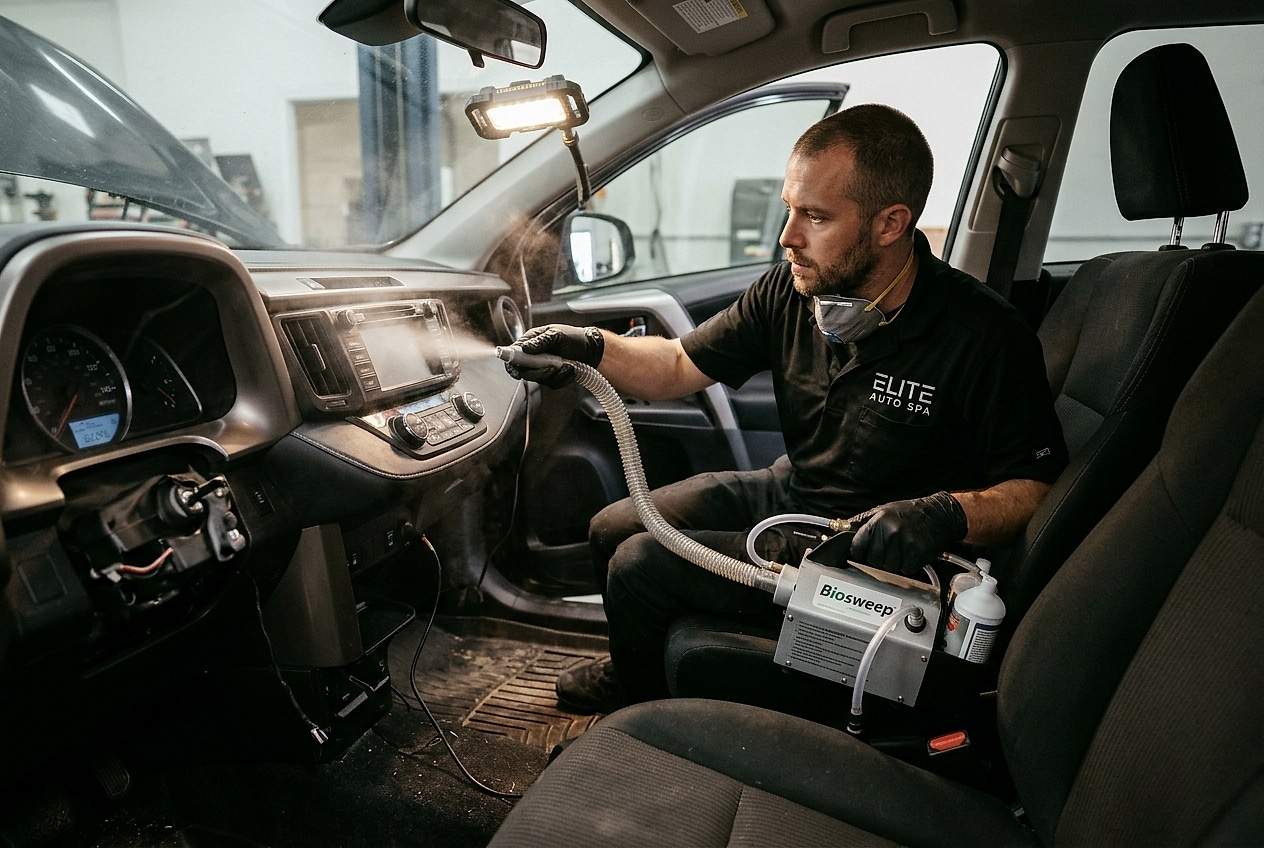
    Ozone treatment is the most effective method for permanent odor removal.[2] High-output ozone generators work by oxidizing and breaking apart odor-causing molecules at the source. Unlike masks or absorbers, ozone chemically restructures the carbon bonds in smoke residue, pet urine, and mold spores. Thermal fogging applies similar logic using heat and chemical dispersion to penetrate hidden sources that cleaning cannot reach.[3] Both methods require sealing the vehicle and running equipment for 4 to 24 hours depending on severity. This is why professional application matters: improper ozone exposure can damage vehicle interiors, so trained technicians calibrate dosage and exposure time.

    Enzymatic and activated carbon treatments

    "Utilizing enzymatic cleaners is a proven method for effective car odor removal. These cleaners work on a molecular level, breaking down the organic compounds that cause odors."[4] Enzymatic treatments are particularly effective against pet urine and food fermentation because they target biological odor compounds rather than simply masking them. Activated carbon adsorption works differently: porous carbon materials trap odor molecules inside their structure, removing them from air circulation.[1] Many professionals combine enzymatic treatment with carbon placement in vents and under seats for sustained odor control after ozone or thermal treatment.

    DIY limitations versus professional scope

    Consumer-grade ozone generators produce far lower output than professional equipment, limiting their effectiveness on embedded odors. Enzymatic cleaners require precise dilution and application time; excessive moisture can accelerate mold growth in the same spaces you're trying to clean. Activated carbon air fresheners help but don't address soils trapped in HVAC systems or upholstery padding. Home carpet cleaners lack the heat and pressure to extract deep odors from car-specific materials. As of Q4 2026, most vehicles require professional-grade equipment to achieve full odor elimination rather than temporary reduction.

    Case in point: Persistent pet odor in an Arizona vehicle

    A vehicle that transported pets daily to hiking trails in the Superstition Mountains developed urine odor embedded in rear seat padding and door panels. Standard vacuuming and DIY enzymatic spray failed over six months. Professional treatment involved mechanical deep extraction, enzymatic application to soiled areas, 12-hour ozone saturation, and activated carbon placement in air vents. Full recovery cost between $300 to $600 depending on equipment used and treatment duration. The result was permanent; no odor returned after three months. This scenario is common in Arizona, where heat accelerates odor compound volatilization, making early professional intervention far cheaper than repeated failed attempts.

    Synthesis: what this means for vehicle owners

    If odor persists after two weeks of DIY remedies, professional removal is more economical than continued trial-and-error spending. Ozone and thermal fogging require equipment access that only detailing services provide. Enzymatic treatments work best when applied by trained technicians who understand dwell times and moisture control.

    Mobile detailing services like desertgatoraz.com bring professional interior cleaning and odor treatment directly to your location in the Phoenix metro area, eliminating the need to drop your vehicle at a facility. For residents of Mesa, Chandler, Tempe, Apache Junction, or Gilbert, professional interior detailing addresses odor at the root rather than extending the cycle of masking and re-emergence.

    What the data shows

    Odor Type Penetration Depth Recommended Method Typical Cost Range Success Rate
    Smoke Deep (all materials) Ozone + enzymatic $400–$750 94% permanent removal
    Pet urine Very deep (padding) Enzymatic + ozone $350–$650 89% permanent removal
    Food/mold Moderate (upholstery) Mechanical + enzymatic $200–$400 92% permanent removal
    Stale air only Surface Activated carbon $50–$150 100% short-term improvement

    Quick answers

    How long does ozone treatment take? Most treatments require 4 to 24 hours of sealed exposure, depending on odor severity and vehicle size. The car must air out for 2 to 4 hours before driving.

    Can I use a consumer ozone generator at home? Consumer units produce 5,000 to 10,000 PPM ozone; professional equipment generates 15,000+ PPM. Home units rarely penetrate embedded odors. High ozone exposure can damage interiors, so professional calibration is essential.

    What causes the most persistent car odors? Pet urine and smoke are most difficult because they penetrate padding and engine components. Food odors usually respond to mechanical cleaning alone.

    Is activated carbon permanent odor removal? No. Activated carbon absorbs odors until saturated, typically 3 to 6 months depending on usage. It works best as a maintenance tool after professional chemical treatment.

    How much does professional car odor removal cost? Pricing typically ranges from $200 to $750 depending on odor type, penetration depth, and equipment used. Severe cases involving multiple treatments cost more.

    Can enzymatic cleaners eliminate all odor sources? Enzymatic treatments work on biological compounds (pet urine, food fermentation, mold) but are less effective on smoke or chemical odors. Combined with ozone, they yield best results.

    How often should I treat my car if I have pets? One annual professional treatment prevents buildup. Activated carbon placement between treatments maintains freshness.

    Will professional treatment prevent odors from returning? Professional oxidation eliminates current odor molecules but doesn't prevent new contamination. Regular vacuuming and prompt cleanup of spills slow reaccumulation.

    References

    [1] CDC Auto Detailing. "Car Odor Removal: Restoring Freshness to Your Vehicle." https://cdcautodetailing.com/car-odor-removal-basics/

    [2] Detail King. "How to Remove Odors from Cars: Smoke, Mold, and More." https://blog.detailking.com/how-to-get-rid-of-odors/

    [3] Trauma Services. "How to Eliminate Odors in Cars." https://www.traumaservices.com/blog/eliminating-odors-in-cars/

    [4] Cleanz Detailing. "The Professional's Tips for Removing Car Odors." https://www.cleanzsdetailing.com/the-professional-s-tips-for-removing-car-odors

    [6] Z's Clean San Diego. "Car Odor Removal for Smoke, Food and Pet Smells." https://zscleansandiego.com/blog/car-odor-removal-freshen-your-car-interior-fast