
Kaydan Porter, Owner, Desert Gator Mobile Detailing
November 21st, 2026
7 min read
You're standing in a Mesa parking lot, looking at a hood that has gone chalky and dull in one summer. The paint was glossy last spring. Now it looks faded, and the clear coat peels when you touch it.
The framework for thinking about oxidation
Oxidation in vehicles has three dimensions: the chemistry of the reaction, the environment that accelerates it, and the protection layer that slows it. The chemistry explains why the surface breaks down. The environment explains why Arizona vehicles break down faster. The protection layer explains what you can do about it. Each dimension points to a different fix, so you need all three to solve the problem.
The chemistry of oxidation
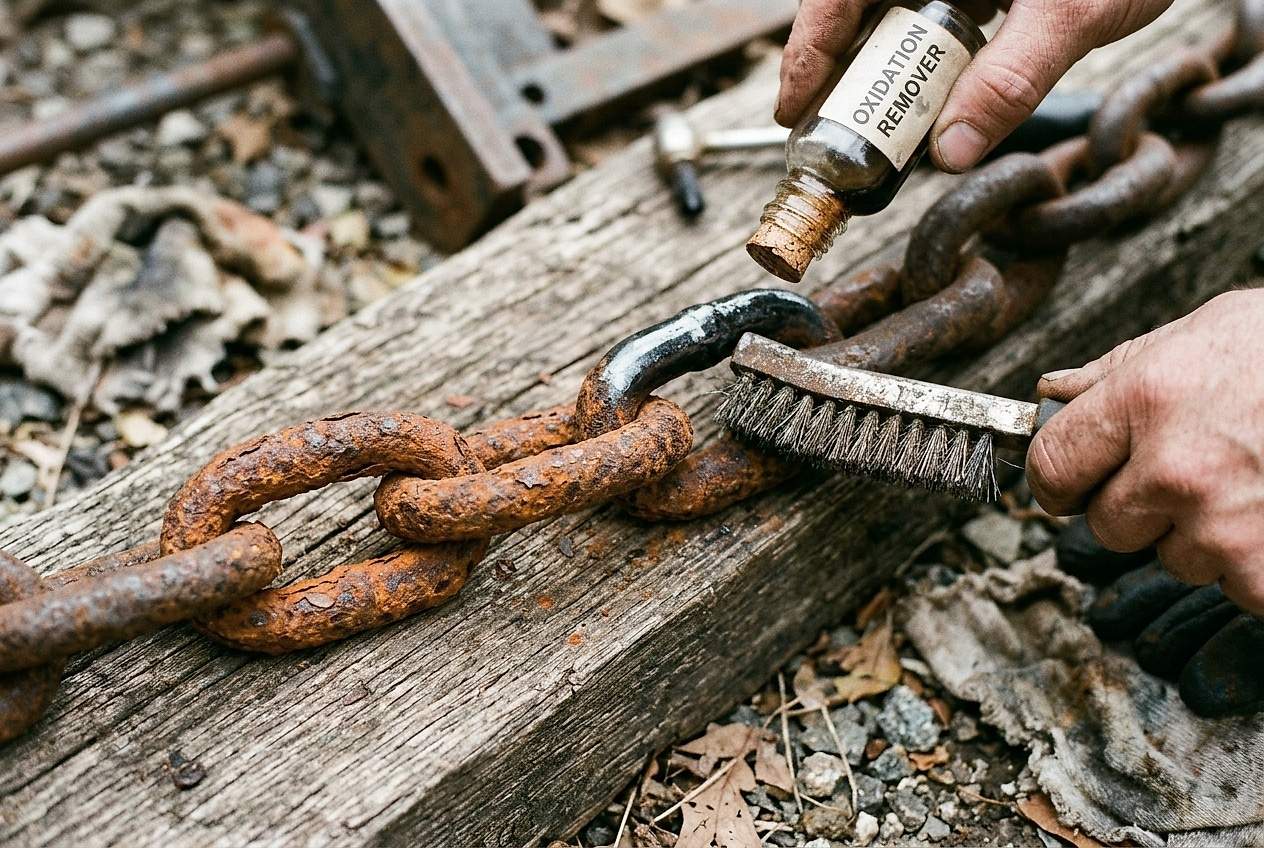
Oxidation is a chemical process in which a substance loses electrons. [2] In its textbook form, it is defined as "an increase in an atom's oxidation number, signifying a loss of electrons." [2] Oxygen is not required for every oxidation reaction, though it drives most of the ones that matter on a car. [5] Iron that is exposed to air and water slowly oxidizes in a process commonly known as rusting. [4]
Automotive paint follows the same logic. Ultraviolet light breaks chemical bonds in the clear coat and pigment, and oxygen then reacts with the damaged molecules. The result is a dull, porous surface that scatters light instead of reflecting it.
Why Arizona heat accelerates oxidation
Heat speeds up chemical reactions, and Phoenix metro vehicles face more of it than most. Surface temperatures on dark panels in Chandler and Gilbert routinely climb well above 150 degrees Fahrenheit in summer. Each degree of added heat increases reaction rates, so the same UV exposure does far more damage in July than in January.
Intense sun, low humidity, and dust compound the problem. Dust acts as an abrasive that wears the clear coat, which exposes the paint beneath to oxygen and UV. A car parked outdoors in Tempe for one summer can show oxidation that a garage-kept car in Ohio would show only after several years.
Professional correction methods
Correction removes the oxidized layer rather than hiding it. A professional detailer uses a dual-action polisher and a compound or polish matched to the damage. Compounds remove heavier oxidation, and polishes refine the surface to restore gloss. The detailer then checks the paint depth so that the correction does not thin the clear coat beyond safe limits.
Severe oxidation on a standard clear coat may need wet sanding first. Light oxidation usually responds to a single polish step. In every case, the goal is a smooth, reflective surface before any protection goes on.
Prevention: coatings and maintenance schedules
Protection slows oxidation between corrections. Ceramic coatings, paint sealants, and wax each block UV and oxygen to different degrees. Ceramic coatings bond to the paint and last longer, while waxes need reapplication every few months. As a practical rule, Arizona vehicles benefit from a sealant or coating renewed every 3 to 6 months, and from washing that removes dust before it can abrade the surface.
A simple schedule works well:
| Interval | Action | Purpose |
|---|---|---|
| Every 2 weeks | Wash and dry | Removes dust and abrasive grit |
| Every 3 months | Apply sealant or wax | Adds UV and oxygen barrier |
| Every 6 to 12 months | Inspect and polish | Catches early oxidation |
| Every 2 to 3 years | Ceramic coating refresh | Maintains long-term protection |
Case in point: a Gilbert commuter fleet
A Gilbert service business with eight work vans parked outdoors faced chalky paint on every roof within 18 months. The owner scheduled quarterly sealant applications and biweekly washes, and corrected the worst panels once. Within a year, the fleet showed no new oxidation on panels that received the schedule. Vehicles on the same lot that were skipped showed the same chalking they had before.
Synthesis: what this means for Phoenix drivers
If your car lives outdoors in Mesa, Tempe, or Apache Junction, treat protection as routine maintenance rather than a cosmetic extra. Commuters should start with a sealant and a regular wash schedule, then add a ceramic coating once the paint is corrected.
Fleet owners should budget for scheduled protection because oxidation is cumulative and costs rise after the clear coat is gone. Owners of classic or dark-colored vehicles should inspect paint every season, since dark panels heat fastest and show damage first.
Desertgatoraz.com offers mobile exterior detailing that comes to your location in the Phoenix metro area, so the work can happen in your own driveway or lot.
Common mistakes to avoid
- Skipping the wash before protection. Trapped dust gets sealed in and scratches the paint. Wash and decontaminate first.
- Using household cleaners on paint. These strip existing protection and can dull the clear coat. Use pH-neutral car wash soap.
- Waiting until paint is visibly chalky. Oxidation is far harder to reverse once the clear coat is gone. Inspect and protect on a schedule.
- Over-polishing with aggressive compounds. Each correction removes clear coat, so use the least abrasive step that works.
- Assuming a wax lasts all summer. Arizona heat breaks down most waxes within a few months. Reapply on a fixed interval.
Frequently asked questions
What causes oxidation on car paint?
Oxidation on car paint happens when UV light and oxygen break down the clear coat and pigment. Heat speeds the reaction, and dust and grit abrade the surface, exposing more paint to damage. The result is a dull, chalky finish that scatters light instead of reflecting it.
Does oxidation always need oxygen?
No. Oxidation is defined as a loss of electrons, and it does not always require oxygen. [5] On vehicles, though, oxygen is the main reactant that drives paint oxidation in outdoor conditions.
How do you fix oxidized car paint?
Fix oxidized paint by polishing or compounding the surface to remove the damaged layer, then applying sealant or ceramic coating for protection. Severe cases may need wet sanding first. A professional checks paint depth before correcting to avoid thinning the clear coat.
How often should you wax a car in Arizona?
Wax or sealant should be reapplied every 3 to 4 months in Arizona. Extreme heat and UV break down protection faster than in milder climates. Ceramic coatings last longer and typically need renewal every 2 to 3 years.
Can oxidized paint be restored?
Yes, if the clear coat is still intact. Light to moderate oxidation usually responds to polishing. Once the clear coat has failed and the paint underneath is exposed, restoration becomes limited and repainting may be required.
Does a ceramic coating prevent oxidation?
A ceramic coating slows oxidation by adding a durable UV and chemical barrier over the paint. It does not make the paint immune. Regular washing and periodic inspection are still needed to keep protection effective.
References
[2] Britannica. "Oxidation-reduction reaction." Britannica, 2026. https://www.britannica.com/science/oxidation-reduction-reaction
[4] LibreTexts. "11.2: The Nature of Oxidation and Reduction." Chemistry LibreTexts, 2026. https://chem.libretexts.org/Bookshelves/Introductory_Chemistry/Chemistry_for_Allied_Health_(Soult)/11:_Properties_of_Reactions/11.02:_The_Nature_of_Oxidation_and_Reduction
[5] Educators International. "What Is Oxidation in Chemistry? A Complete Guide to Rules, Reactions, Examples, and Applications." Educators International, 2026. https://educatorsinternational.org/oxidation-in-chemistry/