
Kaydan Porter, Owner, Desert Gator Mobile Detailing
November 25th, 2026
6 min read
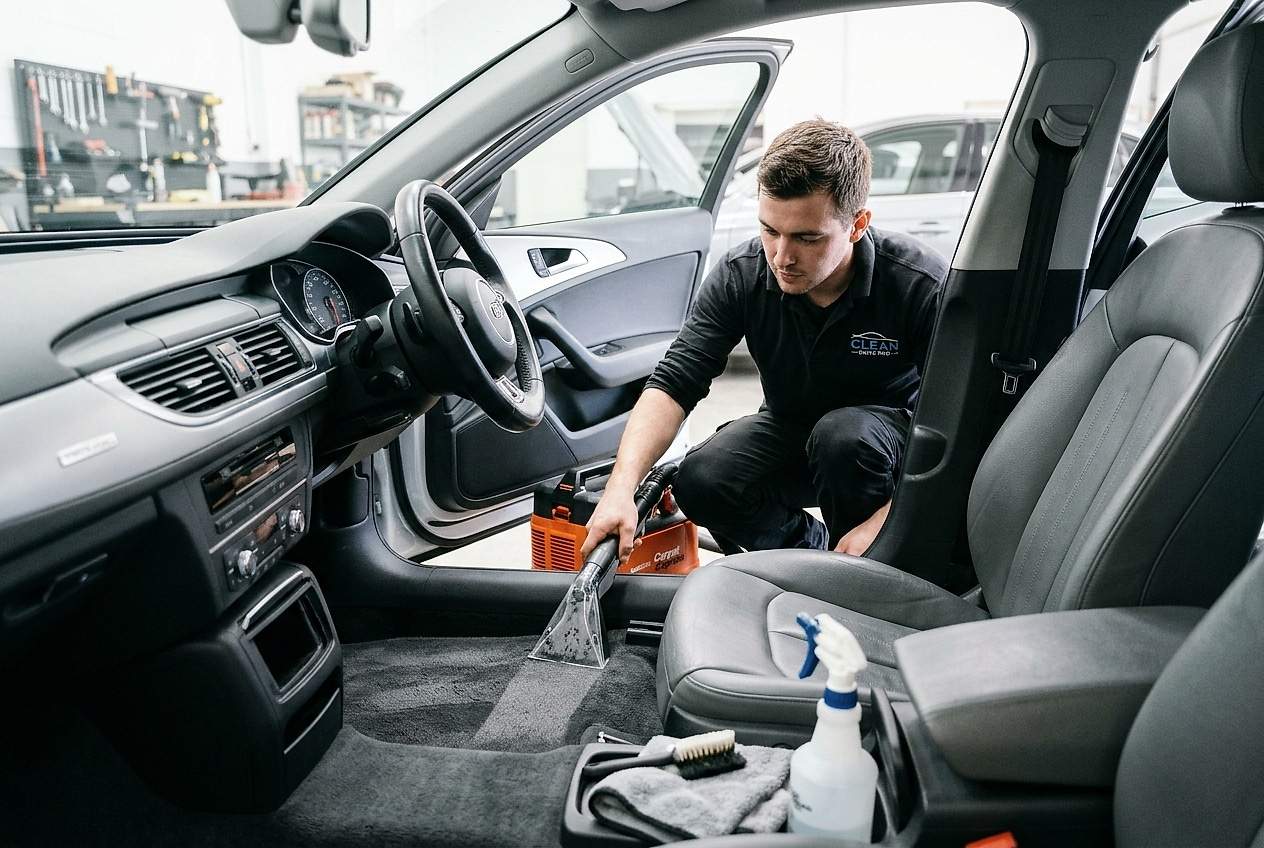
Professional vehicle upholstery and carpet cleaning removes embedded dirt, odor, and stains by lifting soil out of fibers with pressurized water and cleaning solution, then extracting it with suction. Surface vacuuming alone leaves that soil behind, where it grinds into fibers and attracts more dirt over time.
The framework for thinking about vehicle fabric care
Vehicle fabric care rests on three dimensions: the surface material, the contamination type, and the removal method. Each dimension changes what works. A carpet that holds road grit needs different handling than a cloth seat stained with food, and both require different chemistry and moisture control than a fabric seat exposed to sun and heat.
Professional extraction methods
Hot water extraction is the most common professional method for vehicle carpets. It injects heated water and cleaning solution into the fabric, then pulls the mixture back out with a vacuum. "Hot water extraction" is the standard term for this process, and it is the method most detailers use for deep cleaning. [2]
Extraction depends on controlled moisture. Over-wetting is the most frequent mistake, because trapped water in floor padding can lead to mold and mildew. [5] Detailers should use the minimum water needed, then run extraction passes until the fabric feels nearly dry.
Pre-vacuuming matters as much as the extraction itself. A thorough vacuum before any wet cleaning removes loose grit that would otherwise turn to abrasive mud. [3] Use the right attachment for each surface, as Consumer Reports advises: "Vacuum the carpet and cloth upholstery using the right attachment for the job." [6]
Stain removal processes
Stain removal follows a sequence: identify the stain, pre-treat, agitate gently, then extract. Blot rather than scrub, because scrubbing pushes stain deeper into fibers and frays cloth. Test any cleaner on a hidden area first, since some solutions discolor dyed upholstery.
Organic stains such as food, coffee, and bodily fluids need enzyme or oxygen-based cleaners. Oil and grease stains respond better to solvent-based pre-treaters. Once the stain lifts, rinse the area with clean water and extract again to prevent residue from attracting new soil.
Carpet versus cloth seat care
Carpet and cloth seats share a fiber structure but differ in backing, padding, and exposure. Carpet sits on a foam or felt underlay that holds water for long periods. Cloth seats have foam cushions beneath a stretched fabric cover, which dries faster but can absorb liquid into the core.
Carpet tolerates a heavier extraction pass and more agitation. Cloth seats need lower moisture, gentler brushing, and careful attention to seams and stitching. Using carpet methods on cloth seats risks soaking the foam, which causes odor and long-term structural damage.
Fabric protection treatments
Fabric protectants create a barrier that helps liquids bead and wipe away before they soak in. Apply protection only after the fabric is fully dry and clean, because treatments sealed over dirt trap soil in place. Reapply after each deep cleaning to maintain the barrier.
Case in point: a mobile detailing job in Mesa
A mobile detailer in Mesa receives a family SUV with a spilled sports drink across the rear carpet and a pet odor in the cloth seats. The crew vacuums both areas first, pre-treats the sugar stain with an enzyme cleaner, and runs hot water extraction on the carpet. The seats get a lighter pass with reduced moisture to protect the foam. Drying takes most of a day, so the job is scheduled with that in mind. Desertgatoraz.com handles this type of interior work in Mesa, Chandler, Tempe, Gilbert, and Apache Junction as part of its mobile interior cleaning service.
Synthesis: what this means for vehicle owners
Owners with light dust and crumbs can handle routine vacuuming and a spot treatment at home. Owners with pet hair, odor, or set-in stains need professional extraction, because surface cleaning cannot reach the soil in the padding.
Fleet managers should schedule deep cleaning on a fixed interval, since repeated soil loading shortens fabric life. Detailers should document each job's moisture level and drying time to avoid repeat callbacks from mold or odor complaints.
The 80/20 breakdown
Most results come from three actions: thorough pre-vacuuming, controlled extraction with minimal water, and a proper stain sequence. Prioritize these. Skip heavy chemical stacking, aggressive scrubbing, and extra product layers, which add cost and residue without improving results.
Who this is for
Mobile detailing suits owners in the Phoenix metro who want interior cleaning without dropping off a vehicle. It fits busy households, rideshare drivers, and small fleets. It is a poor fit for owners who need a deep clean on a vehicle that must be driven within hours, since full drying can take most of a day.
Frequently asked questions
What is hot water extraction for car carpets?
Hot water extraction is a professional method that sprays heated water and cleaning solution into carpet fibers, then pulls the mixture out with suction. It removes embedded dirt and odor that vacuuming cannot reach. Detailers use it as the standard deep-cleaning process for vehicle carpets. [2]
Can I use the same method on car carpet and cloth seats?
No. Carpet tolerates heavier moisture and agitation, while cloth seats need lower water use because the foam cushion can absorb liquid. Using carpet methods on cloth seats risks odor and foam damage.
How much water should be used when cleaning car upholstery?
Use the minimum water needed. Excess moisture trapped in padding can cause mold and mildew. Run extraction passes until the fabric is nearly dry. [5]
Should I vacuum before professional car carpet cleaning?
Yes. A thorough vacuum removes loose grit before any wet cleaning. Otherwise that grit mixes with water into abrasive mud that can scratch fibers. [3]
How do I remove a food or drink stain from car upholstery?
Blot the stain rather than scrubbing it. Pre-treat organic stains with an enzyme-based cleaner, then rinse and extract. Test any cleaner on a hidden spot first to check for discoloration.
Does fabric protection replace regular cleaning?
No. Fabric protectant only helps liquids bead and wipe away. Apply it after the fabric is clean and dry, and reapply after each deep cleaning.
How long does professional car upholstery cleaning take to dry?
Drying time depends on moisture used and airflow, and it can take most of a day. Schedule the job so the vehicle is not needed until the fabric is fully dry.
References
[2] Wikipedia contributors. "Carpet cleaning." Wikipedia, 2026. https://en.wikipedia.org/wiki/Carpet_cleaning
[3] Maintenance Sales News. "4 Proven Best Practices For Auto Carpet Detailers." Maintenance Sales News, 2026. https://maintenancesalesnews.com/4-proven-best-practices-for-auto-carpet-detailers/
[5] Right Car Detailing. "Auto Carpet Cleaning Best Practices: Complete Guide for Auto Carpets." Right Car Detailing, 2026. https://rightcardetailing.com/auto-carpet-cleaning-best-practices/
[6] Consumer Reports. "How to Clean Your Car's Interior." Consumer Reports, 2026. https://www.consumerreports.org/cars/car-maintenance/how-to-clean-your-cars-interior-a8146415264/