
Kaydan Porter, Owner, Desert Gator Mobile Detailing
November 19th, 2026
8 min read
Ceramic coatings outlast traditional wax by years, offer superior chemical resistance, and maintain a sharper gloss—but wax remains the faster, cheaper option for drivers who detail their vehicles regularly. The choice depends on your budget, climate, and how often you're willing to reapply protection.
The framework for thinking about this decision
Three dimensions separate these products: durability (how long protection lasts), protection quality (what threats each resists), and total cost of ownership (upfront expense plus maintenance). Understanding where each coating excels reveals why neither is universally "better"—only better suited to specific driving conditions and maintenance habits.
Durability: lifespan and reapplication frequency
Traditional wax lasts four to eight weeks before requiring reapplication [1]. Ceramic coatings extend this dramatically: DIY ceramic products last 1–2 years, while professional-grade applications last 3–5 years [4]. This gap means a ceramic-coated vehicle needs protection refreshed perhaps twice per year; a waxed vehicle needs monthly attention in harsh climates. For drivers in the Phoenix metro area, where intense UV exposure and dust storms accelerate degradation, the durability gap matters significantly.
Hybrid products split the difference. Spray coatings bridge wax and ceramic, lasting 6–12 months with reapplication simpler than full ceramic but longer-lasting than wax [3]. These appeal to owners seeking middle-ground convenience without ceramic's upfront commitment.
Protection quality: chemical resistance and hydrophobic performance
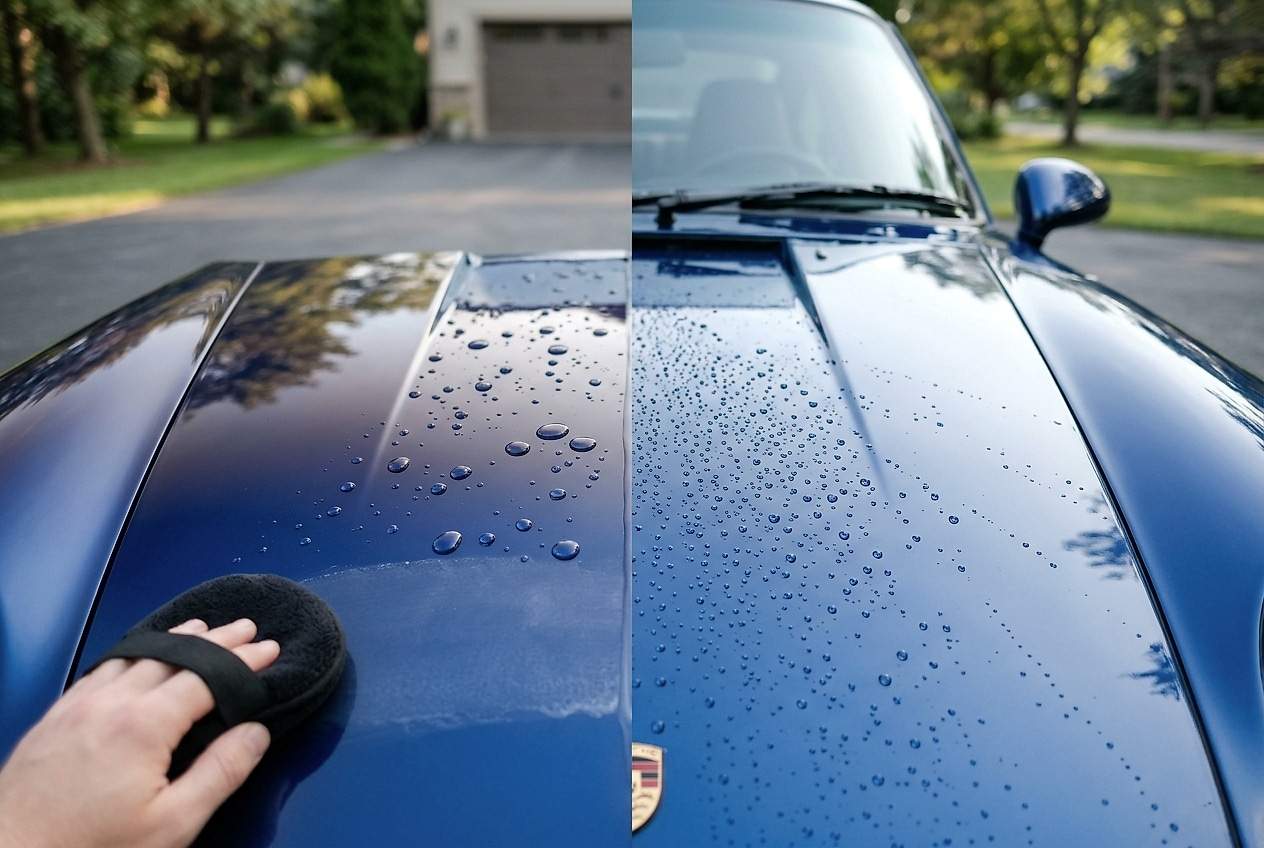
Ceramic coatings form a semi-permanent molecular bond with your vehicle's clear coat, creating a surface that "delivers a sharp, candy-like gloss" [6]. More functionally, they provide water contact angles exceeding 115 degrees, meaning water beads aggressively rather than sheeting across paint [8]. This hydrophobic property protects against mineral deposits, bird droppings, and road salt—common threats in desert environments where mineral-heavy water and alkaline dust corrode unprotected finishes.
Wax sits loosely on the clear coat, offering hydrophobic benefits but weaker chemical resistance. Acidic contaminants, brake dust, and caustic cleaners penetrate wax layers faster than ceramic barriers. For vehicles regularly exposed to industrial fallout or frequent car washes using harsh detergents, ceramic's protective layer proves measurably superior.
Cost of ownership: initial investment versus long-term spend
Professional ceramic coating costs $800–$1,500 upfront but requires no reapplication for 3–5 years [4]. A DIY ceramic kit runs $70–$200 with 1–2 years of protection. Traditional wax costs $15–$50 per application but demands monthly reapplication, totaling $180–$600 annually. Over five years, a single professional ceramic application ($800–$1,500) undercuts perpetual waxing ($900–$3,000 in materials alone, plus labor if professionally applied monthly).
The calculus flips for occasional drivers or those who enjoy the detailing ritual. If you apply wax quarterly rather than monthly, ceramic's cost premium shrinks. If you sell your vehicle every two years, wax's lower entry price may justify avoiding ceramic's multiyear commitment.
Climate considerations for the desert Southwest
Desert conditions amplify ceramic's advantages. Arizona's low humidity, intense solar radiation, and mineral-laden water from wells and municipal supplies accelerate oxidation and mineral etching on bare clear coat. Ceramic coatings absorb this punishment better; wax's softer matrix deteriorates faster under sustained UV exposure above 115°F. Dust storms common in Mesa, Chandler, and Tempe deposit abrasive particles that scratch wax layers during washing; ceramic's harder surface resists scratching more effectively.
Conversely, desert dust makes ceramic maintenance critical. Proper rinsing before hand washing prevents swirl marks on the coating itself. Mobile detailing services like Desert Gator, which brings equipment to your location, reduce the risk of improper at-home care that can compromise coatings.
Application and maintenance demands
Wax requires simple hand application and removal within hours. Ceramic coatings demand precision: surface preparation (clay bar treatment, polish), precise application temperatures, and 24–48 hours of cure time before water exposure. Professional application eliminates user error; DIY ceramic invites mistakes that reduce lifespan.
Maintenance diverges sharply. Waxed vehicles need monthly rewaxing; ceramic-coated vehicles need quarterly hand washing with pH-neutral soap and occasional hydrophobic booster sprays (every 6 months). The labor-per-year calculus favors ceramic despite its higher initial barrier to entry.
Car Wax vs Ceramic Coating vs Hybrid Spray Coatings
| Feature | Car Wax | Hybrid Spray | Ceramic Coating |
|---|---|---|---|
| Typical lifespan | 4–8 weeks | 6–12 months | 1–5 years (DIY to pro) |
| Upfront cost | $15–$50 per application | $30–$100 per application | $70–$1,500 (DIY to pro) |
| Annual maintenance cost | $180–$600 | $120–$400 | $0–$150 (booster sprays only) |
| Water beading | Good | Very good | Excellent (115°+ contact angle) |
| Chemical resistance | Moderate | Good | Excellent |
| UV protection | Moderate | Good | Excellent |
| Ease of application | Very easy | Easy | Moderate (DIY) to professional only |
| Best for | Budget-conscious, frequent detailers | Drivers seeking balance | Long-term owners, harsh climates |
Ceramic coatings deliver superior year-round protection in extreme climates; wax suits cost-conscious drivers with established detailing routines. Hybrid products serve those uncomfortable choosing between expense and effort.
Frequently asked questions
How long does ceramic coating last on a car?
Professional ceramic coatings last 3–5 years with proper maintenance; DIY versions last 1–2 years [4]. Lifespan depends on vehicle storage (garaged vs. exposed), washing frequency, and local water mineral content. Desert vehicles in unshaded parking may see lifespan reduce by 10–15% due to accelerated UV degradation.
Can you apply ceramic coating over wax?
No. Ceramic requires bare clear coat for proper molecular bonding. Existing wax must be fully removed via clay bar treatment or polish before ceramic application. Skipping this step causes poor adhesion and premature failure within months.
Is ceramic coating worth it in Arizona?
Yes, especially in Phoenix, Mesa, and Chandler where mineral-heavy water and intense UV exposure degrade unprotected finishes quickly. Ceramic's 3–5 year protection and superior chemical resistance justify the $800–$1,500 professional investment compared to $180–$600 annual wax expense.
What's the best protection for a car that sits outside?
Ceramic coating outperforms wax for parked vehicles. The continuous UV and weather exposure that wax can't withstand—wax breaks down in roughly 4–8 weeks—means coated vehicles maintain protection through monsoon seasons and dust storms without monthly reapplication.
Can you wax over ceramic coating?
Technically yes, but it's unnecessary and potentially counterproductive. Ceramic coatings already provide hydrophobic properties; wax adds no additional protection and complicates future coating removal if you want to recoat. Booster sprays designed for ceramic maintenance preserve hydrophobicity more effectively.
How often should you wash a ceramic-coated car?
Ceramic-coated vehicles need hand washing monthly in normal conditions, more frequently in desert climates where dust accumulates. Use pH-neutral soap and soft microfiber wash mitts to avoid scratching the coating. Avoid automated brush car washes, which degrade ceramic faster than hand washing.
Does ceramic coating prevent scratches?
Ceramic provides scratch resistance superior to wax but does not prevent scratches entirely. Moderate swirls from improper washing may be less visible due to the coating's hardness; deep scratches still penetrate to clear coat. The coating protects against UV and chemical damage more effectively than it guards against physical contact.
What's the best choice for a leased vehicle?
Wax. Leased vehicles return within 2–3 years, making ceramic's multiyear investment unrecoverable. Monthly waxing costs less than professional ceramic and leaves no permanent modifications to the lease vehicle.
Synthesis: what this means for you
If you live in the Phoenix metro area and park outdoors: ceramic coating justifies its cost. Desert UV, mineral-heavy water, and dust storms overwhelm wax within weeks. A single professional application protects through multiple Arizona monsoon seasons. Desert Gator and similar mobile detailing services can handle ceramic application and maintenance on-site, eliminating transport hassles.
If you detail your vehicle monthly: wax remains rational. The ritual appeals to enthusiasts; reapplication every 4–8 weeks fits an established routine. Your familiarity with paint preparation and application means consistent results. Total five-year cost approaches ceramic but supports a preferred maintenance rhythm.
If you want simplicity over the next 3–5 years: ceramic coating reduces total maintenance burden. Quarterly hand washing and occasional booster sprays require far less labor than monthly waxing. The upfront inconvenience of professional application delivers years of reduced weekend detailing work.
References
[1] Chemical Guys. "Car Wax vs. Ceramic Coating: Which Is Right For Your Car?" https://www.chemicalguys.com/blogs/exterior-how-tos/car-wax-vs-ceramic-coating
[3] Brilliatech. "Car Wax vs. Ceramic Coating — Which Protects Better?" https://m.brilliatech.com/blog/car-wax-vs-ceramic-coating-which-protects-better/
[4] Octint Solutions. "Ceramic Coating vs Wax? Pick the Best for Your Car's Paint." https://octintsolutions.com/ceramic-coating-vs-wax/
[6] Car Kit Info. "Car Wax vs Ceramic Coating: An Expert's Honest Comparison (2026)." https://carkitinfo.com/car-wax-vs-ceramic-coating/
[8] CarMechan. "Car Wax vs Ceramic Coating 2026: Full Comparison & Verdict." https://carmechan.com/buying-guide/car-wax-vs-ceramic-coating/