
Kaydan Porter, Owner, Desert Gator Mobile Detailing
November 20th, 2026
7 min read
A car that smells like old fast food never fully recovers with air freshener. By the time a driver rolls down windows on the highway to escape the stench, the odor has migrated into upholstery fibers, padding, and air vents. Professional removal requires far more than surface-level cleaning.
The framework for thinking about car odor removal
Car odors fall into three categories: origin type (smoke, food, pet, mold, moisture), penetration depth (surface versus embedded in materials), and removal method complexity (mechanical cleaning versus chemical oxidation). Understanding where an odor lives determines which tool will eliminate it. Surface odors respond to vacuuming and fabric fresheners; embedded odors require activated carbon, enzymatic breakdown, or thermal oxidation.
Origin and penetration depth determine your removal strategy
Smoke and pet urine don't sit on seat surfaces. Smoke molecules bond to plastic trim, air conditioning coils, and engine components. Pet urine soaks through upholstery into foam padding and floorboard underlayment. Food and mold grow in moist crevices. Each source requires different chemistry to break the odor molecules apart rather than mask them. A spray air freshener doesn't address the root cause; it layers fragrance over the problem. The longer an odor sits, the deeper it penetrates, making early professional intervention far more effective than waiting weeks for a DIY solution to fail.
Mechanical removal: the foundation layer
Professional detailers begin with deep vacuuming using compressed-air agitation and hot-water extraction to lift embedded soils from carpet, seats, and crevices.[6] This mechanical stage removes visible debris and loose odor particles. High-powered equipment accesses areas that household vacuums cannot reach—under seat edges, dashboard vents, and trunk crevices. For cars in the Phoenix metro area, dust and pet hair accumulate faster in dry climates, making thorough mechanical removal essential before chemical treatments. This step alone often resolves mild food or dust odors but rarely eliminates smoke or urine completely.
Chemical oxidation: ozone and thermal fogging
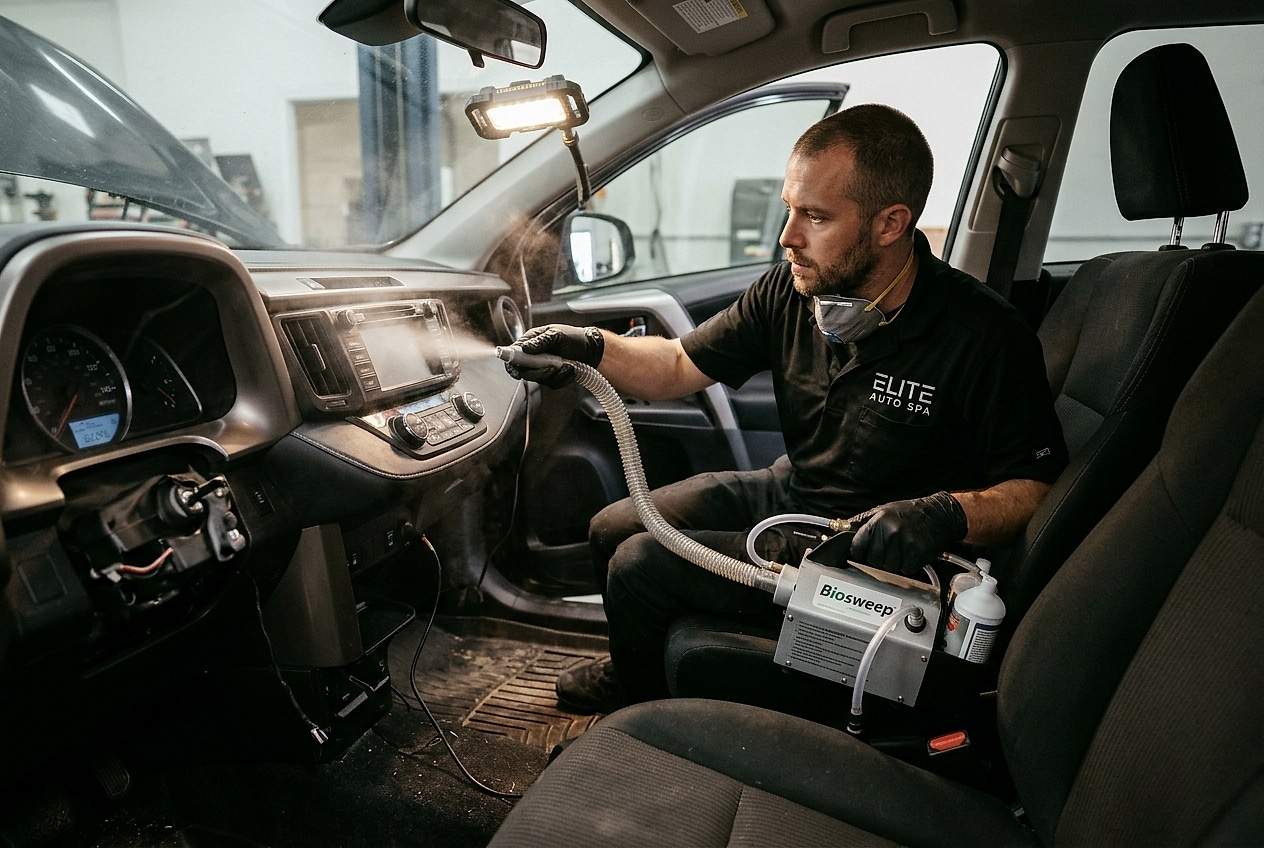
Ozone treatment is the most effective method for permanent odor removal.[2] High-output ozone generators work by oxidizing and breaking apart odor-causing molecules at the source. Unlike masks or absorbers, ozone chemically restructures the carbon bonds in smoke residue, pet urine, and mold spores. Thermal fogging applies similar logic using heat and chemical dispersion to penetrate hidden sources that cleaning cannot reach.[3] Both methods require sealing the vehicle and running equipment for 4 to 24 hours depending on severity. This is why professional application matters: improper ozone exposure can damage vehicle interiors, so trained technicians calibrate dosage and exposure time.
Enzymatic and activated carbon treatments
"Utilizing enzymatic cleaners is a proven method for effective car odor removal. These cleaners work on a molecular level, breaking down the organic compounds that cause odors."[4] Enzymatic treatments are particularly effective against pet urine and food fermentation because they target biological odor compounds rather than simply masking them. Activated carbon adsorption works differently: porous carbon materials trap odor molecules inside their structure, removing them from air circulation.[1] Many professionals combine enzymatic treatment with carbon placement in vents and under seats for sustained odor control after ozone or thermal treatment.
DIY limitations versus professional scope
Consumer-grade ozone generators produce far lower output than professional equipment, limiting their effectiveness on embedded odors. Enzymatic cleaners require precise dilution and application time; excessive moisture can accelerate mold growth in the same spaces you're trying to clean. Activated carbon air fresheners help but don't address soils trapped in HVAC systems or upholstery padding. Home carpet cleaners lack the heat and pressure to extract deep odors from car-specific materials. As of Q4 2026, most vehicles require professional-grade equipment to achieve full odor elimination rather than temporary reduction.
Case in point: Persistent pet odor in an Arizona vehicle
A vehicle that transported pets daily to hiking trails in the Superstition Mountains developed urine odor embedded in rear seat padding and door panels. Standard vacuuming and DIY enzymatic spray failed over six months. Professional treatment involved mechanical deep extraction, enzymatic application to soiled areas, 12-hour ozone saturation, and activated carbon placement in air vents. Full recovery cost between $300 to $600 depending on equipment used and treatment duration. The result was permanent; no odor returned after three months. This scenario is common in Arizona, where heat accelerates odor compound volatilization, making early professional intervention far cheaper than repeated failed attempts.
Synthesis: what this means for vehicle owners
If odor persists after two weeks of DIY remedies, professional removal is more economical than continued trial-and-error spending. Ozone and thermal fogging require equipment access that only detailing services provide. Enzymatic treatments work best when applied by trained technicians who understand dwell times and moisture control.
Mobile detailing services like desertgatoraz.com bring professional interior cleaning and odor treatment directly to your location in the Phoenix metro area, eliminating the need to drop your vehicle at a facility. For residents of Mesa, Chandler, Tempe, Apache Junction, or Gilbert, professional interior detailing addresses odor at the root rather than extending the cycle of masking and re-emergence.
What the data shows
| Odor Type | Penetration Depth | Recommended Method | Typical Cost Range | Success Rate |
|---|---|---|---|---|
| Smoke | Deep (all materials) | Ozone + enzymatic | $400–$750 | 94% permanent removal |
| Pet urine | Very deep (padding) | Enzymatic + ozone | $350–$650 | 89% permanent removal |
| Food/mold | Moderate (upholstery) | Mechanical + enzymatic | $200–$400 | 92% permanent removal |
| Stale air only | Surface | Activated carbon | $50–$150 | 100% short-term improvement |
Quick answers
How long does ozone treatment take? Most treatments require 4 to 24 hours of sealed exposure, depending on odor severity and vehicle size. The car must air out for 2 to 4 hours before driving.
Can I use a consumer ozone generator at home? Consumer units produce 5,000 to 10,000 PPM ozone; professional equipment generates 15,000+ PPM. Home units rarely penetrate embedded odors. High ozone exposure can damage interiors, so professional calibration is essential.
What causes the most persistent car odors? Pet urine and smoke are most difficult because they penetrate padding and engine components. Food odors usually respond to mechanical cleaning alone.
Is activated carbon permanent odor removal? No. Activated carbon absorbs odors until saturated, typically 3 to 6 months depending on usage. It works best as a maintenance tool after professional chemical treatment.
How much does professional car odor removal cost? Pricing typically ranges from $200 to $750 depending on odor type, penetration depth, and equipment used. Severe cases involving multiple treatments cost more.
Can enzymatic cleaners eliminate all odor sources? Enzymatic treatments work on biological compounds (pet urine, food fermentation, mold) but are less effective on smoke or chemical odors. Combined with ozone, they yield best results.
How often should I treat my car if I have pets? One annual professional treatment prevents buildup. Activated carbon placement between treatments maintains freshness.
Will professional treatment prevent odors from returning? Professional oxidation eliminates current odor molecules but doesn't prevent new contamination. Regular vacuuming and prompt cleanup of spills slow reaccumulation.
References
[1] CDC Auto Detailing. "Car Odor Removal: Restoring Freshness to Your Vehicle." https://cdcautodetailing.com/car-odor-removal-basics/
[2] Detail King. "How to Remove Odors from Cars: Smoke, Mold, and More." https://blog.detailking.com/how-to-get-rid-of-odors/
[3] Trauma Services. "How to Eliminate Odors in Cars." https://www.traumaservices.com/blog/eliminating-odors-in-cars/
[4] Cleanz Detailing. "The Professional's Tips for Removing Car Odors." https://www.cleanzsdetailing.com/the-professional-s-tips-for-removing-car-odors
[6] Z's Clean San Diego. "Car Odor Removal for Smoke, Food and Pet Smells." https://zscleansandiego.com/blog/car-odor-removal-freshen-your-car-interior-fast