
Kaydan Porter, Owner, Desert Gator Mobile Detailing
November 22nd, 2026
6 min read
Brake dust is the single most common reason wheels look dirty within days of a wash, and it bonds to wheel surfaces more aggressively than road grime. Choosing between professional and do-it-yourself care determines how often that buildup returns and how much damage accumulates over time.
The framework for thinking about tire and wheel detailing
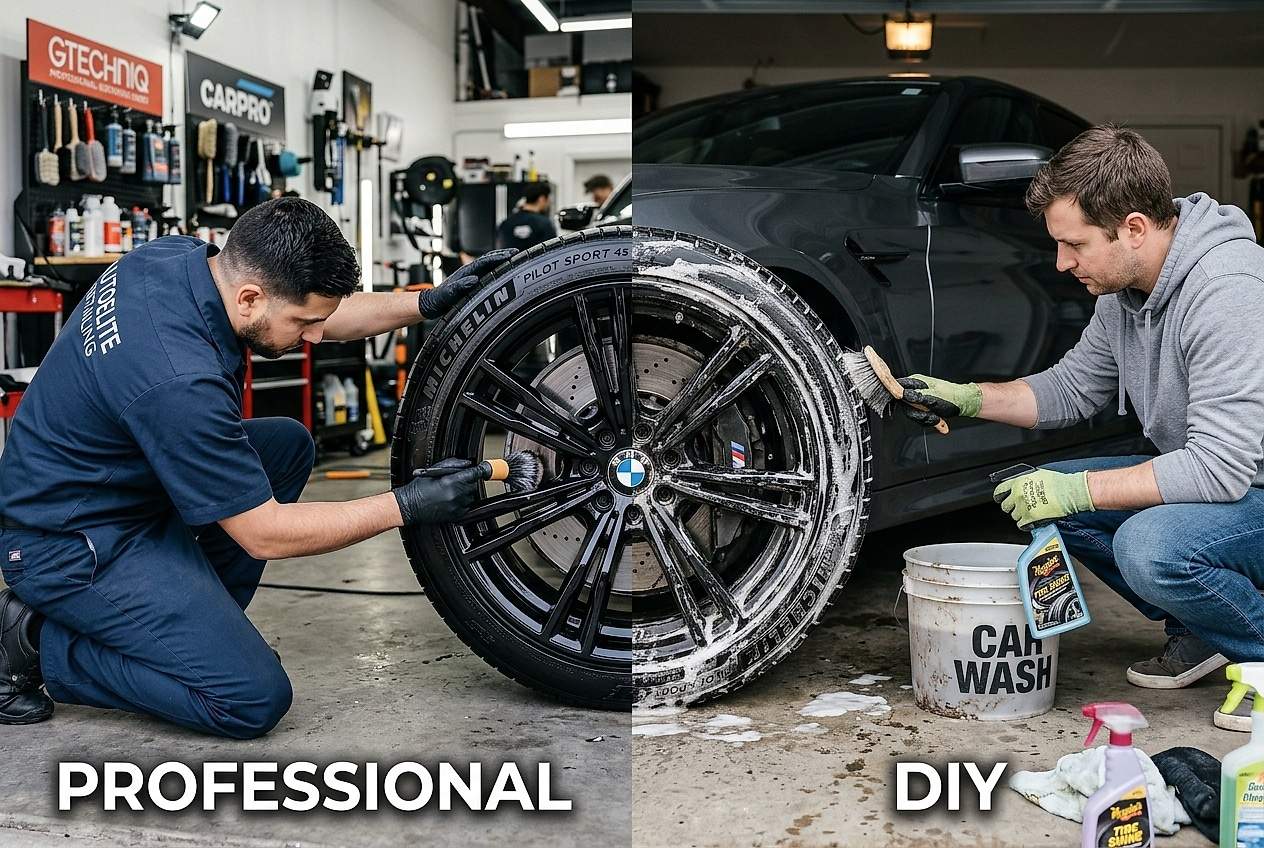
Evaluate tire and wheel detailing across three dimensions: cleaning chemistry, equipment and technique, and long-term protection. Each dimension shapes the result. Cleaning chemistry determines whether brake dust and road film come off without harming the wheel finish. Equipment and technique determine whether the cleaning reaches the barrel, the spokes, and the inner lip. Long-term protection determines how long the results last between visits.
Cleaning chemistry: brake dust, tire shine, and safety
Brake dust is iron-rich debris from brake pads, and it is a main reason wheels discolor. Acidic iron removers are formulated to dissolve it, but they carry risk. Alloy wheels, clear coats, and painted finishes all react differently to strong chemicals. Professional detailers select pH-balanced products matched to each wheel finish. DIY users often reach for a general-purpose cleaner, which can etch or dull a finish if left on too long.
Tire shine products fall into two groups. Water-based dressings give a satin look and wash off easily. Solvent-based dressings produce a wet, high-gloss look but can sling onto paint and wheels during driving. Professionals usually apply a measured, thin layer and remove overspray. Confirm the label supports the tire's rubber type before applying.
"DIY detailers rarely do this due to time and equipment limits," according to Quick Tyre Fix, a UK mobile tyre service. [1] That gap shows most clearly in the wheel barrel and inner lip, areas that a quick home wash rarely reaches.
Wheel coatings and longevity
Wheel coatings create a sacrificial layer that brake dust and road salt struggle to bond to. A professionally applied ceramic coating requires a fully decontaminated surface, and surface prep is where DIY results most often fall short. Coating adhesion depends on removing iron fallout, polish residue, and old dressings first.
Longevity follows from preparation. Professional wheel care typically includes decontamination, a sealant or coating, and a schedule for maintenance washes. Ceramic Pro, a coatings manufacturer, recommends a structured cleaning routine to preserve wheel finishes. [5] A consistent routine keeps coatings performing longer and reduces the frequency of harsh cleaning, which protects the finish over time.
Repair considerations also matter. Damage such as curb rash or a bent lip often requires a shop, not a kit. "A DIY kit is generally much cheaper than professional service," per Premier Color and Wheels, but that saving disappears if the repair fails or the finish is damaged further. [2]
Case in point: Phoenix metro vehicles
Mesa, Chandler, Tempe, Gilbert, and Apache Junction share a dry, high-heat climate that bakes brake dust and dressings onto wheels and tires. Heat accelerates the bonding of iron particles to clear coats, and sun drying shortens the life of tire dressings. A vehicle parked outdoors in Gilbert during summer may need decontamination far more often than one kept in a garage in a milder climate.
Mobile detailing addresses this directly. desertgatoraz.com provides mobile wheel and tire cleaning in the Phoenix metro area, which means the service comes to the customer's driveway or work location. The company's offerings include exterior washing, hand car washing, and wheel and tire cleaning. Customers who want the wheel barrel and tire sidewall cleaned thoroughly, without performing the work themselves, can use this option.
Synthesis: what this means for different drivers
Drivers with new or high-finish alloy wheels should choose professional care for the initial decontamination and coating. The prep work carries the most risk, and a poorly prepared surface wastes the coating investment. Owners who maintain a clean wheel finish can handle routine washing at home using pH-neutral wheel cleaner and a soft brush.
Owners of older vehicles or those with heavy brake dust should consider a combined approach: professional decontamination every few months, with light DIY maintenance between visits. Drivers in the Phoenix area should plan for more frequent cleaning because of heat and dust exposure.
Professional vs DIY vs Ceramic coating
| Feature | Professional service | DIY care | Ceramic coating (professional) |
|---|---|---|---|
| Chemical selection | Matched to wheel finish | General-purpose products | Requires surface decontamination first |
| Reach into barrel and lip | Full, with specialized tools | Limited by time and tools | Full, applied during service |
| Brake dust removal | Iron removers used with control | Often incomplete | Easier to clean afterward |
| Upfront cost | Higher per visit | Lower per product | Highest initial investment |
| Maintenance interval | Scheduled | Frequent, self-managed | Reduced frequency |
| Risk of finish damage | Low when done correctly | Higher with misuse | Low when prep is correct |
The table shows that professional care costs more per visit but reduces finish risk and extends the time between cleanings. DIY care suits drivers who maintain wheels regularly and accept the limits of home tools.
Quick answers
Does brake dust damage wheels? Brake dust is iron-rich and bonds to the finish, so prolonged buildup can stain and pit the surface. Regular removal with a suitable cleaner prevents this.
Is tire shine safe for alloy wheels? Most tire dressings are designed for rubber, not wheel finishes. Apply them only to the tire, and wipe away overspray.
Are DIY wheel cleaners safe? PH-neutral wheel cleaners are safe for most finishes. Strong acidic products require careful use and short dwell time.
How long does a wheel coating last? Duration depends on the product, driving conditions, and maintenance. Coatings in the Phoenix area may need more frequent maintenance because of heat and dust.
Is professional detailing worth the cost? For new or high-value wheels, professional decontamination protects the finish and the coating investment.
Can I clean wheels when they are hot? Avoid cleaning hot wheels. Heat speeds chemical drying and can cause staining.
Does mobile detailing reach the whole wheel? Mobile services like desertgatoraz.com clean wheels and tires on-site, covering the faces and tire surfaces.
How often should wheels be professionally detailed? Frequency depends on driving conditions and brake dust levels. Schedule visits based on how quickly buildup returns.
References
[1] Quick Tyre Fix. "Professional vs Hand Detailing: Alloy Wheels in Focus." Quick Tyre Fix, 2026. https://quicktyrefix.co.uk/mobile-tyre-fitting-service-near-me-in-norwood-green
[2] Premier Color and Wheels. "DIY vs. Professional Wheel Repair: What's the Best Option?" Premier Color and Wheels, 2026. https://premiercolorandwheels.com/post/diy-vs-professional-wheel-repair-edmond-ok
[5] Ceramic Pro. "Detailing Wheels – How to Clean Your Wheels Like a Professional." Ceramic Pro, 2026. https://ceramicpro.com/detailing-wheels-how-to-clean-your-wheels-like-a-professional/