
Kaydan Porter, Owner, Desert Gator Mobile Detailing
November 14th, 2026
5 min read
You're stepping into your car in July with an interior temperature exceeding 180 degrees Fahrenheit. The steering wheel is too hot to grip, and your dashboard is cracking under the relentless sun. Phoenix's summer heat demands specific preparation strategies that differ fundamentally from seasonal maintenance in temperate climates.
The framework for thinking about Phoenix summer car care
Three interrelated systems determine whether your vehicle survives Phoenix heat intact: fluid integrity, exterior protection, and interior preservation. Fluid systems degrade faster under extreme temperatures. Exterior surfaces oxidize and fade without a protective barrier. Interior materials warp, crack, and fade when exposed to sustained heat above 140 degrees. Success requires addressing all three simultaneously rather than treating them as independent problems.
Fluid systems and temperature stress
Every fluid in your vehicle evaporates faster because of Phoenix's extreme temperatures.[3] Motor oil thickens and loses viscosity. Coolant concentration matters more than volume; "the mixture should contain 50 percent coolant and 50 percent water, so adjust it accordingly."[8] Transmission fluid, power steering fluid, and brake fluid all experience accelerated breakdown. Summer heat cuts a typical car battery's five-year lifespan to just three years.[1] Check all fluid levels before June and again in early July. Verify your cooling system can maintain a 50/50 coolant-to-water ratio. A weak battery becomes a stranded vehicle without warning when ambient temperatures exceed 110 degrees Fahrenheit.
Exterior paint and protective coatings
Paint oxidation accelerates in Phoenix's UV environment and heat. Clear coat fails first, leaving the base color exposed to further damage. A ceramic coating or professional wax creates a barrier that reflects heat and shields clear coat from UV degradation. Hand washing and drying every two weeks prevents mineral deposits from etching the surface. Professional exterior detailing removes contaminants that accelerate oxidation; services like those offered by desertgatoraz.com include exterior washing and protection treatments designed for desert climates. Without protection, new car paint can fade noticeably within six months of Phoenix summer exposure.
Interior materials and heat management
Dashboard and steering wheel surfaces reach temperatures that soften plastic and crack leather. Interior air temperature rises 40 to 50 degrees above ambient within 30 minutes on a sunny day. "Consider using sunshades on your windshield and rear window. These shades reflect sunlight and reduce the interior temperature."[4] Leather conditioning treatments prevent cracking and maintain suppleness. Fabric treatments protect upholstery from UV fading and heat damage. Professional interior detailing deep-cleans air vents, which accumulate dust and reduce cooling efficiency by 15 to 25 percent when clogged. Schedule interior conditioning in May before peak summer heat arrives.
Tire pressure and rubber degradation
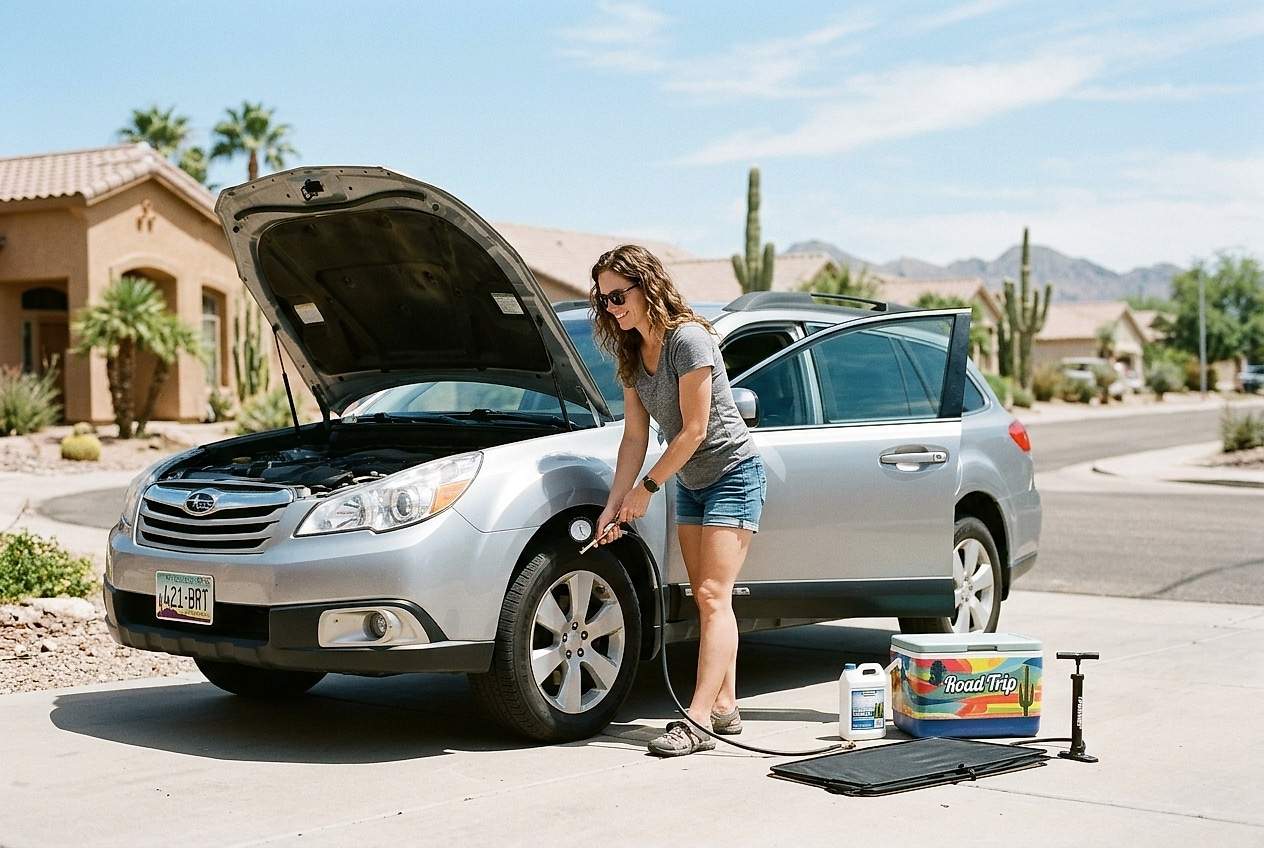
Tire pressure increases approximately 1 PSI for every 10-degree rise in temperature. A tire underinflated by 5 PSI in spring heat reaches proper pressure in summer, then becomes overinflated and prone to blowouts as heat continues rising. Check tire pressure at sunrise before the asphalt reaches 140 degrees. Verify the recommended PSI on your driver's door jamb, not the maximum PSI printed on the tire sidewall. Rotating tires every 6,000 miles prevents uneven wear exacerbated by Phoenix heat. Cracked sidewalls and bulges signal replacement is urgent; heat accelerates sidewall failure.
Preventive timing and professional preparation
Professional detailing before summer begins costs 150 to 300 dollars and prevents damage costing thousands. A full exterior detail removes contamination, applies protective coating, and seals seams where heat can penetrate. Interior detailing conditions materials, deep-cleans air filtration, and removes dust buildup that reduces AC efficiency. Schedule this work in April or May, not June when heat is already extreme. Mobile detailing services that come to your location, available in Mesa, Chandler, Tempe, Apache Junction, and Gilbert, eliminate the need to sit in a hot waiting room.
Common mistakes to avoid
Relying on tint alone without interior conditioning. Window tint reduces interior heat gain by 30 to 40 percent but does not protect materials from remaining heat or UV penetration. Combine tint with sunshades and professional fabric conditioning.
Neglecting battery load testing. A battery that tests fine in spring may fail without warning in summer. Request a load test during your pre-summer maintenance visit.
Skipping coolant concentration checks. Adding only water to top off coolant dilutes the mixture below 50/50, reducing freeze protection and heat dissipation. Top off with the proper coolant-water ratio your vehicle requires.
Postponing detailing until July. Professional detailing in extreme heat takes longer, costs more, and is less effective because products cure too quickly. Scheduling in May ensures optimal results.
Washing your car in direct sunlight. Soap and water dry too fast, leaving streaks and mineral deposits that etch paint. Wash early morning or evening.
What this means for you
If you drive a daily commute in Phoenix, prioritize fluid checks and battery load testing in April, then schedule professional exterior detailing by May 1st. The 200 to 300 dollars invested prevents paint oxidation damage worth 1,500 to 3,000 dollars and ensures your air conditioning and cooling systems operate at peak efficiency during peak heat months.
If you park primarily in a garage or shade structure, interior conditioning and sunshade installation remain essential to prevent cracking and fading. Even partial sun exposure during drives heats interior surfaces enough to damage materials without protective treatment.
If your vehicle is over five years old, have the battery load tested and replaced preemptively rather than risk failure during peak summer. A failed battery in a 115-degree parking lot is not a repair you can postpone.
References
[1] Yahoo Autos. "Phoenix summer heat is horrible for cars. What to check before you hit the road." https://autos.yahoo.com/phoenix-summer-heat-horrible-cars-135335530.html
[3] T-Bird Auto. "Preparing Your Car for the Extreme Summer Heat." https://www.tbirdauto.com/preparing-your-car-for-the-extreme-summer-heat/
[4] Mobiluxe Detail. "Preparing Your Car for Phoenix Summers: Essential Detailing Tips." https://mobiluxedetail.com/blog/preparing-your-car-for-phoenix-summers–essential-detailing-tips
[8] Scottsdale Muffler. "Top 5 Car Maintenance Tips Before the Phoenix Summer Hits." https://scottsdalemuffler.com/auto-maintenance/top-5-car-maintenance-tips-phoenix-summer-hits/